 Two bloggers have interviewed me on the occasion of publishing a new book. First I’ll show you Maggie McNeill’s, because it’s written; after that I’ll give the link to Johnny Lemuria’s listenable podcast interview.The Honest Courtesan has kindly given permission for me to reproduce the full conversation here.
Dr. Laura Agustín, author of the blog The Naked Anthropologist and the book Sex at the Margins, the seminal work on “sex trafficking” hysteria (in which she coined the term “rescue industry”), has written The Three-Headed Dog, a novel dramatizing the problems faced by migrants. It’s another way of introducing readers to the issues the “sex trafficking” paradigm attempts to paper over, which Dr. Agustín has studied for over 20 years and understands in a way very few others do. I recently read the novel, and Dr. Agustín graciously agreed to answer some questions about it.
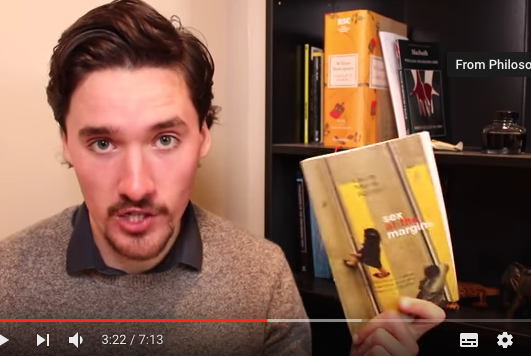
 MM: Sex at the Margins has been and continues to be a work of major importance to the sex workers’ rights movement; I know it really helped me to shake off the dualistic thinking about “willing” vs “coerced” sex work, and it’s invaluable in getting people to look at their preconceptions around why people (especially women) leave their original home countries to work. So why did you decide to write fiction instead of a 10th-anniversary edition?
LA: The essence of Sex at the Margins doesn’t need updating, by which I mean women’s migration to work as maids or to sell sex, the use of smugglers, the rise of the Rescue Industry. Someone else can document the growth and proliferation of that last, if they can stomach it, but the core ideas haven’t changed. I wanted to write stories to reach people who don’t read books like Sex at the Margins and who only hear about the issues from mainstream media reports. The Three-Headed Dog provides a way to learn about social realities and be gripped by stories at the same time.
MM: I write fiction myself, so that makes sense to me. But what made you choose the crime genre? Why not do a “straight” novel?
LA: Crime seemed like the right frame, because everyone thinks smuggling and undocumented migration are at least technically crimes – leaving the idea of trafficking out of it. I am a fan of some kinds of mystery writing, and the formula of a detective who searches for missing migrants provides infinite opportunities for all sorts of stories and characters.
MM: I think you just started to answer one of my questions! At the end of the book several questions are unresolved, and I would have liked to know more about Félix, the detective. Is this the first of a series?
LA: I’ve got too many stories to tell for one book. The Dog was getting long and complicated, so I decided to make it the first in a series. In the detective genre it’s common for some questions to remain dangling, and readers know they can learn more in the next installment. If I’d been writing 150 years ago I might have done weekly installments in a magazine, as Dickens did with The Pickwick Papers. In the next book, which I’ve started, Félix’s search takes her to Calais and London.
MM: I was very intrigued by Félix, and it seems to me that she might be based on you. Would I be correct? And are any other characters based on people you know?
LA: The characters created themselves in my mind out of the many thousands of migrant friends and acquaintances I’ve had in my life. Including myself. But they sprang forth and told me who they were. I identify with much of Félix’s character, but I identify with much of the smuggler Sarac’s character, too.
MM: I like that Félix has some history of sex work, and that she still seems to be comfortable taking gigs that dip into the edges of sex work.
LA: She certainly was a sex worker during the European tour she did when younger with her friend Leila, who now lives in Tangier. I think she still takes sexwork gigs when it suits her. I expect she’ll tell us more about that in the future.
MM: Not many novels have well-developed and nuanced sex workers as major characters, and when we appear as minor characters we’re mostly there to be rescued or murdered. But these characters, even the minor ones, are much more developed than that. There was one character, Marina, who was clearly intending to do sex work, but what about the others? I couldn’t be sure.
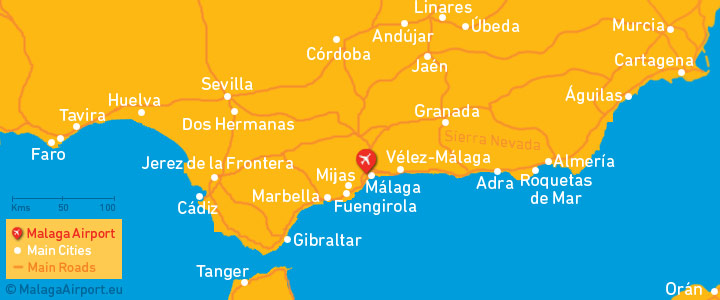
LA: This is Marina’s second time sexworking in Spain. Félix looks for two other characters in spas (massage joints) in Madrid, and one of those is adamant about not intending to be a maid. They’re Latin Americans who belong to a long tradition of working in indoor businesses like bars and flats, or sometimes in the street. They arrive with contacts and some prior knowledge of what they’re getting into, so it’s a serious problem when the smuggler makes them de-plane in Madrid instead of Málaga. Of the other characters, Promise, the Nigerian, planned to sexwork in the street, and Eddy, the boy who goes missing, doesn’t intend anything but is moving in that direction.
MM: It seemed to me that their ending up in Madrid was a very big issue, even beyond the lack of connections. Is Madrid so very different from Málaga?
LA: Yes, Madrid is a harder place, a capital city and centre of echt-Spanish culture. Málaga is on the Costa del Sol, crossroads for many kinds of migration, smuggling, tourism and crime. It’s a long stretch of coast that ends in a point only 32 kilometres from Africa across the Mediterranean Sea. Nowadays many non-Spanish Europeans from colder climates have homes there in quasi-closed communities. The coast is by no means a piece of cake, but it’s not a cold, self-important northern city. Personally I feel a great sense of history there and lived in Granada during the years I worked on Sex at the Margins.
MM: So it’s a good place to find jobs that aren’t strictly legal?
LA: This is about informal economies that exist in parallel to formal ones (which means they’re included in government accounting). Informal economies are even larger than the formal in some developing countries. In Spain it is not illegal to sell sex, but undocumented migrants have no right to be in the country at all, much less work there. The same is true when they get jobs in restaurant kitchens, on construction sites, picking fruit and working as maids and cleaners. The informal economy rolls along, the jobs are available and migrants are more or less glad to get them despite the clandestinity.
MM: And as you discussed in Sex at the Margins, it’s this informal economy that’s depicted as “trafficking” nowadays, even when there’s no coercion involved per se.
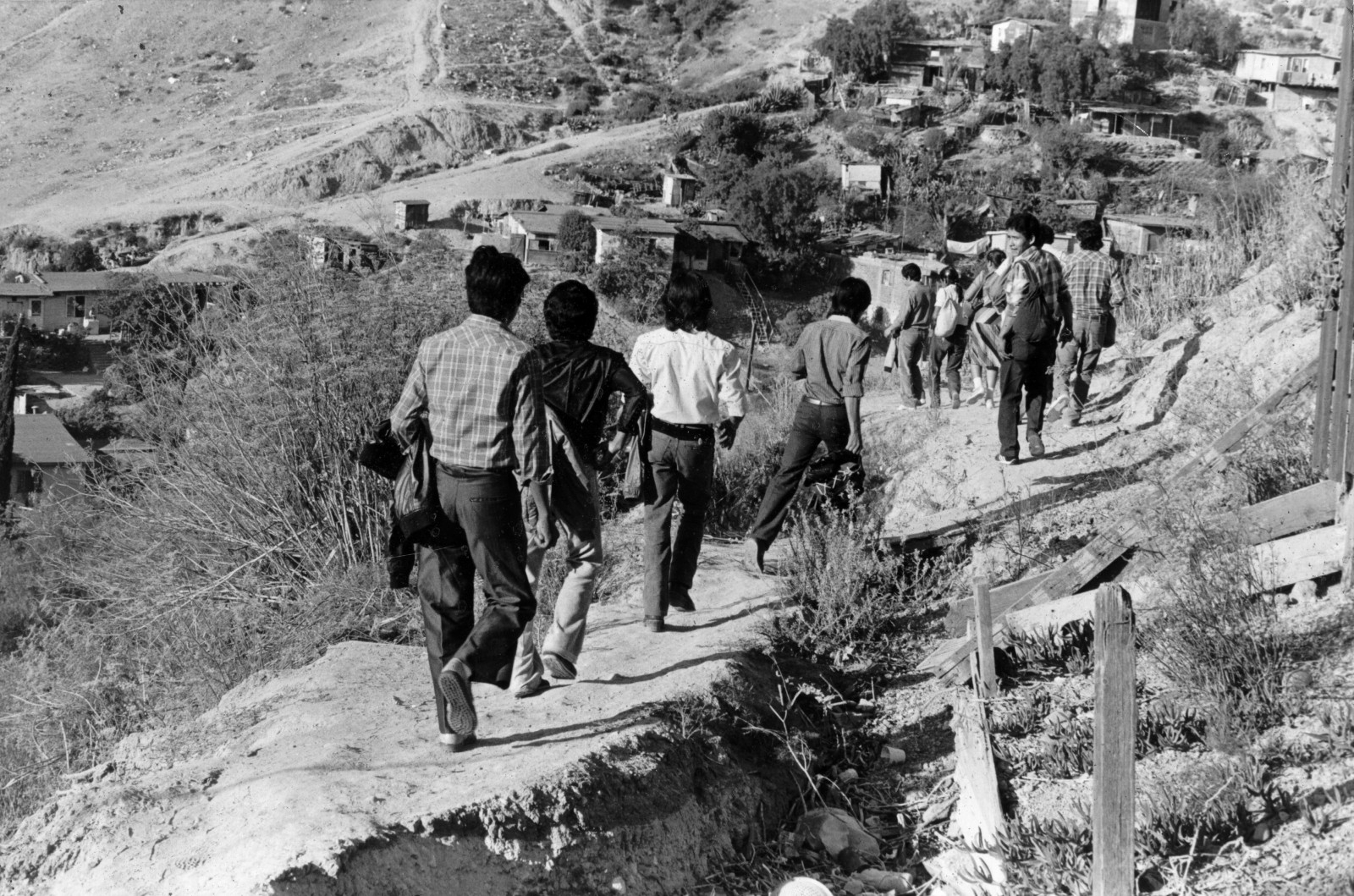
LA: The group that arrives by plane at the beginning are undocumented migrants. They’ve got papers to show at the border: passports and tourist visas. Fakery was involved, and these young people are planning to get paid work, so they’re going to misuse the visas. A guy who’s part of the smuggling travels with them. The project is based on the migrants getting jobs and income so they can pay back debts they or their families took on when they bought travel-agency-type services (known in crime-circles as smuggling). Technically they’re all committing crimes, but to the migrants they feel like minor crimes, given the well-known availability of jobs when they arrive. Everyone knows people who’ve done it and sent money home. Do smugglers sometimes resort to nefarious practices? Of course; it’s an unregulated economy. But if smugglers want to stay in the business they guard their reputation. Word spreads.
 MM: I’m sure the rescue industry folks would find fault with the fact that the book isn’t about people “rescuing” these migrants from their smugglers.
LA: I wrote this book out of love, not as polemic. I’d have to get paid very well to devote myself for long to analysing moral entrepreneurship; I don’t find crusader-figures interesting. I don’t see the world in black-and-white, I like ambiguity and shifting ground. In Félix’s interior life, questions of helping and saving play a part, but she refuses the rescuer-role.
MM: And really, even the villains aren’t the mustache-twirling cardboard characters so beloved by those who promote the “sex trafficking” narrative. I’m thinking about Sarac, the smuggler, and Carlos, the sex club owner.
LA: The smugglers are squabbling amongst themselves and not very appealing, but they aren’t monsters or driving anyone into bondage. They charge for their services. Sarac worked as a soldier/mercenary, now does “security” and is involved in people-smuggling. He wants to do something new, but not pimping. Carlos operates hostess clubs in Madrid. Those are not illegal, but he may employ illegal migrants. He’s part of an established tradition, and he makes good money on the women’s work.
MM: I think American readers have some very confused ideas about the sex industry and migration in Europe. Do you think The Three-Headed Dog will appeal to them and help clear up some of those misconceptions?
LA: Undocumented migration and working in underground economies are worldwide phenomena no matter what local culture or national laws prevail. Ways to earn money by selling sex vary in the details, but sex workers recognise each other across national borders and talk about the same problems and solutions everywhere. Sometimes places where laws are uglier provide more opportunities. Since the migrants are working illegally in Spain they have a lot in common with all sex workers in the USA, right?
MM: True; all of us are illegal here, whether we were born here or not. Is there anything else you’d like to tell the readers that I haven’t thought of?
LA: Yes, I want to point out that even if you don’t own a Kindle, you can still buy the Kindle version of The Three-Headed Dog and download a free reading app right there. And you can read more about sex industry jobs here at the Naked Anthropologist.
Next: The Lemurian Hour podcast conducted via Skype audio.
 This is a project of author and artist John L Robinson, aka Johnny Lemuria, whose introduction says This is a decadent podcast; if you can’t handle that you should go elsewhere. Actually I didn’t say anything decadent, though some abolitionists think I’m one of Satan’s handmaidens.
Or listen here:
Thank you, Johnny and Maggie. Anyone else interested in an interview? Contact me on the form to your right.
–Laura Agustín, the Naked Anthropologist












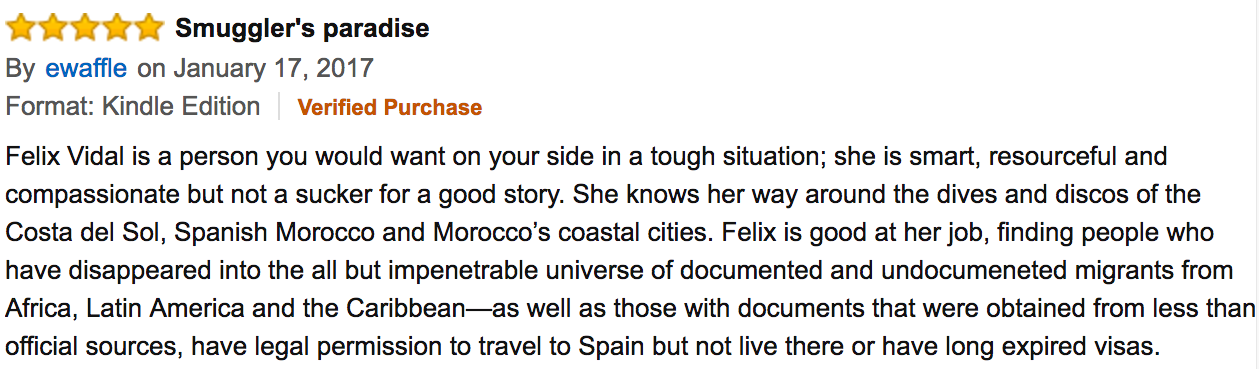
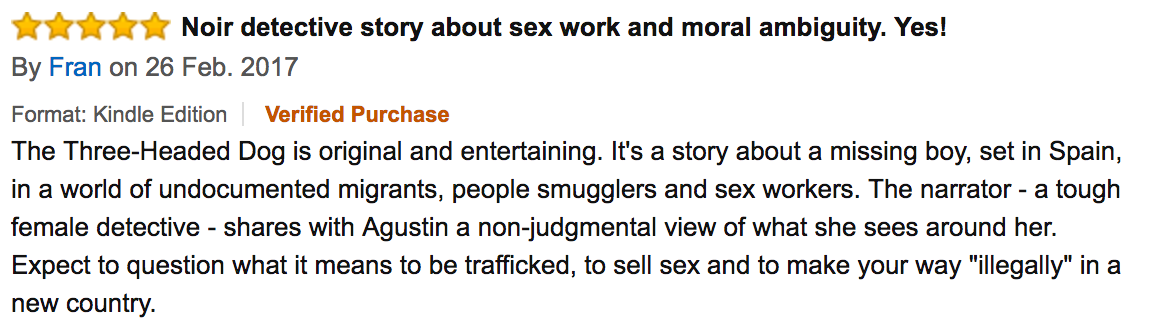
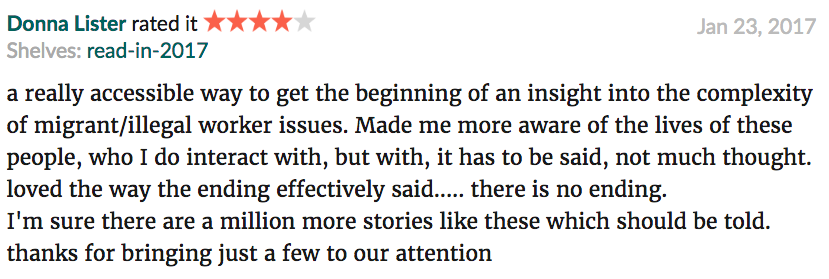
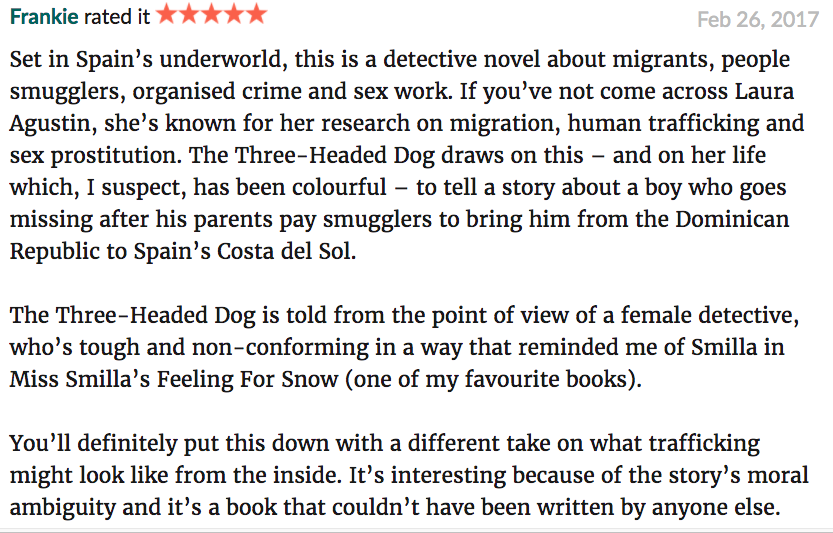

 Gripping is a great tribute, and a few others have said the Dog is a page-turner (funny when swishing on a screen). They mean the reader is hooked on the story and wants to know what comes next. That’s not easy to achieve!