web analytics

Articles by laura agustin

You are currently browsing laura agustin’s articles.

Oh for goodness’ sake, does everyone in the USA have to take on sex trafficking as their special mission? How conformist! Ashley Judd has joined the list; it turns out she once wrote a school paper on the topic, so the UN invited her to come be an expert recently, and rather than blame Judd for her lack of imagination I charge the UN for utter irresponsibility. I expect Mira Sorvino is annoyed as well, displaced from her Queen Bee position. Both women are smugly calling themselves philanthropists now, showing perfectly the correctness of my theory of Rescue as identity marker for under-employed middle-class women.

Now here is Gloria Steinem, founder of Ms Magazine and veteran politicker in the women’s movement, spouting fundamentalist cliches in India, where she was invited to talk about prostitution and trafficking. Feminist conflict on these subjects is as common in India as anywhere else, so the fact that Steinem’s remarks caused a kerfuffle is not surprising, but The Hindu newspaper has allowed a true blossoming of quarrels today –  really quite absurd if you read through them all. Steinem’s original talk at a university, reported as Up against the epidemic of trafficking, was repressive towards sex workers and their allies who attended, followed by Prostitution is one of the oldest oppressions, not profession, which includes more unsubstantiated statistics from Rescue project Apne Aap

the number of child victims trafficked globally for sexual exploitation or cheap labour is 1.2 million annually. The National Human Rights Commission estimates that almost half the children trafficked within India are between the ages of 11 and 14.

Steinem’s own errors and cliches include:

The average age for children to be pushed into sex trafficking is between 12 and 13 in the United States and between 9 and 12 in India. The perception is that very young children are less likely to have AIDS. Quoting from her experiences in different countries, she said women who are trafficked suffer a great deal because of patriarchal structures and religions.

. . . the less “valuable” women who are not expected to maintain the “purity” of a class, caste or race are the ones most likely to fall prey to human trafficking worldwide.

She could be crucified for comments like the last one but was presumably surrounded by groupies so not in danger. Isn’t it nice to know that she now has travel plans with Apne Aap to look at real live sex trafficking and prostitution around India? More Reality Tourism, I call it, with a biased guide. Has she met Siddharth Kara yet?

I suspect that the event’s organiser, Kumkum Roy of Jawaharlal University’s Women Studies Programme, had not properly investigated Steinem before inviting her, because she nearly apologised for exclusion of sex workers at Steinem’s talk in Need for a nuanced debate. Shohini Ghosh, another academic, refuted Steinem’s nonsense more clearly in Moralistic assumptions.

However the icing on this quarrelsome cake is in a piece by Steinem herself called Body Invasion is De-humanising, as a reply to the above criticism. Steinem’s unfamiliarity with this particular debate is glaringly obvious, so that she leans on 1970s Dworkian rhetoric and errors of fact that have been debunked hundreds of times. As with the pea-brained actors, Steinem is reduced to using anecdotal evidence, claiming that the unhappy prostitutes she happens to have met represent all, and she says no one has ever told her they want their daughter to grow up to be a prostitute. My land, isn’t that amazing! This sort of embarrassing cant is easily avoided by never accepting an invitation to talk on a subject where most of the audience knows much more than you ever will: Public Speaking 101.

Pictures depict real body invasions.

–Laura Agustín, the Naked Anthropologist

Share

Tags: , , ,

I’ll be speaking briefly at the AWID International Forum on Women’s Rights and Development in Istanbul later this month. This very large conference is held every few years by the Association for Women’s Rights in Development. The website says attendees include people interested in women’s rights, international development and social justice, particularly from the Global South, young women and groups that historically have had difficulty getting their agendas heard.

This year’s theme is Transforming economic power… are you up to the challenge? In other words, ideas about money and power. The APNSW group I am part of will have a pre-meeting to strategise having sex worker voices in all streams of the conference and therefore the wider women’s movement. Our session is going to have short presentations and lots of discussion, so please come and participate.

Day 3 – April 21, 11:30 – 13:00 Kasimpasa 1 & 2

Don’t Talk to Us About Sewing Machines–Talk to Us About Workers’ Rights (20957 E,F,T)

Sex work is work. Trafficking is as an issue of poverty that causes many women to willingly/unwillingly enter into agreements with traffickers because they seek to escape / explore better livelihoods. This session will reflect on the evidence base and the experiences of sex worker rights organisations in this area.

Speakers: Meena Seshu-SANGRAM, Sachumi Mayeo-Empower, Laura Agustín

–Laura Agustín, The Naked Anthropologist

Share

Tags: , ,

I rarely comment on news stories immediately and certainly not when I first need to understand a long legal text. Now I have digested the Ontario Court of Appeal’s decision to uphold the 2010 decision of Superior Court Judge Susan Himel. Representatives of the government appealed her decision last June, and it has taken all this time for the Court of Appeal to make their own decision, which upholds Himel’s only in part. All five judges did agree with Himel that key prohibitions should be struck from prostitution law: operating a brothel, working together with others and the old idea of ‘living off’ someone else’s sex work (except in genuinely coercive situations). But the court didn’t uphold one of Himel’s decisions, to allow solicitation – or ‘communication’ – in the street. This is a backward step.

Canadian law before Himel was typical in allowing the sale of sex but surrounding the act with prohibitions, making it easy for workers to be arrested and harassed by police (as I discussed the other day in reference to London and the Olympic Games).

The recent decision removing obstructions from the act of selling sex in indoors, organised places, but not outdoors, is just what many business owners want and some patriarchally-inclined commentators recommend, the argument being that street prostitution is too much of a nuisance in neighbourhoods where it happens, and is overly associated with drug use and violence. This special treatment shows class, race, ethnicity, age and gender-identity bias, specially penalising those who already suffer worse marginalisation. These cards for a Mayfair venue show the image businesses love to project.

The court reasoned that if sex work is made legal in businesses and groups indoors, street workers can move inside – which the judges must know isn’t true even if they don’t admit it. Many street workers won’t be able to pass the hiring process; for instance, if employers want the prettiest people by mainstream standards, the youngest-looking people, the stereotypically feminine-looking people, those that don’t use drugs or whatever other prejudice they have. And to work in a group without such a boss requires belonging to a social network where at least one person has the organisational skills to set the group up, which also excludes many.

Quantitatively street prostitution occupies a minor position within the sex industry; researchers everywhere have been estimating it’s not greater than 10% of the whole for decades. But that doesn’t mean it is dying out: some people prefer the flexibility of working in the street and others fall into it as a way to survive. But is there a right to sell in the street? Urban planners, upwardly mobile home owners, politicians and numerous others think there is not; they want inner cities to look more middle-class. Those who spend time with street sex workers sometimes wind up as abolitionists and sometimes as proponents of harm reduction. Tolerance zones for street-walking are proposed and opposed constantly, everywhere.

The Court of Appeal judges were split on this issue: the majority (three) saying soliciting should not be allowed and the minority (two) saying it should. Meanwhile, sex workers are in the uncomfortable position of wanting to celebrate, but that reaction looks insensitive towards those who work in the street. In the movement for sex workers’ rights, solidarity between different sorts of workers is highly valued and divisiveness not appreciated. Both sides of the case are likely to appeal to the Supreme Court – so onward and upward.

Thanks to John Lowman for help wading through the legal texts.

Other links of interest:

The recent decision

Katrina Pacey of Pivot Legal Society

Activists divided

BC sex workers prepared to keep challening

Himel on the ideological nonsense spouted by abolitionists

–Laura Agustín, the Naked Anthropologist
Share

Tags: , ,

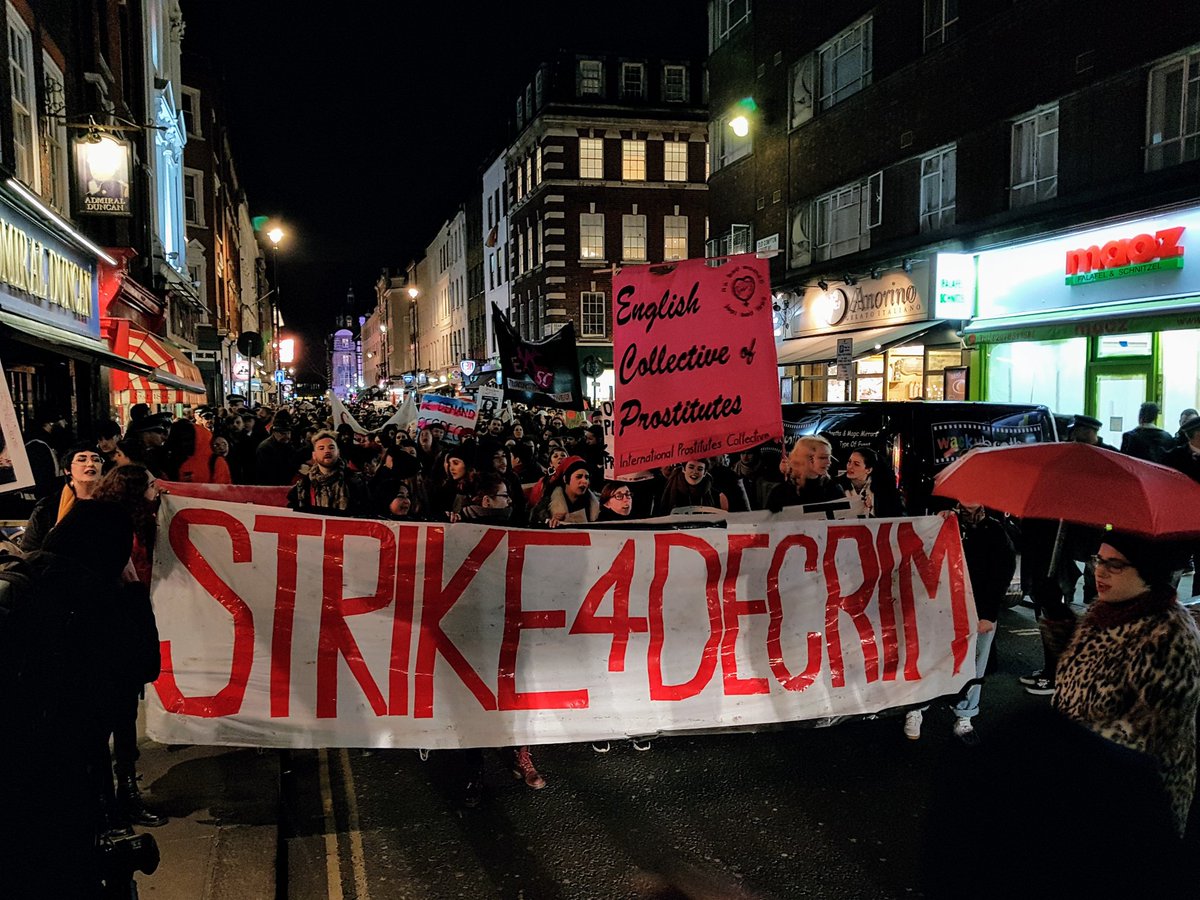
x:talk, a workers’ collective in London, is calling for a stop to all arrests of sex workers as a way to reduce the harm associated with police handling of ‘trafficking’ associated (erroneously) with large sporting events. London is another place where selling sex is legal but surrounded by many vaguely defined activities that can cause arrest, notably the prohibition on working alongside someone else (even if they serve as your receptionist or security guard). Adverts like these in public phone boxes are also prohibited but continue to proliferate. Just about every prohibition is now justified as a way to stop trafficking, when most of the offences date back to efforts to limit the nuisance caused by prostitution.

Note the call is for a cessation of arrests of workers, not clients. Criminalisation of purchasing sex (an anti-client law) exists in a diluted form here that makes it an offence to pay for sex with a person controlled for another person’s gain, which clients may be charged for whether they knew about the control or not (what’s known as a strict liability clause). Yes, it’s a very vague idea and difficult to prosecute.

x:talk will be sending a letter to the Mayor of London requesting the moratorium. Get in touch if you are willing to be a signatory to the letter or if there is any other way you can support the campaign: moratorium2012 [at] gmail.com.

Sex Work and the Olympics: The Case for a Moratorium

1. x:talk and its supporters are calling for a moratorium on arrests of sex workers in London with immediate effect until the end of the Olympic Games.

2. Governments, charity organisations and campaign groups have argued that large sporting events lead to an increase in trafficking for prostitution. These claims, often repeated by the media, are usually based on misinformation, poor data and a tendency to sensationalise. There is no evidence that large sporting events cause an increase in trafficking for prostitution.[1]

3. These claims can lead to anti-trafficking policies and policing practices that target sex workers. In London, anti-trafficking practices have resulted in raids on brothels, closures and arbitrary arrests of people working in the sex industry. This creates a climate of fear among workers, leaving them less likely to report crimes against them and more vulnerable to abuse and exploitation.[2] This is an inadequate response to sex work and to trafficking.

4. x:talk is aware of “clean-up efforts” already underway in London, particularly east London, in the run up to the Olympics. These include multiple raids and closure of premises. We anticipate that until the end of the Olympic games there will be a continued rise in the numbers of raids, arrests and level of harassment of sex workers.

5. A series of violent robberies on brothels by a gang in December in Barking & Dagenham demonstrates the effect that this climate of fear can have on the safety of sex workers. The effect of raids on brothels and closures in the area had eroded relations between sex workers and the Police with the result that the sex workers targeted by the gang were unwilling to report the attacks for fear of arrest. The gang were able to attack at least three venues in December 2011.[3]

6. In light of this, x:talk and its supporters are calling on the Mayor of London and London Metropolitan Police to suspend arrests and convictions of sex workers under the criminal laws laid out in Appendix 1.

APPENDIX 1: OFFENCES TO BE INCLUDED UNDER MORATORIUM

Suspension of offences that refer directly to sex workers:

-  Soliciting (this should include soliciting penalties: rehabilitation orders and Anti-Social Behavioural Orders), s.1 (1) Street Offences Act, s.16, s.17 Policing and Crime Act 2009, s.1 of the Crime and Disorder Act 1998.

-  Keeping a brothel, where the person deemed to be “keeping a brothel” is one or more of the people selling sexual services. Effectively, this means we are calling for a suspension of any arrests of sex workers who work collectively.

Soliciting

S. 1 (1) of the Street Offences Act 1959 makes loitering or soliciting for purposes of prostitution an offence. Section 16 of the Policing and Crime Act 2009 amended s.1 of the Street Offences Act 1959 inserting the requirement that soliciting be “persistent”, defined as occurring twice within a three-month period.

A logical corollary of the suspension of laws relating to persistent soliciting would be the suspension of any new rehabilitation orders, as defined by s.17 of the Policing and Crime Act 2009, and Anti-Social Behavioural Orders, as defined by s.1 of the Crime and Disorder Act 1998, that may follow breach of a rehabilitation order.

Keeping a brothel

S.33A of the Sexual Offences Act 1956, as inserted by s. 55(1) and (2) of the Sexual Offences Act 2003, creates an offence of keeping, managing, acting or assisting in the management of a brothel to which people resort for practices involving prostitution (whether or not also for other practices). Prostitution is defined by section 51(2) of the Sexual Offences Act 2003 as follows: a person (A) who, on at least one occasion and whether or not compelled to do so, offers or provides sexual services to another person in return for payment or a promise of payment to A or a third person.

S.33A therefore covers premises where two or more people provide sexual services at the same time. Where one or more person (who may or may not be offering sexual services) are found to be keeping, managing, acting or assisting in the management of that brothel they will be charged under s.33A. The required level of control over brothel activities varies but will be satisfied where there is evidence of a person seeing customers onto the premises, handling payments from customers, paying bills, placing advertisements in local papers (R v Alexsander Sochaki (2010) EWCA Crim 2708). However, we draw attention to the recent case of Claire Finch, who was unanimously acquitted of brothel keeping. Finch had accepted that she worked collectively from her own home providing sexual services and gave evidence it would be too dangerous for her to work alone. Finch’s barrister, relying on evidence that there had been numerous serious violent attacks on solitary street sex workers in Bedfordshire in recent years. successfully argued that Finch was entitled to rely on the defence of necessity.

Suspension of arrests of sex workers, administrative detainment and / or removal, during the enforcement of offences relating to third parties:

-  Sections 52-53 of the Sexual Offences Act 2003 make it an offence to cause, incite or control a prostitute for gain. Section 54 defines gain as ‘any financial advantage, including the discharge of an obligation to pay or the provision of goods or services (including sexual services) gratuitously or at a discount, or the goodwill of any person which is or appears likely, in time, to bring financial advantage.’

Causing, inciting, controlling for gain

These offences, particularly s.53 controlling a prostitute for gain, are often the basis of raids[4] and will be accompanied by the arrest of sex workers for immigration offences.

During the enforcement of these offences we are calling for a suspension of all arrests of sex workers, including arrests and deportation procedures for immigration offences.

Suspension of the closure of premises:

-  S.21 of the Policing and Crime Act 2009, which allows the closure of premises for up to three months where the police have reasonable suspicion that prostitution related offences (as defined by ss.52-53 of the Sexual Offences Act 2003) are being committed.

-  Brothel keeping charges make it an offence keep, manage or assist in the management of a brothel and for a landlord or tenant to let or permit their premises for the purposes of prostitution: s.33A-36 Sexual Offences Act 1956. Those keeping a brothel, landlords and tenants might be informed that if the behaviour does not desist, and the premises close, they will be liable for prosecution.[5]

Closure Notices and Orders

A Freedom of Information request issued by x:talk to the MET has revealed that in four of the five London Olympic boroughs only one closure order and notice has been applied for pursuant to s.21 of the Policing and Crime Act. However, the FOI states that “this response does not mean that no premises were closed, instead it confirms that no premises were closed in these four boroughs as a result of a notice issued under Section 21, Schedule 2 of the Policing and Crime Act 2009 … premises usually respond to requests from Police to close and often other legitimate means of closing them are adopted, such as consultation with the landlord & follow through action resulting from that. Barriers to use of closure notices include civil court fees and consultation process.”

We therefore call for a suspension of police efforts to serve notices and close premises where they suspect prostitution offences are being carried out, whether in the pursuance of a closure order / notice under s.21 of the Policing and Crime Act 2009, ss.33A-36 of the Sexual Offences Act 1956, or any other legal measure. However, it is important to note that our call for suspension does not apply to premises where child related prostitution or pornography offences are suspected (ss.47-50 Sexual Offences Act 2003). Our call relates solely to premises where prostitution offences under s.52-53 of the Sexual Offences Act 2003 are suspected.


[1] Global Alliance Against Traffic in Women (GAATW), (2011) What’s the Cost of a Rumour? A Guide to Sorting Out the Myths and Facts about Sporting Events and Trafficking. http://www.gaatw.org/publications/What’s_the_Cost_of_a_Rumour-GAATW2011.pdf

[2] x:talk (2010), Human rights, Sex Work and the Challenge of Trafficking

[3] Owen Bowcott, “Call for change in law to protect prostitutes from violent crime”, Guardian 6/01/12, http://www.guardian.co.uk/society/2012/jan/16/change-law-prostitutes-crime-violent

[4] Crown Prosecution Service guidance for enforcement of s.53: “In investigating cases of controlling prostitution, the police may raid and disrupt brothels where local police policy previously had been one of toleration of off street prostitution.” http://www.cps.gov.uk/legal/p_to_r/prostitution_and_exploitation_of_prostitution/

[5] Ibid 3, Owen Bancroft, Guardian 6/01/12

Quote from Metropolitan Police: “a notice has been served to the registered owner of the venue in Victoria Road under the auspices of section 33a of the Sexual Offences Act 1956. The notice formally notified the recipient that they were liable to prosecution should the premises in Victoria Road remain in use as a brothel.”

–Laura Agustín, the Naked Anthropologist
Share

Tags: , , , , , ,

Sex-slave charity head quits amid row was the alternate title to this disgraceful story that reminds us that the United States is not alone in playing Rescue Industry hardball. A claim to have saved very young girls from sexual slavery (supposedly shown in this photo) has been repudiated by police in Thailand. The charity’s name, Grey Man, suggests some sort of paramilitary identity; their mission, according to their website, is the rescue of children from traffickers.

This news story can hardly be counted on for the final facts of this matter, and it may be that the charity is locked in some kind of struggle for power or money with Thai police. But it is creepy enough that an Australian charity should, as they proclaim, promote the use of former Australian soldiers and police in daring missions to rescue victims of sex trafficking in Asia. Daring? Why? If any brothels have become dangerous places, rescue raids are surely the reason. The gall! And anyone who describe himself as daring is already being ridiculous.

Rescue boss out over claims of fake ‘victims’

Lindsay Murdoch, 26 March 2012, smh.com.au (Sydney Morning Herald)

THE head of an Australian charity that has been accused of faking the rescue of Thai hill tribe children from sexual slavery has resigned. Former Australian army commando Sean McBride stepped down from the Grey Man charity at the weekend following new claims about the organisation and an investigation into the hill tribes children by Thailand’s Department of Special Investigation.

Mr McBride, who also uses the name John Curtis, told The Age the Grey Man’s board decided he should step down because ‘‘personal issues’’ between him and people in Thailand were interfering with the organisation’s operations. Funded by Australian donations, the high-profile charity promotes the use of former Australian soldiers and police in daring missions to rescue victims of sex trafficking in Asia.

Police in the northern Thai city of Chiang Mai have cut ties with the charity amid claims and counter-claims about the organisation pending the outcome of the departmental investigation. In a new claim, the Grey Man’s former head of investigations in Thailand said the charity’s website had exaggerated the success of its operations, including changing the ages of victims.

‘‘Sean [Mr McBride] told me younger girls are most interesting for donors,’’ said the Thailand-born man, who asked that his name not be published because of his undercover work. The charity’s website often claimed that victims as young as 12 were rescued.

Responding by email to questions from The Age sent before he stepped down, Mr McBride said he never changed reports ‘‘except to make them more readable and media-orientated’’. He said the charity, which last year had about 25 field operatives and was training 20 more, would not put ‘‘people on the ground in Thailand until we get the all-clear from the DSI’’, although its website continues to appeal for donations to support its main objective of ‘‘assist[ing] the police in Thailand in locating and rescuing children from trafficking and sexual abuse’’. He told The Age that much of the controversy about the charity he founded in 2007 was about ‘‘corruption and vested interests’’.

The charity says it has rescued dozens of children from prostitution in Asia, the youngest aged 10. It also works on prevention measures such as supporting employment and education programs in an attempt to stop children being trafficked for sexual exploitation. But the charity has had acrimonious disputes with its operatives in Thailand, including police provided with costs to support its operations.

Referring to the hill-tribe-children investigation and the Grey Man’s critics, Mr McBride said: ‘‘Did we rescue 22 children and did we scam the Australian public? They know they are about to lose that one, so they are using half-truths now to try and discredit us in other ways and they will keep trying.’’

Police from the Chiang Mai-based transnational crime unit told The Age that 21 hill tribe children from a village in northern Chiang Rai province were not rescued from prostitution as the charity claimed on its website along with appeals for funds. The Department of Special Investigation is investigating claims that the children had never left their homes, had continued to attend school and had suffered as a result of the publicity.

Mr McBride said the Grey Man had provided the department with a comprehensive response to the allegations. ‘‘We are fully co-operating with the inquiry,’’ he said. Police also told The Age the department is investigating the Grey Man’s alleged use of a fake address in Chiang Mai. Mr McBride said the address ‘‘was a temporary address when we first started’’.

In responses to questions from The Age, Mr McBride defended the use of photographs of hill tribe children on its website above references to children being taken to a brothel. ‘‘There don’t seem to be many photos of hill tribe kids. If they were sex trade victims they would have their eyes blacked out,’’ he said. ‘‘I suppose people could make a connection between those kids and brothels but it was not our intention. I will discuss it with our people, but I think people realise a site like ours will have photos of kids on it.’’

The former head of Grey Man’s 10-person Thai investigation unit said Australian volunteers who travelled to Thailand to support operations could provide little assistance because they could not speak Thai and had little knowledge of Thai culture. Mr McBride said the man did not like working with foreigners ‘‘so we had to send our volunteers off to do their own tasks’’.

Operations to rescue sex trade workers in Thailand have become highly contentious. The Empower Foundation, which represents sex workers, said in a report released this month that ‘‘we have now reached a point where there are more women in the Thai sex industry being abused by anti-trafficking practice than there are women exploited by traffickers’’. [that story here]

The foundation was not referring specifically to the Grey Man, which is based in Brisbane and has been strongly supported by Australia’s legal profession, including judges. The Grey Man board has appointed former Australian Federal Police agent Colin Rowley to replace Mr McBride, who said he will no longer be involved with or comment further on the charity.

Laura Agustín, the Naked Anthropologist

Share

Tags: , , ,

Pictures like this can cause ranting about Sex Tourism solely because an older white man is seen walking with a younger less-white woman. Their physical characteristics are presumed to determine fixed identities, by which I mean we are supposed to know who they are, fundamentally, simply because of how they look. I have always been very uncomfortable with such blanket categorisation, which reminds me of systems of racial segregation. Or if race is not the crux then age would seem to be, since according to today’s romantic narratives, proper relationships only occur between people of the same age. Anti-sex tourism campaigners who claim only to be concerned about the tourists’ financial power fail to account for the special repulsion they exhibit at age and ethnic/racial differences in these couples, a prejudice that blocks any curiosity about the people involved as people.

Soi Cowboy Photo by Matt Greenfield

Some of the men under scrutiny are tourists, while others call themselves ex-pats, but they all stand accused of having travelled for the purpose of using their money to buy sexual relationships. I bring this fraught topic up because a number of Christian Rescue Industry groups have identified places of sex tourism as a target of their mission, hoping to rescue women who sell sex and stop men who buy it: a species of End Demand project. The testimony below comes from The World Race: This unique mission trip is a challenging adventure for young adults to abandon worldly possessions and a traditional lifestyle in exchange for an understanding that it’s not about you; it’s about the Kingdom. The following are excerpts from a single participant’s description of one experience.

Bill and his 300 women, Laura Meyers, 28 December 2010

. . . One of the most dreadful days of my life was in Pattaya, Thailand. . . I was there on the human trafficking exploratory trip and Michelle and I had spent the day interviewing men and families on why they were in Pattaya. . . Bill was sitting around the table with some other western men. . . Bill was originally from Canada but had moved to Thailand a few years back. . . for “SEX” . . . he had BOUGHT OVER 300 women! Although somewhere in my gut I knew that response was coming, I sat shocked and horrified. . . He had no shame or inkling that what he was doing was wrong. It had never crossed his mind that the women and children that he was buying for sex were being held captive. It had never crossed his mind that . . these girls were . . . being forced to perform for him by their “owner”.

After this beginning, familiar from other Rescue narratives, there is a change.

The more I talked with Bill I heard his heart. . . He told me story after story of how he continually felt rejected . . . from his family, rejected from his friends, rejected from his old way of life, so he came to the one place where “love” is “guaranteed.” The truth was, Bill was not being satisfied and after years of chasing love and looking in all the wrong places he was becoming restless. Bill was hurting. Bill was alone. Bill was searching. . . . that dreadful night in Pattaya, Thailand, although it was brief, I was able just to shed some light on Bill’s life and tell him that there was more to the life that he was living. I was able to share HOPE and extend GRACE. If for no other reason, I may have been in Pattaya, Thailand, the nastiest place I have ever been, for Bill. It’s easy for me to walk into situations like the one with Bill and my heart immediately goes into conviction mode. Where all I see is this sin in Bill’s life, where I see where he is hurting people over and over again and the righteous justice rises within me and I get angry. But more often than not these days, my heart rises for justice for Bill; he is hurting. Obviously, I want the exploitation and abuse to end for the women and children, that’s my heart. But my deepest desire is for Bill’s life to be restored so he can be the end to the exploitation of women and children. If we can get to his heart than there would be no need to have prevention plans and recovery centers for women and children. If we could get to his heart there would be no Red Light District in Pattaya, Thailand.

The idea that commercial sex could disappear through ending demand for it is terribly naive, especially where it is economically and socially significant, as in Pattaya, as I discussed in a review of Sex Trafficking by Siddharth Kara. This Christian narrative of salvation and reform does improve on the usual secular and purely punitive proposal to put all men who buy sex in prison or on sex-offender lists. Otherwise, these missions of naive young Americans to other countries to interfere on religious grounds is just more colonialism, related to Reality Tourism - excuses to travel the world convinced that one’s own culture is best, that one knows how everyone else should live, that one has the right to barge in, judge and then feel good about it.

–Laura Agustín, the Naked Anthropologist

Share

Tags: , , , ,

To those inundated by the same crude message about sex trafficking over and over, two news stories may surprise. In the first, Chinese women who travel to Malaysia are considered interesting not because of any scandal or scourge but because of culture. Not long ago, this story would not have seemed quite so odd – before all women who travel to sell sex were transformed by the Rescue Industry into pathetic victims.

Malaysia just like home for prostitutes from China
28 February 2012, Borneo Post

Kuala Lumpur . . .influx of ‘freelance’ prostitutes from China. . . they liked the climate here which was not far different from China’s. . . They speak Mandarin, which makes it easy for them to mix with the local Chinese community and their food back home is almost similar to the Chinese food here. The availability of budget flights and Internet access are also catalysts for them to come to this country. . . preliminary investigation found that these women who worked through syndicates would return to Malaysia [after being sent home] on student visas and resume working as freelance prostitutes as the earnings were lucrative. . . most of the Chinese nationals interrogated used student visas to enable them to enter the country unimpeded.

. . .Chinese nationals made up the most number of people arrested for prostitution at 653 from January to February 15. This was followed by those from Vietnam (367), Thailand (300), Indonesia (177), the Philippines (55), Uzbekistan (19), Myanmar (14), Cambodia (10), Bangladesh (nine), Mongolia (six), Nigeria and Sri Langka (four each), and India (one). The highest number of arrests involved Chinese nationals at 5,753 in 2009, 6,378 in 2010 and 5,922 in 2011.

That’s a lot of arrests, so it’s not a good story, but notable that the women are not described as trafficking victims. The reference to a syndicate may be to agencies who process visas for students, including students who do not intend to study.

Why would women from China travel to Malaysia to sell sex, given this arrest rate? Consider how they are treated in China.

The oldest profession seeks respect
9 September 2011, The 4th Media

Lin is just 17 . .  Although she knows nothing about cutting hair, she’s employed by a hair salon that can be spotted from the street by a sparkling pink barber pole that glows through the windows at night . . .she has already suffered the humiliation of being handcuffed and detained by police several times.

The salon owner surnamed Wang and an employee surnamed Li get worked up as they rant about the treatment they receive from the police. Li said police have raided her shop twice in the last four months. . . Wang jumps in with angry tales of frequent visits by the police that cost her 600 to 800 yuan in fines to retrieve her employees from the police station. . . A day or two after the raid Wang’s salon is back in business. Wang said she would rather pay for a license, get legal protection and follow required health regulations. “I offer a service that I’m not forcing anyone to take. I’m doing a good thing. It’s not easy making money these days,” she said, adding that one of her four employees was abandoned by her husband, and another has several children to feed. Wang takes a 20 percent commission from the women who average little more than 100 yuan per day [12 euros].

. . .The ubiquitous salons mainly employ women from the countryside, who have little education, few opportunities at home and little chance of doing well in a cosmopolitan city. . . many of the salons operate on the fringe of the law and provide sex services to some of the millions of migrant men who leave home for many months at a time. . .

Young teen Lin resisted becoming a full-time sex worker. She felt disgraced and uncomfortable with her coquettish colleagues. She went home to her village but there was nothing for her to do and soon returned to Yulin and sex work and now supports herself and her family. She moved to another salon that treats her better and says she actually enjoys the job.

. . .A xiaojie, which is a euphemism for sex worker, is treated with disdain by open society. . .the police who often publicly humiliate the xiaojie in hopes of deterring others from entering the profession or in an effort to be seen to be cleaning up a neighborhood. The main targets of the police are the migrant xiaojie who work in small salons or massage parlors. The high-end call girls working out of big nightclubs and luxury hotels are seldom harassed. Prostitution in China is punishable by a maximum 15 days in detention and a fine of 5,000 yuan [600 euros].

For more information see Migrant sex workers in China: massage parlours, hair salons, hotel rooms.

–Laura Agustín, the Naked Anthropologist

Share

Tags: , , ,

We have now reached a point in history where there are more women in the Thai sex industry being abused by anti-trafficking practices than there are women exploited by traffickers.

This statement comes from the founder of Empower on the occasion of their report Hit and Run: The impact of anti-trafficking policy and practice on Sex Workers’ Human Rights in Thailand. This assessment, carried out by more than 200 sex workers over the course of 12 months in bars, restaurants and brothels across the country and in Burma and Laos, begins:

We travel for days up the mountains, across rivers, through dense forest. We follow the paths that others have taken. Small winding paths of dust or mud depending on the season. I carry my bag of clothes and all the hopes of my family on my back. I carry this with pride; it’s a precious bundle not a burden. As for the border, for the most part, it does not exist. There is no line drawn on the forest floor. There is no line in the swirling river. I simply put my foot where thousands of other women have stepped before me. My step is excited, weary, hopeful, fearful and defiant. Behind me lies the world I know. It’s the world of my grandmothers and their grandmothers. Ahead is the world of my sisters who have gone before me, to build the dreams that keep our families alive. This step is Burma. This step is Thailand. That is the border.

If this was a story of man setting out on an adventure to find a treasure and slay a dragon to make his family rich and safe, he would be the hero. But I am not a man. I am a woman and so the story changes. I cannot be the family provider. I cannot be setting out on an adventure. I am not brave and daring. I am not resourceful and strong. Instead I am called illegal, disease spreader, prostitute, criminal or trafficking victim.

Why is the world so afraid to have young, working class, non-English speaking, and predominantly non-white women moving around? It’s not us that are frequently found to be pedophiles, serial killers or rapists. We have never started a war, directed crimes against humanity or planned and carried out genocide. It’s not us that fill the violent offender’s cells of prisons around the world. Exactly what risk does our freedom of movement pose? Why is keeping us in certain geographical areas so important that governments are willing to spend so much money and political energy? Why do we feel like sheep or cattle, only allowed by the farmer to graze where and when he chooses? Why do other women who have already crossed over into so many other worlds, fight to keep us from following them? Nothing in our experiences provides us with an answer to these questions.

A hundred-page report follows. Excerpts from Sex ‘trade’, not ‘traffic’, a news story on the report include:

The survey determined that more than 50,000 sex workers have been involved with Empower since it started [in 1985] including migrants mainly from Laos, Burma, China and Cambodia…

Migration, it was noted, is part of the “culture” of sex work, and the brokers involved in transporting people are generally seen as helpful. Most don’t charge exorbitant rates for their service…

“We came to build new lives for our families, not to be sent home empty-handed and ashamed,” explained Dang Moo, another Burmese sex worker in Mae Sot…

“Before I was arrested I was working happily, had no debt, and was free to move around the city,” said Nok, a Burmese. “Now I’m in debt, I’m scared most of the time, and it’s not safe to move around. How can they call this ‘help’?”…

For those dropping into this website for the first time and not familiar with the issues except for what you’ve seen on television or in the newspapers, I have put together a list of links to stories about ‘rescues’ not appreciated by those defined as victims. This does not mean the migrants or sex workers or prostitutes were all perfectly happy with everything about their lives; it means they did not want whatever attempt to help was forced on them as part of anti-sex trafficking operations, and in many cases felt their lives had been ruined by Rescue. The Rescue Industry tag on this website includes many more posts with more resources, but here is an array of striking commentaries on what so few people question: the efficacy of Rescue operations.

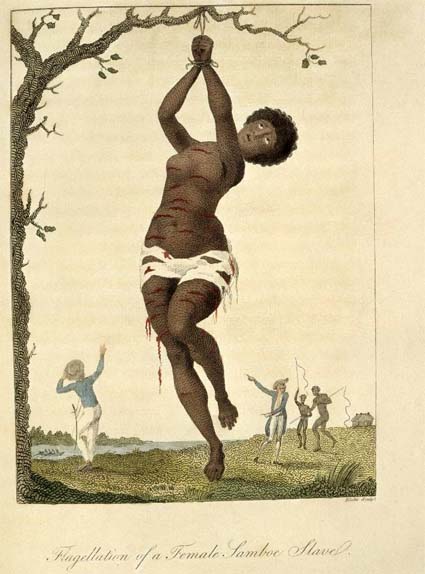
And just to make it clear this problem of imposing victimisation and Rescue on women who sell sex is quite old, consider

–Laura Agustín, The Naked Anthropologist

Share

Tags: , ,

Men at the higher end of the evolutionary scale: That is how one man has described men who want to save sex slaves, seeking to differentiate themselves from less civilised, bad men – the ones that buy sex. In this idea, being a Good Man is achieved not by concern for world peace, equal opportunity, racism, the end of poverty or war but rather by concern for sex slaves.

Recently I published a sober academic review of a book that is not academic at all, Sex Trafficking: Inside the Business of Modern Slavery. Afterwards, I republished the review in Counterpunch, with a snappy introduction for the occasion:

FEBRUARY 27, 2012

Not Inside the Business of Modern Slavery
Sex Trafficking

by LAURA AGUSTÍN

It is good luck for Good Men that sex slavery has been identified as a terrible new phenomenon requiring extraordinary actions. In the chivalric tradition, to rescue a damsel in distress ranked high as a way knights errant could prove themselves, along with slaying dragons and giants. Nowadays, Nicholas Kristof is only one of a growing number of men seeking attention and praise through the rescue of a new kind of distressed damsel – poorer women called sex slaves. In this noble quest, women who prefer to sell sex to their other limited options are not consulted but must be saved, and human rights are the new grail. The association with Christianity is not casual. Siddharth Kara, another man seeking saintliness, uses lite economics – another trendy way to get noticed these days.

The original review follows. The publisher of Counterpunch, Alexander Cockburn, has forwarded me a letter from the Frederick Douglass Family Foundation objecting to the piece, calling me a journalist, which I am not. He also doesn’t seem to have read past that introductory paragraph to the review of the book, where he might have found real issues to think about.

In Laura Agustin’s cynical worldview, men who hold the opinion that prostituting women is wrong and endeavor to do something about it are, in fact, misguided crusaders in the tradition of Don Quixote lost in chivalric fantasy on a mortal quest to feed their own egos by saving damsels in distress. In her article, Not Inside the Business of Modern Slavery, Sex Trafficking, Agustin specifically targets two men amongst what she portrays as a growing parade of attention-seeking phony heroes (cue the paparazzi) – Nicholas Kristof and Siddharth Kara.

Unsettling as it is for Agustin to accept the presence of men at the higher end of the evolutionary scale, Kristof and Kara are helping to shed light on a culture of gender exploitation that has survived only because of spin and lies. Where the rest of us see two men of intelligence and compassion, Agustin sees ulterior motive. In my experience, ones own ill intent makes one suspicious of ill intent in others. What is Agustin’s motive in attacking those working hard to end the exploitation of women? More spin and lies I suspect.

Robert J. Benz
Founder & Executive Vice President
Frederick Douglass Family Foundation

A culture of gender exploitation has only survived because of spin and lies? What? No interest in poverty or cultures of gender inequality from this crusader! Cynicism is in the eye of the beholder, of course. Note that Benz clearly places his kind of man on the high end of evolution, in that overtly colonialistic move in which white men save brown women from brown men. I don’t even understand the last sentence: how can a motive be spin? The guy should have looked me up first and come up with a better attack. And got a copyeditor.

But there is something else interesting here: the notion that Kara has been insulted by being placed in the chivalric tradition, which is generally assumed to represent something noble. Benz’s reference to Don Quixote shows he probably never studied chivalry himself. On the contrary, I imagine both Kara and Kristof would be chuffed to be associated with it. To critique knights in shining armour, as I do, you need to be not only interested in solving social problems but also interested in ending patriarchy, and knighthood is an elitist, male, hierarchical tradition in which white European men proved themselves to other men through treating women as objects, and women were supposed to be grateful, because they couldn’t possibly have gotten themselves out of their predicament unassisted, or figured out how to deal with life themselves in the first place. Note also my reference to human rights as the new grail.

In the contemporary example, men proving themselves through virtuous acts are using police and paternalism to rescue damsels – acts more than legitimate to criticise.

If you got this far and you tweet or post anywhere else, I’d appreciate this getting around. Maybe even Benz will see it!

–Laura Agustín, the Naked Anthropologist

Share

Tags: , ,

DMSC's Avinash clinic. Photo: Indranil Bhoumik/Mint

The most popular page on this website is a 2009 story about prices in Sonagachi, a red-light area in Kolkata. It got more than 200 comments, mostly from clients, some from pimps, others from morally outraged folks, mostly in India. I used to work at deleting the nasty ones every day, and then I stopped allowing comments, or there would be heaven knows how many by now. I have more than once been asked to remove the most sexist and deplorable comments, but how would this make sense, given my interest in understanding what’s going on in commercial sex and gender relations? Not to mention that erasure would be a weird form of End Demand.

DMSC, or Durbar Mahila Samanwaya Committee, the sex worker collective described in a story below, operate a project in Sonagachi. Their principles are

  • Respect and dignity to sex work and towards sex workers
  • Reliance on the knowledge and wisdom of the community of sex workers
  • Recognition of sex work as an occupation and preserve and protect their occupational and human rights

Accusations have been made by anti-prostitutionists (among them Nicholas Kristof) that there is something sinister about DMSC. The slurs, which have never been substantiated, probably derive from the collective’s requirement that journalists, academics, philanthropists and other tourists seek permission before swanning in to take photos of people. DMSC consider such behaviour to be theft. For those who want to abolish prostitution and make everything into trafficking and slavery, Durbar’s refusal to play along with gawkers must be annoying, given the collective’s size, but that is no reason to slander the whole project.

In the following birthday story please note how many areas they are active in: culture, health, sports, children and publishing, as well as advocacy, lobbying and other kinds of activism. I especially like the description of a party for the marginalised, in which taboos are taboo.

The New Rhythms of Sonagachi

Kolkata Chromosome/Shamik Bag, 24 February 2012, livemint.com

As the city’s sex workers collective turns 20, we meet members who have found confidence in their enhanced social presence. For what is sometimes referred to as the world’s oldest profession, a mere passage of two decades can seem irrelevant in the life of Sonagachi—the red-light area in Kolkata and among the largest brothel districts in Asia. Yet, in these 20 years, 38-year-old Swapna Roy has seen a change in the way people refer to her—from being sneeringly mentioned in the coarse Bengali equivalent of slut, Roy today is a jouno kormi—a sex worker.

Roy’s daylight hours are busy—every day she is on the field in areas like Ultadanga and Janbazar as the joint coordinator of a project which sensitizes around 3,000 sex workers on safe and hygienic practices. She also keeps a tab on her two schoolgoing children, one of whom got a first division in the Madhyamik examinations last year. There is no unease about the business of her sundown hours. “We have come to realize that sex work is like any other work and I’m like any other worker. In these two decades, we have learnt to appreciate this.”

We are in the office of the Durbar Mahila Samanwaya Committee (DMSC), a collective of 65,000 sex workers from West Bengal. The organization works for women’s rights and is at the forefront of the fight against HIV/AIDS and related issues. Sex workers are the primary office bearers and stakeholders at DMSC, and in the 20 years of its existence, the organization has been responsible for bringing out into the streets—and into middle-class drawing rooms, through newspaper and television coverage—the issues facing sex workers, including the demand for legal sanction for the profession.

“You will find bank managers trying to woo them for their accounts and senior police officers calling up to seek appointments. Many of them are frequent fliers to Delhi and some travel abroad every three months on official work. There has been a cultural shift in society’s perception of sex workers,” says Shubha Ranjan Sinha, a senior DMSC official, sitting in the spacious front room of Durbar’s Nilmoni Mitra Street office, near Sonagachi. Posters with slogans like “Liberty, Equality, Sexuality” and “Only rights can stop the wrong” adorn the walls.

The three-storey office is abuzz. The next day, 15 February, would mark 20 years since a team of medical professionals, led by Smarajit Jana of Kolkata’s All India Institute of Hygiene and Public Health, visited Sonagachi on an HIV intervention research study. In due course, Dr Jana realized that for the sex workers, their children’s education, access to financial services and fending of police harassment and torture by local thugs was more important than urging a client to use a condom. So Dr Jana founded DMSC, with sex workers as stakeholders, based on the value of “collective bargaining power”. From 12 members in 1995, DMSC draws its current strength of 65,000 members from 48 branches across the state, each headed by an elected secretary, according to Dr Jana.

The following day, the terrace of the Durbar office, the venue of the anniversary celebrations, is cheerfully decorated with streamers and balloons. With a cake waiting to be cut, speaker after speaker gives short speeches to mark the occasion. There is much to cheer about, it seems. In 1995, Usha, the consumer cooperative society and micro-credit programme under DMSC, convinced the Bengal government to alter the state’s cooperative law to register it as a sex workers cooperative instead of being wrongly labelled a housewives cooperative. With more than 5,000 members putting in their small savings, Usha, as of 2006-07, had an annual turnover of Rs. 9.75 crore and has disbursed Rs. 2.12 crore in loans to members. This came against the monopoly of Sonagachi moneylenders, some of whom charged 300% interest against loans. Some sex workers also have health insurance, while some have got voter identity cards with the Election Commission of India recognizing their Usha membership as valid identity proof. State Bank of India has also begun to recognize sex work as a profession while opening accounts, says Dr Jana. DMSC also runs 17 non-formal schools for children of sex workers, and two hostels at Ultadanga and Baruipur. There are regular teachers who give tuition to boarders (students who are pursuing higher education) in different subjects.

Members of Komol Gandhar, DMSC’s cultural wing dedicated to dance, drama, mime and music and run by the children, get invited regularly for paid shows. Eminent theatre personalities like the late Badal Sircar and Rudraprasad Sengupta have earlier trained its theatre unit. The Durbar football team, largely comprising children of sex workers, has for the first time in the 2011-12 season, participated in the nursery football league conducted by The Indian Football Association, West Bengal. They have won six of the seven games they have played so far, says coach Biswajit Majumdar. Some of the young footballers, says Majumdar, have represented Bengal at national-level junior championships.

Mrinal Kanti Dutta, one of the 12 founding members of Durbar, is the author of three non-fiction books, one of which is based on his experience of living in the Kalighat red-light area with his mother. While the three books have been published by Durbar Prakashani, the in-house publishing wing which has around 25 titles and brings out a popular monthly magazine, Dutta’s forthcoming novel, Pakhi Hijrer Biye, will be launched soon by a well-known College Street publisher. Dutta dropped out of college out of fear of getting ridiculed after his batchmates spotted him in the Kalighat red-light area.

Yet, on various occasions, Durbar has been hauled up for its insistence on legalizing sex work, its inability to eradicate violence and exploitation in red-light areas, and for not disclosing to patients the positive results from HIV tests. As Dr Jana says, HIV+ results are not disclosed only on occasions when Durbar has to follow norms under National AIDS Control Organisation’s (Naco) “unlinked anonymous” testing programme, even while admitting that more needs to be done to stem violence.

The terrace party comes across as a zone that is manifestly liberated from the moral scruples of the greater society that surrounds Sonagachi. Here, taboos are taboo and the fringe of Kolkata life—sex workers, their children, cross-dressers and transgenders —are comfortably cocooned through their commingling. Part of the confidence and inspiration comes from the story of Bharati Dey, secretary, DMSC. Dey is a frequent flier and has already exhausted the pages of two passports. As a sex worker in the mid-1990s, Dey is well-known for the movement she launched in 1997 in the Naihati- Barrackpore industrial belt against the mafia and political extortion. As she speaks, words like attempted murder, lynching, revolver and gang rape flow effortlessly—almost as if she is nonchalant to the indicators of her earlier existence. But, as Dey admits, it is life’s experiences that have shaped her and these days words and phrases like AGM (annual general meeting), Geneva Conference, donor agencies, advocacy and human rights, are uttered as easily.

We don’t dissuade adult and willing girls from entering the profession. It is easy to say sex work is bad, but most girls come from poverty stricken families and are uneducated,” says Purnima Chatterjee, who sits on a self-regulatory board, which works as a watchdog body in all DMSC branches against trafficking and introduction of minor and unwilling girls into the trade…

It’s close to noon, and outside the clinic, where we meet, Sonagachi is stirring after what must have been yet another late night out in an area that is home to an estimated 11,000 sex workers. Bare-bodied men soap themselves frenetically at a public bath, a juice vendor peels the skin off pineapples, rickshaw-pullers wait for passengers, petticoats and blouses are collected from clotheslines in surrounding brothels. Crows and vultures fly above an overflowing garbage dump next to a black granite-faced building named Night Lovers.

Through this scene, 23-year-old Mita Mondal’s thin voice can be heard. Mondal is the lead vocalist and face of the Durbar band. She was rescued as a minor from the streets of Sonagachi eight years ago. The band practises on the vacant third floor of the building which houses the Avinash clinic, and the strident music filters out of the open windows to the streets below. Mondal occasionally goes off key and the conga player misses a rhythm or two. But everything falls into place when Mondal begins singing the Durbar anthem. It seems well-rehearsed, the dholak player shakes his head like a wound-up toy, and everybody mouths the chorus lines amid a sudden outburst of collective energy.

Laura Agustín, the Naked Anthropologist

Share

Tags: , , ,

« Older entries § Newer entries »