The idea of criminalising the purchase of sex continues to be promoted round the world, usually as part of some politician’s campaign against immoral sex and the exploitation of children, with a subtext aimed at keeping women at home and migrants out. Sweden’s law is thrown out as the model, along with claims that prostitution is practically absent and trafficking nearly non-existent there. Neither of these has been proven. To explore this sort of claim, see tags to the right of this post (sweden, nordic model, laws, gender equality, for example.)
The banning-sex-purchase proposal has been made in countries as far away from Sweden as Brazil and India. Presented abstractly it sounds clear, simple and righteous. But local context and history make a big difference in how a proposed law can come to pass and operate on the ground (as opposed to in starry rhetoric). The Swedish context is unusual in the world, the conditions making this law (sexköpslagen) possible difficult to imagine outside the Nordic region. Nothing slapdash nor sudden was involved but rather deep history in a particular culture. This is not true of other countries that jump on the bandwagon because some politicians see their chance to make names based on simplistic moralising.
The following is an excerpt from a longer article I published a few months ago on the dysfunction of prostitution laws, the idea of whore stigma and the disqualification and actual murder of sex workers. For those who ask Where did the Swedish model come from? How could feminism have led to it? this provides a short version of what might be called an épistème – the epistemological field forming the conditions of possibility for knowledge in a given time and place.
The population of only nine and a half million is scattered over a large area, and even the biggest city is small. In Sweden’s history, social inequality (class differences) was early targeted for obliteration; nowadays most people look and act middle-class. The mainstream is very wide, while social margins are narrow, most everyone being employed and/or supported by various government programmes. Although the Swedish utopia of Folkhemmet – the People’s Home – was never achieved, it survives as a powerful symbol and dream of consensus and peace. Most people believe the Swedish state is neutral if not actually benevolent, even if they recognize its imperfections.
After the demise of most class distinctions, inequality based on gender was targeted (racial/ethnic differences were a minor issue until recent migration increases). Prostitution became a topic of research and government publications from the 1970s onwards. By the 1990s, eradicating prostitution came to be seen as a necessary condition for the achievement of male-female equality and feasible in a small homogeneous society. The solution envisioned was to prohibit the purchase of sex, conceptualized as a male crime, while allowing the sale of sex (because women, as victims, must not be penalized). The main vehicle was not to consist of arrests and incarcerations but a simple message: In Sweden we don’t want prostitution. If you are involved in buying or selling sex, abandon this harmful behavior and come join us in an equitable society.
Since the idea that prostitution is harmful has infused political life for decades, to refuse to accept such an invitation can appear misguided and perverse. To end prostitution is not seen as a fiat of feminist dictators but, like the goal to end rape, an obvious necessity. To many, prostitution also seems incomprehensibly unnecessary in a state where poverty is so little known.
These are the everyday attitudes that social workers coming into contact with Eva-Maree probably shared. We do not know the details of the custody battle she had been locked in for several years with her ex-partner. We do not know how competent either was as a parent. She recounted that social workers told her she did not understand she was harming herself by selling sex. There are no written guidelines decreeing that prostitutes may not have custody of their children, but all parents undergo evaluations, and the whore stigma could not fail to affect their judgements. For the social workers, Eva-Maree’s identity was spoiled; she was discredited as a mother on psycho-social grounds. She had persisted in trying to gain mother’s rights and made headway with the authorities, but her ex-partner was enraged that an escort could gain any rights and did all he could to impede her seeing them. The drawn-out custody process broke down on the day she died, since standard procedures do not allow disputing parents to meet during supervised visits with children.
In a 2010 report evaluating the law criminalizing sex-purchase, stigma is mentioned in reference to feedback they received from some sex workers:
The people who are exploited in prostitution report that criminalization has reinforced the stigma of selling sex. They explain that they have chosen to prostitute themselves and feel they are not being involuntarily exposed to anything. Although it is not illegal to sell sex they perceive themselves to be hunted by the police. They perceive themselves to be disempowered in that their actions are tolerated but their will and choice are not respected.
The report concludes that these negative effects “must be viewed as positive from the perspective that the purpose of the law is indeed to combat prostitution.” To those haunted by the death of Eva-Maree, the words sound cruel, but they were written for a document attempting to evaluate the law’s effects. Evaluators had been unable to produce reliable evidence of any kind of effect; an increase in stigma was at least a consequence.
Has this stigma discouraged some women from selling sex who might have wanted to and some men from buying? Maybe, but it is a result no evaluation could demonstrate. The report, in its original Swedish 295 pages, is instead composed of historical background, repetitious descriptions of the project and administrative detail. Claims made later that trafficking has diminished under the law are also impossible to prove, since there are no pre-law baseline statistics to compare to.
The lesson is not that Sweden’s law caused a murder or that any other law would have prevented it. Whore stigma exists everywhere under all prostitution laws. But Sweden’s law can be said to have given whore stigma a new rationality for social workers and judges, the stamp of government approval for age-old prejudice. The ex-partner’s fury at her becoming an escort may derive in part from his Ugandan background, but Sweden did not encourage him to view Eva-Maree more respectfully.
Some say her murder is simply another clear act of male violence and entitlement by a man who wanted her to be disqualified from seeing their children. According to that view, the law is deemed progressive because it combats male hegemony and promotes Gender Equality. This is what most infuriates advocates of sex workers’ rights: that the “Swedish model” is held up as virtuous solution to all of the old problems of prostitution, in the absence of any evidence. But for those who embrace anti-prostitution ideology, the presence or absence of evidence is unimportant.
***
Some of the immediate questions you might have, for instance on Gender Equality and State Feminism, are addressed in the full essay Prostitution Law and the Death of Whores. This kind of background is, of course, not interesting to everyone, and most of what I see on the topic talks about the law as Bad or Good. Discussions typical in parliamentary committees like the Irish are silly because they opt to accept banal lists of supposed successes in Sweden without acknowledging the difficulties of knowing effects at all. Activists on both sides tend to over-state their cases – practically the definition of much activism in social movements. For anyone interested in history, though, the background is crucial, and it can be seen as good news that it’s not so easy to simply transfer the logic of a law from one country to another: that kind of homogenised culture is not here yet.
Proof of the law’s effects are mostly unknowable so far. The state’s evaluation of the law in 2010 admitted ignorance of how to investigate commercial sex online and gave numbers only for street prostitution. This was a tiny number to begin with describing an activity that is diminishing. Claims that sex trafficking have decreased are meaningless since no baseline statistics were kept on this before the law was passed. The claims of eradicating either phenomenon are public-relations trivia. That politicians in other countries reproduce these claims in supposedly serious hearings demonstrates mediocrity and lack of interest in the subject. As I said above, the principle effect we can be sure of is
Sweden’s law can be said to have given whore stigma a new rationality for social workers and judges, the stamp of government approval for age-old prejudice.
Increases in stigma, social death and excuses to disqualify women who sell sex as autonomous beings are dire effects to a piece of legislation that emerged from a goal to achieve Gender Equality. Utopian visions can backfire, and this one has.
It doesn’t matter which political direction you come from: the topics of sex work, sexual exploitation, prostitution and sex trafficking seem like a veritable Gordian Knot. As long as you listen to one set of advocates and take their evidence in good faith, you are okay. But the minute you listen to another set of advocates with different arguments and evidence, everything falls apart. The way these subjects intersect leads to untenable contradictions that make progress seem impossible. Hand-wringing and ideological free-for-alls predominate.
Twenty years ago I first asked two questions that continue to unsettle me today. The first is answerable: What does a woman who sells sex accomplish that leads to her being treated as fallen, beyond the pale, incapable of speaking for herself, discountable if she does speak, invisible as a member of society? The answer is she carries a stigma. The second question is a corollary: Why do most public conversations focus on laws and regulations aimed at controlling these stigmatized women rather than recognizing their agency? To that the answer is not so straightforward.
I am moved to make this assessment after the murder of someone I knew, Eva-Maree Kullander Smith, known as Jasmine. Killed in Sweden by an enraged ex-partner, Eva-Maree was also a victim of the social death that befalls sex workers under any name you choose to call them. Immediately after the murder, rights activists cursed the Swedish prostitution law that is promoted everywhere as best for women. My own reaction was a terrible sinking feeling as I realized how the notion of a Rescue Industry, named during my research into the “saving” of women who sell sex, was more apt than even I had thought.
Murders of sex workers are appallingly frequent, including serial killings. In Vancouver, BC, Robert Pickton killed as many as 26 between 1996 and 2001 before police cared enough to do anything about it. Gary Ridgeway, convicted of killing 49 women in the 1980s-90s in the state of Washington, said, “I picked prostitutes because I thought I could kill as many of them as I wanted without getting caught.” Infamous statements from police and prosecutors include the Attorney General’s at Peter Sutcliffe’s 1981 trial for the murder of at least 13 women in the north of England: “Some were prostitutes, but perhaps the saddest part of this case is that some were not.” He could say this because of a ubiquitous belief that the stigma attached to women who sell sex is real – that prostitutes really are different from other women.
My focus on the female is deliberate. All who propose prostitution policy are aware that men sell sex, but they are not concerned about men, who simply do not suffer the disgrace and shame that fall on women who do it.
Stigma and disqualification
Many people have only a vague idea what the word stigma means. It can be a mark on a person’s body – a physical trait, or a scarlet letter. It can result from a condition like leprosy, where the person afflicted could not avoid contagion. About his selection of victims Sutcliffe said he could tell by the way women walked whether or not they were sexually “innocent”.
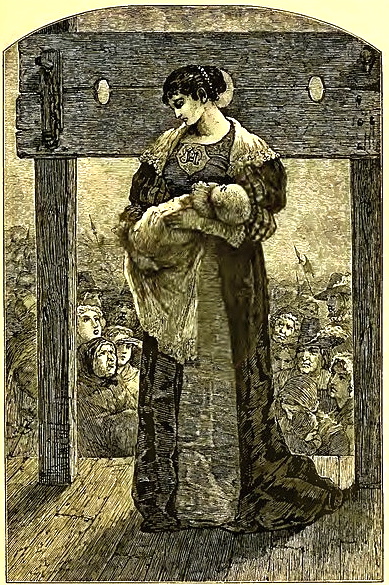
Stigma can also result from behaviors seen to involve choice, like using drugs. For Erving Goffman, individuals’ identities are “spoiled” when stigma is revealed. Society proceeds to discredit the stigmatized – by calling them deviants or abnormal, for example. Branded with stigma, people may suffer social death – nonexistence in the eyes of society – if not physical death in gas chambers or serial killings.
In the late 1990s I wondered why a migrant group that often appeared in media reports and was well-known to me personally was absent from scholarly migration literature. I came to understand that migrant women who sell sex were disqualified as subjects of migration, in some perhaps unconscious process on the part of scholars and journal editors. Was the stigma attached to selling sex so serious that it was better not to mention these migrants at all? Or did people think that the selling of sex must transport anything written about it to another realm, such as feminism? When I submitted an article to a migration journal addressing this disqualification, The Disappearing of a Migration Category: Women Who Sell Sex, two and a half years passed before its publication, probably because the editor could locate no peer reviewers willing to deal with my ideas.
Of the many books on prostitution I read back then, most dismissed the possibility that women who sell sex can be rational, ordinary, pragmatic and autonomous. The excuses followed a pattern: The women didn’t understand what they were doing because they were uneducated. They suffered from false consciousness, the failure to recognize their own oppression. They were addicted to drugs that fogged their brains. They had been seduced by pimps. They were manipulated by families. They were psychologically damaged, so their judgements were faulty. If they were migrants they belonged to unenlightened cultures that gave them no choices. They were coerced and/or forced by bad people to travel, so they weren’t real migrants, and their experiences didn’t count. Because they were brainwashed by their exploiters, nothing they said could be relied on. This series of disqualifications led to large lacunae in social-scientific literature and mainstream media, showing the power of a stigma that has its very own name – whore stigma. Given these women’s spoiled identities, others feel called to speak for them.
Rescue Industry, legal regimes and stigma
The person in a helping profession or campaign is said to embody the good in humanity – benevolence, compassion, selflessness. But helpers assume positive identities far removed from those spoiled by stigma, and benefits accrue to them: prestige and influence for all and employment and security for many. Many believe that helpers always know how to help, even when they have no personal experience of the culture or political economy they intervene in. What I noted was how, despite the large number of people dedicated to saving prostitutes, the situation for women who sell sex never improves. The Construction of Benevolent Identities by Helping Women Who Sell Sex was the key that unlocked my understanding of the Rescue Industry.
Abolitionists talk continuously about prostitution as violence against women, set up projects to rescue sex workers and ignore the dysfunctionality of much that is conceived as “rehabilitation”. Contemporary abolitionism focuses largely on the rescue of women said to be victims of trafficking, targeting the mobile and migrant women I mentioned earlier, who are now completely disappeared in a narrative of female victimhood. Although much of this goes on under a feminist banner, colonialist maternalism describes it better.
In classic abolitionism, whore stigma is considered a consequence of patriarchy, a system in which men subjugate women and divide them into the good, who are marriageable, and the bad, who are promiscuous or sell sex. If prostitution were abolished, whore stigma would disappear, it is claimed. But contemporary movements against slut-shaming, victim-blaming and rape culture clearly show how whore stigma is applied to women who do not sell sex at all, so the claim is feeble. Instead, abolitionism’s aversion to prostitution probably strengthens the stigma, despite the prostitute’s demotion to the status of victim rather than the transgressor she once was.
Under prohibitionism, those involved in commercial sex are criminalized, which directly reproduces stigma. In this regime, the woman who sells sex is a deliberate outlaw, which oddly at least grants her some agency.
For advocates of the decriminalization of all commercial-sex activities, the disappearance of whore stigma would occur through recognizing and normalizing the selling of sex as labor. We don’t yet know how long it may take for stigma to die out in places where some forms of sex work are decriminalized and regulated: New Zealand, Australia, Germany, Holland. Given the stigma’s potency in all cultures one would expect it to diminish unevenly and slowly but steadily, as happened and continues to happen with the stigma of homosexuality around the world.
Prostitution law and national moralities
I explained my skepticism about prostitution law at length in an academic article, Sex and the Limits of Enlightenment: The Irrationality of Legal Regimes to Control Prostitution. All prostitution laws are conceived as methods to control women who, before ideas of victimhood took hold, were understood to be powerful, dangerous figures associated with rebellion, revolt, carnival, the world upside down, spiritual power and calculated wrongdoing. Conversations about prostitution law, no matter where they take place, argue about how to manage the women: Is it better to permit them to work out of doors or limit them to closed spaces? How many lap-dancing venues should get licenses and where should they be located? In brothels, how often should women be examined for sexually transmitted infections? The rhetoric of helping and saving that surrounds laws accedes with state efforts to control and punish; the first stop for women picked up in raids on brothels or rescues of trafficking victims is a police station. Prostitution law generalizes from worst-case scenarios, which leads directly to police abuse against the majority of cases, which are not so dire.
In theory, under prohibitionism prostitutes are arrested, fined, jailed. Under abolitionism, which permits the selling of sex, a farrago of laws, by-laws and regulations give police a myriad of pretexts for harrying sex workers. Regulationism, which wants to assuage social conflict by legalizing some sex-work forms, constructs non-regulated forms as illegal (and rarely grants labor rights to workers). But eccentricities abound everywhere, making a mockery of these theoretical laws. Even Japan’s wide-open, permissive sex industry prohibits “prostitution” defined as coital sex. And in recent years a hybrid law has arisen that makes paying for sex illegal while selling is permitted. Yes, it’s illogical. But the contradiction is not pointless; it is there because the goal of the law is to make prostitution disappear by debilitating the market through absurd ignorance of how sex businesses work
Discussion of prostitution law occurs in national contexts where rhetoric often harks back to essentialist notions of morality, as though in this highly-travelled, hybrid-culture world it were still possible to talk about authentic national character, or as though “founding father” values must define a country for all time. One intervenor at the recent Canadian Supreme Court hearing on prostitution law argued that decriminalization would defy founding values of “the Canadian community”: “that women required protection from immoral sexual activity generally and prostitution specifically” and “strong moral disapproval of prostitution itself, with a view to promoting gender equality”. The national focus clashes with anti-trafficking campaigns that not only claim to use international law but sponsor imperialist interventions by western NGOs into other countries, notably in Asia, with the United States assuming a familiar meddling role vis-à-vis Rest-of-World.
Gender Equality, State Feminism and intolerance
Gender Equality is now routinely accepted as a worthy principle, but the term is so broad and abstract that a host of varying, contradictory and even authoritarian ideas hide behind it. Gender Equality as a social goal derives from a bourgeois feminist tradition of values about what to strive for and how to behave, particularly regarding sex and family. In this tradition, loving committed couples living with their children in nuclear families are society’s ideal citizens, who should also go into debt to buy houses and get university educations, undertake lifetime “careers” and submit to elected governments. Although many of these values coincide with long-standing governmental measures to control women’s sexuality and reproduction, to question them is viewed with hostility. The assumption is that national governmental status quos would be acceptable if women only had equal power within them.
Gender Equality began to be measured by the UN in 1995 on the basis of indicators in three areas: reproductive health, empowerment and the labor market. Arguments are endless about all the concepts involved, many seeing them as favouring a western concept of “human development” that is tied to income. (How to define equality is also a vexed question.) Until a couple of years ago, the index was based on maternal mortality ratio and adolescent fertility rate (for health), share of parliamentary seats held by sex plus secondary/higher education attainment (for empowerment) and women’s participation in the work force (for labor). On these indicators, which focus on a narrow range of life experiences, northern European countries score highest, which leads the world to look there for progressive ideas about Gender Equality.
These countries manifest some degree of State Feminism: the existence of government posts with a remit to promote Gender Equality. I do not know if it is inevitable, but it is certainly universal that policy promoted from such posts ends up being intolerant of diverse feminisms. State Feminists simplify complex issues through pronouncements represented as the final and correct feminist way to understand whatever matter is at hand. Although those appointed to such posts must demonstrate experience and education, they must also be known to influential social networks. Unsurprisingly, many appointed to such posts come from generations for whom feminism meant the belief that all women everywhere share an essential identity and worldview. Sometimes this manifests as extremist, fundamentalist or authoritarian feminism. Sweden is an example.
Sweden and prostitution
Jämställdhet, Photo Malinka Persson
The population of only nine and a half million is scattered over a large area, and even the biggest city is small. In Sweden’s history, social inequality (class differences) was early targeted for obliteration; nowadays most people look and act middle-class. The mainstream is very wide, while social margins are narrow, most everyone being employed and/or supported by various government programmes. Although the Swedish utopia of Folkhemmet – the People’s Home – was never achieved, it survives as a powerful symbol and dream of consensus and peace. Most people believe the Swedish state is neutral if not actually benevolent, even if they recognize its imperfections.
After the demise of most class distinctions, inequality based on gender was targeted (racial/ethnic differences were a minor issue until recent migration increases). Prostitution became a topic of research and government publications from the 1970s onwards. By the 1990s, eradicating prostitution came to be seen as a necessary condition for the achievement of male-female equality and feasible in a small homogeneous society. The solution envisioned was to prohibit the purchase of sex, conceptualized as a male crime, while allowing the sale of sex (because women, as victims, must not be penalized). The main vehicle was not to consist of arrests and incarcerations but a simple message: In Sweden we don’t want prostitution. If you are involved in buying or selling sex, abandon this harmful behavior and come join us in an equitable society.
Since the idea that prostitution is harmful has infused political life for decades, to refuse to accept such an invitation can appear misguided and perverse. To end prostitution is not seen as a fiat of feminist dictators but, like the goal to end rape, an obvious necessity. To many, prostitution also seems incomprehensibly unnecessary in a state where poverty is so little known.
These are the everyday attitudes that social workers coming into contact with Eva-Maree probably shared. We do not know the details of the custody battle she had been locked in for several years with her ex-partner. We do not know how competent either was as a parent. She recounted that social workers told her she did not understand she was harming herself by selling sex. There are no written guidelines decreeing that prostitutes may not have custody of their children, but all parents undergo evaluations, and the whore stigma could not fail to affect their judgements. For the social workers, Eva-Maree’s identity was spoiled; she was discredited as a mother on psycho-social grounds. She had persisted in trying to gain mother’s rights and made headway with the authorities, but her ex-partner was enraged that an escort could gain any rights at all and did all he could to impede her. The drawn-out custody process broke down on the day she died, since standard procedures do not allow disputing parents to meet during supervised visits with children.
In a 2010 report evaluating the law criminalizing sex-purchase, stigma is mentioned in reference to feedback they received from some sex workers:
The people who are exploited in prostitution report that criminalization has reinforced the stigma of selling sex. They explain that they have chosen to prostitute themselves and feel they are not being involuntarily exposed to anything. Although it is not illegal to sell sex they perceive themselves to be hunted by the police. They perceive themselves to be disempowered in that their actions are tolerated but their will and choice are not respected.
The report concludes that these negative effects “must be viewed as positive from the perspective that the purpose of the law is indeed to combat prostitution”. To those haunted by the death of Eva-Maree, the words sound cruel, but they were written for a document attempting to evaluate the law’s effects. Evaluators had been unable to produce reliable evidence of any kind of effect; an increase in stigma was at least a consequence.
Has this stigma discouraged some women from selling sex who might have wanted to and some men from buying? Maybe, but it is a result no evaluation could demonstrate. The report, in its original Swedish 295 pages, is instead composed of historical background, repetitious descriptions of the project and administrative detail. Claims made later that trafficking has diminished under the law are also impossible to prove, since there are no pre-law baseline statistics to compare to.
The lesson is not that Sweden’s law caused a murder or that any other law would have prevented it. Whore stigma exists everywhere under all prostitution laws. But Sweden’s law can be said to have given whore stigma a new rationality for social workers and judges, the stamp of government approval for age-old prejudice. The ex-partner’s fury at her becoming an escort may derive in part from his Ugandan background, but Sweden did not encourage him to view Eva-Maree more respectfully.
Some say her murder is simply another clear act of male violence and entitlement by a man who wanted her to be disqualified from seeing their children. According to that view, the law is deemed progressive because it combats male hegemony and promotes Gender Equality. This is what most infuriates advocates of sex workers’ rights: that the “Swedish model” is held up as virtuous solution to all of the old problems of prostitution, in the absence of any evidence. But for those who embrace anti-prostitution ideology, the presence or absence of evidence is unimportant.
When media are king
Media handling of these incidents reproduces stigma with variation according to local conditions. The mainstream Swedish press did not mention that Eva-Maree was an escort, because to do so would have seemed to blame her and blacken her name. In the case of a series of murders in Ipswich, England, the media’s relentless talk of prostitutes led the victims’ parents to request they use the term sex workers. A number of dead women on Long Island, NY, were discussed as almost “interchangeable – lost souls who were gone, in a sense, long before they actually disappeared” (Robert Kolker, New York Times, 29 June 2013). A woman murdered recently near Melbourne, Australia, was called “St Kilda prostitute” rather than “sex worker” or even, simply, “woman”, in a place where the concept of sex work is actually on its bumpy way to normalization. I’m talking here about the mainstream, whose online articles are reproduced over and over, hammering in the clichés.
Editors who append photos to articles on the sex industry use archetypes: women leaning into car windows, sitting on bar stools, standing amidst traffic – legs, stockings and high heels highlighted. Editors do this not because they are too lazy to find other pictures but to show, before you read a word, what the articles are really about: women whose uniform is the outward sign of an inner stain. Similarly, when writers and editors use the clichéd language of a “secret world”, “dark underbelly”, “stolen childhoods”, “seedy streets” and “forbidden fruit”, they are not simply being sensationalist but pointing to the stigma: Here’s what this news is really about – the disgusting and dangerous but also eternal and thrilling world of whores.
Cutting the Gordian Knot
Not long ago I was invited to speak at the Dublin Anarchist Bookfair on the topic of sex work as work. The announcement on Facebook provoked violent ranting: to have me was anti-feminist, against socialism and a betrayal of anarchism. I wrote Talking about sex work without isms to explain why I would not discuss feminist arguments in the short Dublin talk. I’m not personally interested in utopias and after 20 years in the field really only want to discuss how to improve things practically in the here and now. No prostitution law can comprehend the proliferation of businesses in today’s sex industry or account for the many degrees of volition and satisfaction among workers. Sexual relations cannot be “fixed” through Gender-Equality policy. If I were Alexander standing over the knot I would slice it thus: All conversations from this moment will begin from the premise that we will not all agree. We will look for a variety of solutions to suit the variety of beliefs, and we will not compete over which ideological position is best. Most important, we will assume that what all women say is what they mean.
Who cares about the law against buying sex? City, a free newspaper like Metro, ran a page recently on sex laws in Sweden.
17 steps to a softer vision of sex A lot has happened on the sex front in the past 100 years. Follow City’s timeline to see how the vision of sex has changed.
The choice of landmarks to put on this timeline is interesting; obviously not all legal events concerning sex in Sweden in the past 100 years were included. Those chosen reflect familiar forms of liberalisation most people are now comfortable with: contraception, abortion, homosexuality, discrimination, partnerships.
The law criminalising the purchase of sex, sexköpslagen, is absent, as are other laws that contradict the headline that says everything’s become ‘softer’ (more permissive/less strict; soft and softer aren’t Swedish words). One friend said editors would omit the sex-buying law as insignificant to 90% of the readers – just one of those odd laws ordinary people don’t understand and have no opinion about. City is an unpretentious, popular paper commuters pick up outside train stations.
If you only look at news sources that consider themselves to be Important, keeping the record of what national government figures say and do, you get a different impression – that laws like sexköpslagen are symbols of Swedish policy on equality. Some people think this hegemonic news is more important. Some think it’s significant that only one MP actively opposes the law, but my guess is the others just want to avoid trouble from aggressive state feminists. Then there’s the fact that most people just don’t know there are normal sex workers in their lives, because everyone keeps quiet about it. That’s what stigma accomplishes, and it’s the opposite of normalisation.
Anti-prostitutionists exaggerate effects of the law constantly, and claim that a single survey on ‘attitudes’ about it proves its popularity amongst Swedes (Kuosmanen 2010). But the author himself cautioned against believing his results, given that ‘of the 2500 questionnaires that were distributed, 1134 were returned, providing a response rate of 45.4% and a missing rate of 54.6% from the entire sample.’ It turns out a large proportion of males receiving the survey failed to respond, meaning, Kuosmanen warned, ‘the results should be interpreted with a degree of caution, particularly as regards questions that concern experiences of the purchase and sale of sex, where there is, in addition, a degree of internally missing data.’
I doubt most people who received the survey knew much or had ever thought about the law. What does it matter, then, how they answered the questions? I don’t understand the significance of an attitude survey, as though the population were a marketing focus group asked to indicate whether a new flavour of yogurt has a future amongst consumers.
It would be interesting to see a parallel timeline of ‘harder’ or less permissive visions of sex during the same period: laws widening the definition of rape and women’s sexual vulnerability (which sexköpslagen is grounded in). The presence of both tendencies at the same time shows how society tries to ‘progress’ vis-a-vis sex, deciding which forms of sexual liberation and control to promote, which kinds of sex are good and bad. Politicians make hay of this stuff, while everyone else gets on with doing what they want, mostly – as discussed the other day under the rubric Prohibition.
A few weeks ago a flurry of Swedish media articles purported to ‘reveal’ that the national development agency, Sida, gives money (3,611,092 euros) to Mama Cash, a Dutch foundation that, among many women’s causes, supports sex workers’ rights and has funded Rose Alliance, a sex-worker group in Sweden. This wasn’t even new news, but some anti-prostitution folks tried to whip up indignation and manufacture a scandal.
The first story appeared on a news site hosted by Sida itself on 4 December. The same day, another article repeated the news, with a headline saying the money goes to lobbyists for commercial sex. Still on the same day one of Sweden’s delegates to the European Parliament, and a member of the abolitionist European Women’s Lobby, demanded excitedly that Sida stop giving the money (she’s holding up the Say No to Prostitution sign in her photo). The next day saw replies from RFSU (Sweden’s big sex-education organisation) and Louise Persson, defending the financing of groups supporting vulnerable women/prostitutes/sex workers. Then there was another piece from the parliamentarian, followed by another on the Sida site. Neither Mama Cash nor Sida made any reply.
At Rose Alliance we decided to write a short statement acknowledging the flurry and, instead of defending or counter-attacking, presenting the basic facts about the organisation on a news site called Newsmill. It got delayed in the pre-Christmas rush and was published 23 December as Vi sexarbetare kan föra vår egen talan. Here is the English version, just as dry and unexcited as the original Swedish.
Sex Workers Can Speak for Ourselves
Annelie Eriksson, Pye Jakobsson and Laura Agustín
Rose Alliance was recently in the news when it was reported at OmVärlden that Sida gives money to a foundation that has given us two grants. Rose Alliance (Riksorganisationen för sex- och erotikarbetare i Sverige) is an organisation for current and former sex workers in Sweden. We began in 2001 but started expanding about three years ago.
The most important things to know about Rose Alliance are:
We promote economic, labour and individual rights for people of any gender identity who sell sex.
We recognise that sex workers have a wide variety of experiences and value all of them.
We believe in the theory and practice of harm reduction.
We assist and advise each other on legal and self-employment issues and dealing with social and police authorities, on a voluntary basis.
We received our first core funding in 2011, from Mama Cash, to strengthen our internal organisation. We now have funding for two more years, which we will use to
Publish printed resources for both internal and external use
Some Rose Alliance members blog and publish articles as individuals: Greta Svammel, Petite Jasmine, the Naked Anthropologist are examples. Some members receive invitations to visit, speak and consult both inside and outside Sweden. Host organisations reimburse the usual expenses for this travel.
Political lobbying is not our main focus. But for the record, we advocate self-determination and rights for sex workers – the right to sell sex as well as the right to stop selling sex. The law criminalising the purchase of sex aims to deprive sex workers of the right to run their own lives, so we oppose it.
Annelie Eriksson, Pye Jakobsson och Laura Agustín för Rose Alliance
23 Dec 2012, Newsmill
Rose Alliance var nyligen uppmärksammade i media när det rapporterades på OmVärlden att Sida ger pengar till en stiftelse som har gett oss två verksamhetsbidrag. Riksorganisationen för sex- och erotikarbetare i Sverige (Rose Alliance) är en intresseorganisation för nuvarande och före detta sexarbetare i Sverige. Vi startade 2001 men började växa som organisation för ungefär tre år sedan.
De viktigaste att veta om Rose Alliance är:
Vi arbetar för att främja ekonomiska, arbetsrättsliga och individuella rättigheter för alla sexarbetare, oavsett könsidentitet.
Vi inser att sexarbetare har en stor variation av erfarenheter och värderar alla lika mycket.
Vi tror på skadereduktion, både i teori och praktik.
Vi stödjer och rådgör med varandra i juridiska frågor, frågor kring egenföretagande och hur man hanterar kontakt med sociala- och polisiära myndigheter. Allt på en volontär basis.
Förra veckan deltog vi i World Conference of ILGA (International Lesbian, Gay, Bisexual, Trans and Intersex Association) i Stockholm, och vi har haft en egen lastbil i Stockholms prideparad under de senaste två åren.
Vi fick vårt första verksamhetsbidrag 2011, från Mama Cash, för att stärka vår interna organisation. Vi har sedan juli 2012 verksamhetsbidrag för ytterligare två år, som kommer att användas till att:
Göra vår hemsida till en bättre resurs för våra medlemmar
Organisera utbildande workshops för våra medlemmar
Publicera tryckt material för internt och externt bruk
Vissa Rose Alliance medlemmar bloggar och publicerar artiklar som individer:Greta Svammel, Petite Jasmine, the Naked Anthropologist är några exempel. Vissa medlemmar blir inbjudna att besöka, föreläsa och konsultera såväl inom som utanför Sverige. Värdorganisationerna ersätter då kostnader i samband med dessa resor.
Politisk lobbyverksamhet är inte vårt främsta fokus. Men för tydlighetens skull: vi förespråkar självbestämmande och rättigheter för sexarbetare – rätten att sälja sex såväl som rätten att sluta sälja sex. Sexköpslagen bidrar till beröva sexarbetare rätten att styra över sina egna liv, därför är vi emot den.
Nordic model is a new tag on this website, and it doesn’t refer to leggy blondes. People contact me ever oftener asking for what I’ve written on prostitution laws in the Nordic countries, so I have now tagged everything I could find. This is a sub-set of the Sweden tag, which includes other sorts of issues related to gender equality. Norway’s law is even more stringent than Sweden’s. Iceland is the third country that has passed the law, but many others are considering it.
What you will not find are quantitative, definitive, bottom-line debunkings of abolitionist and anti-prostitutionist claims. Those don’t exist, they cannot exist, and anyone who says they can is spinning a line. There’s widespread disagreement about how to define trafficking and who is a victim of it, so when you see numbers you should immediately be skeptical. Sometimes ideology is at the bottom of large figures for victims. Other times the issue is that different countries and organisations use non-comparable categories for counting people. Where sex businesses operate in the informal sector there are no formal lists of employees. Where sex workers are supposed to register with the state (as prostitutes) many do not. Undocumented migrants are not eligible to register anywhere as workers and are not counted at the border. Everyone estimates all these numbers; the words research and evidence are tossed about wantonly. The most egregious example I know of ideologically based, subjective, sloppy counting is Siddharth Kara’s. There are other grotesque examples I describe as Garbage In, Garbage Out.
When someone asks for ‘the most reliable statistics on the effect of the Swedish Model of prostitution criminalisation’, they are assuming those exist somewhere. To understand why they do not exist, look at critiques of the government evaluation of its law. They were unable to evaluate it, they didn’t know how, I wouldn’t know how either, so no conclusions can be drawn from the evaluation. There are only claims. Go to the nordic-model tag and find things like
Moral entrepreneurs go on pretending large numbers prove their points. People say the Nordic model – laws that prohibit the purchase of sex and punish purchasers – is effective in reducing prostitution and trafficking. As for reducing prostitution, the only thing that possibly has been reduced is the number of people selling in the street, but those were tiny numbers to begin with and already shrinking. The Swedish evaluators anyway used famously wrong Danish numbers for street prostitution to make their claim and never issued a correction after being informed of their error. On any other kind of commercial sex, they had no numbers at all because they did not know how to do that research (and they admitted it).
As for claims about trafficking, you cannot know you have ‘reduced’ something for which you had no baseline numbers in the first place. All you have are police officials’ impressions and claims. The ‘effect’ of the law is unmeasurable.
I’ve begun tweeting, by the way, and realise I am starting to reach people who don’t know why anti-trafficking campaigns are so conflicted and unsuccessful. Do come join me (@LauraAgustin) in the challenge to make incredibly complex subjects lucid in under 140 characters.
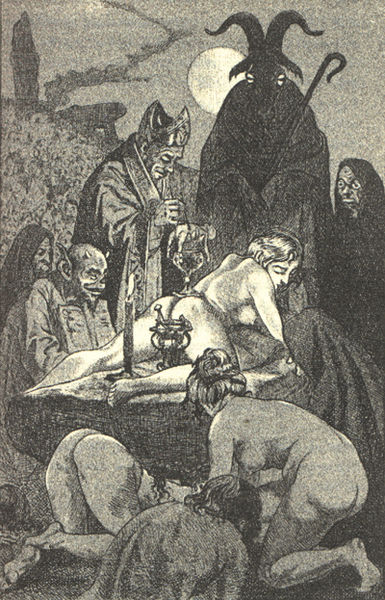
Feminist Satanism. No, that’s not right. Satanic Feminists. To be fair, no, it should be Feminists Who Believe Men are Pedophilic Satanists (or Satanist Pedophiles). No matter how you look at it, these words don’t immediately make sense together. This is the Rescue Industry with a vengeance – and Extremist Feminism indeed.*
Gunilla Ekberg has not appeared in public in Sweden in quite a while, I believe, but she has been giving anti-prostitution talks in Canada in support of a campaign to defeat Judge Himel’s decision to decriminalise many aspects of sex work in Ontario (Ekberg is apparently a citizen of Canada now). Admirers in Canada are billing her as a famous international lawyer, but she was publicly criticised in Sweden for calling herself a lawyer – does anyone know about Canada? Her notoriety derives from her unyielding attitude as a campaigner, so authoritarian even some Swedes with similar ideas stopped wanting to be associated with her.
In 2005 she worked for Sweden’s Ministry of Industry as an expert on prostitution and was closely allied with ROKS, an organisation that runs shelters for women in trouble. At the time, ROKS’s management claimed Swedish patriarchy could usefully be compared to Afghanistan’s and advocated separatism: women living apart from men. As if this were not enough, ROKS management came to believe that pedophilic satanism was a real threat to girls and women in Sweden. Phew.
Other European countries have suffered mad bouts of belief in satanic cults in history, and the US is famous for its Satanic Panic all through the 1980s, but the oddity with Sweden is how such extremism can dwell so very close to mainstream government: get funding, have prestige, function as if ordinary and unremarkable.
The story of Ekberg’s embarrassing moment and public disgrace occurred in 2005, when journalist Evin Rubar (a woman) was making a programme about ROKS for Swedish Television, Könskriget (Sex War – link to first part), in which the story of the satanic pedophiles is told, including the testimony of a young woman supposedly saved by ROKS who complains about her treatment by the rescuers. You will see in the clip below that Rubar, assuming Ekberg to have been closely involved, asks questions Ekberg refuses to answer. Leaving the room, Ekberg, assuming the microphone is off, threatens Rubar: Don’t count on any help from the shelters. The whole Sex War programme is two hours long; this is the clip in which Ekberg threatens Rubar:
Ekberg did not lose her job over this, but she did eventually leave it. The affair generated much criticism of her behaviour and that of the ROKS people, who come across as maniacs (at least one writer calling their thought patterns feminist fundamentalism, with which I concur, here on the blog and in Sex at the Margins). Numerous Swedish bloggers followed the disgraceful affair, reported here in the newspaper Aftonbladet. The ROKS manager was replaced.
Today, 25 June 2012, numerous people wrote to me to say, about another blogger’s post: Didn’t you write about this already? The answer is yes, in May 2011. Oh blogs, so easy to ‘absorb’. Sometimes the absorber says ‘but I only used the links you gave!’ Not good enough, say I, as defence against parasitism.
I will be giving an hour-long lecture in Stockholm on 26 January 2012, covering general ideas about migration and who ‘migrants’ are thought to be, both documented and undocumented, as well as ideas about health and prevention, including for migrant sex workers. The sponsors are Smittskyddsinstitutet (Swedish Institute for Communicable Disease Control), a government agency to monitor the epidemiological situation for communicable diseases in humans and promote protection against them.
It is interesting and progressive that this agency should have me speak at their event: Nuancing of the notion of migrants is taking place. Note that State Feminism is not in charge here.
I have only just heard that pre-registration for this event closes tomorrow, so I supply details quickly now. I would love for some supporters to come to this Stockholm event, and, if you do, please come and introduce yourselves.
Smittskyddsinstitutet (SMI) och Europeiska flyktingfonden (ERF) i samverkan välkomnar dig som arbetar med frågor inom området hälsa, prevention och migration till en heldagskonferens om migration och prevention. Konferensen vill utifrån ett hälsoperspektiv belysa hälsa och prevention i samband med migrationsprocessen och mottagandet av asylsökande och andra som av skilda skäl söker sig till Sverige.
Forskare från Malmö högskola redovisar nya kunskapssammanställningar på området migration, sexuell hälsa och prevention. Dessutom presenterar SMI med samarbetspartner ett nytt projekt som syftar till förbättrad struktur och samordning kring hälsoundersökningar av asylsökande.
26 januari 2012
Norra Latin, Stockholm
kl. 09.00 – 16.30 (registrering och kaffe från kl. 08.30)
Moderator: Willy Silberstein
Konferensen vänder sig till hälso- och sjukvårdspersonal, tjänstemän, politiker, forskare och ideella organisationer inom området hälsa, prevention och migration.
Konferensen är gratis. SMI bjuder på lunch och kaffe. Antalet platser är begränsat till 200.
OBS! Förlängds anmälningstid: Sista anmälningsdag 10 januari 2012.
Program
09.00 – 09.15 Robert Jonzon, Smi, hälsar välkommen Moderator Willy Silberstein presenterar konferensprogram.
09.15 – 09.45 Inledning av GD J. Carlson, Smi, och tf GD C. Werner, Migrationsverket.
09.45 – 10.15 Migration och sexuell hälsa – Presentation av en kunskapsöversikt från Malmö högskola, Monica Ideström, enhetschef vid Smi.
10.15 – 10.30 Bensträckare.
10.30 – 11.00 Migration och prevention – Presentation av en kunskapsöversikt, Fil.mag. Christina Halling, Malmö högskola.
11.00 – 11.45 Frågor och diskussion under moderators ledning.
11.45 – 13.00 Lunch. 13.00 – 14.00 Migration – Sex at the Margins (föredrag på engelska) – The Naked Anthropologist, Dr Laura Agustín.
14.00 – 14.30 Förbättrad struktur och samordning kring hälsoundersökningar av asylsökande – Presentation av EU-projekt, projektledare Robert Jonzon, Smi.
14.30 – 15.00 Kaffe.
15.00 – 15.20 Förutsättningarna att ge andra än asylsökande m.fl. erbjudande om hälsoundersökning – Presentation av Socialdepartementets utredning, utredningssekreterare Anna Billing.
15.20 – 15.50 Presentation av EU-projektets partners och medarbetare, Robert Jonzon m.fl. Utöver Smittskyddsinstitutet deltar följande partners i projektet: Migrationsverket, Socialstyrelsen, Sveriges Kommuner och Landsting, Stockholm läns landsting, Norrbottens läns landsting, Landstinget i Östergötland och Region Skåne samt Uppsala och Umeå universitet.
15.50 – 16.30 Avslutande diskussion under ledning av moderator
Här livesänds den nationella konferensen om prostitution och människohandel för sexuella ändamål, som pågått på Citykonferensen i Stockholm, den 14 december 2011, 15.15 – 16.30.
Frivilligt ell er ej? Paneldebatt
Jenny Westerstrand, forskare vid Juridiska institutionen, Uppsala universitet
Claes Borgström, advokat och f.d. Jämo
Lisen Lindström, samtalsbehandlare vid Prostitutionsenheten i Stockholm
Lise Tamm, Vice chefsåklagare, Internationella åklagarkammaren Stockholm
Hanna Wagenius, förbundsordförande Centerpartiets ungdomsförbund
Jonas Jonsson, handläggare hiv och hälsa samt utbildare, RFSL
Petra Östergren, forskare och författare
OCH en Rose Alliance medlem pratate två gånger från publiken.
Det behövs lite talamod i början men då blir debatten ganska intressant.
Note to visitors to Sweden who want to see, examine, document, research or otherwise report on the effects of the law to criminalise buying sex: Cancel your trips, there is nothing to see.
How can you see ‘less’ sex trafficking’, ‘less’ sex work?How does one interpret emptiness? What does the absence of people on this bus mean? Does no one ride buses anymore? Is this one out of service? Is it on display in a museum? Has the route been cancelled? Who knows the answer?
I receive messages continually from people planning trips to Sweden: journalists, filmmakers, researchers, students, fellowship-applicants. They have all had the same idea to visit a country where a law prohibiting the purchase of sex is claimed to have reduced its sale and reduced sex trafficking. If these visitors write to me, I suppose they have read what I (and others) have written on the failure of the government evaluation to prove anything about the law and the difficulty that any such evaluation faces. Yet people assume they will somehow be able to observe the effects of the law. The whole idea of effects is questionable, but in the case of prohibitionist laws even more so. The most obvious first effect of prohibition is to discourage people from being seen doing whatever has been prohibited. Some people might really stop (or might never start) doing whatever has been made illegal, and some people might find different ways to do it that will be harder to discover. A typical visit is proposed like this Irish one:
Mr Shatter said representatives from the Department of Justice and the Garda travelled to the Swedish capital, Stockholm, recently to observe the impact of legislation introduced there in 1999 to criminalise the purchase of sexual services.
Presentations in Sweden included discussions with the Swedish Department of Justice and evaluators of the Swedish legislation (Supreme Court Judge Anna Skarhed, Mrs Gunilla Berglund from the Ministry of Justice, the National Rapporteur on Trafficking Ms Kasja Wahlberg, and the Co-ordinator of Stockholm Prostitution Unit Mr Patrick Cederlof). There were also presentations from ROKS (a Swedish NGO which provides refuge for battered women), Jenny Westerstrand (Researcher on Prostitution regimes) and Ulrika Rosvall Levin, (The Swedish Institute). [some typos corrected by me]
I don’t understand myself why they spend money and time interviewing government spokespeople, politicians, the heads of government-funded projects and moral entrepreneurs all of whom only re-state what they have said before but not proven: that the law has reduced prostitution and sex trafficking. Those statements are widely available on the Internet, including in television clips and videos. All of the above interviewees receive government money to do their jobs and all are known to fiercely favour the criminalisation of buying sex and wish for the disappearance of all forms of selling it. They give meaning to the term stakeholder.
Many visitors also interview police officials, who are only permitted to confirm government policy and mostly just point to a drop in the number of sex workers in the street (since they have no idea how to measure all other forms of commercial sex). The police also engage in speculation that shows they are doing their jobs well, since there is so little sex trafficking to see. This absence is also tricky to interpret, since there was never any baseline evidence on trafficking before the law so they have nothing to compare to now when they do (or do not) find any.
But, you say, some of the visitors want to talk to you or ask you to introduce them to real live sex workers who could balance what they hear from the government. About talking to me, ok I will sound different, but I can’t demonstrate that government claims are wrong – the same problem of researching an absence holds. (Another snag is that visitors begin by assuming that anyone they want to talk to lives in the capital, when Sweden’s a big country [for Europe] and all relevant and interesting folks do not live in Stockholm.) About my introducing visitors to sex workers: I consider it unethical. If I did introduce anyone, though, what would the personal testimony of one or two individuals mean? Little.
Nonetheless, I don’t believe I have deterred anyone determined to come see what the prohibition looks like. All I can do is ask folks to consider what they think they will be able to see. Take this view of a single person sitting in a bar – how many reasons can you think of to explain why he is alone?
På lyxiga semesterorter i Dominikanska republiken solar turister nära stränder där småbåtar frekvent ger sig ut mot Puerto Rico. Mona-kanalens förrädiska strömmar vimlar av hajar och många av båtarna kapsejsar. Men nästan alla dominikaner känner ändå någon som har lyckats klara resan. De som har tagit sig över gränsen måste sedan passera genom Puerto Ricos västra träskmarker, där den amerikanska gränspolisen väntar. De som tar sig förbi dem kan stanna på ön eller fortsätta till Miami, New York eller Europa. Presumtiva migranter försöker hitta erfaret sjöfolk med båtar starka nog att klara stormar och som inte överlastar båtarna med alltför många passagerare.
I boken The Suffering of the Immigrantbeskriver sociologen Abdelmalek Sayad hur länder som tar emot migranter uppfattar migration som ett irriterande socialt problem som måste ”hanteras”. Sayad ser de överväldigande hinder som nordafrikaner möter i Frankrike som en tydlig strukturell konsekvens av kolonisering, utan att för den skull offerförklara migranterna. I stället argumenterar han kraftfullt för att erkänna dem som handlande subjekt. Förmågan att se och erkänna den sortens agentskap – att även missgynnade migranter är huvudpersoner i sina egna liv – har sin grund i en förståelse för hur migrationer börjar.
När jag bodde i Dominikanska republiken, var ett av mina uppdrag att besöka samhällen där utflyttning var väletablerat. Jag mötte kvinnor som ville resa till Europa, där de två valmöjligheter som fanns att tillgå var att arbeta som inneboende hembiträde eller att sälja sex. De vägde riskerna och fördelarna mot varandra och diskuterade huruvida de skulle klara anpassningen. De flesta av dem hade inte någon längre formell utbildning, men de var varken naiva eller ointelligenta. Om de stannade hemma var deras bästa alternativ fortfarande hemhjälp eller att sälja sex, men till långt lägre löner och utan de nya horisonter en resa kan erbjuda.
Potentiella migranter drömmer också om att få se kända platser, träffa nya människor, bli självständiga, lära sig ett nytt yrke, få nya idéer – precis som människor i rika länder gör. Att resa är utvecklande för alla resenärer – inte bara för rika turister, och för många människor är dessa resor deras största chans att ta reda på mer om världen.
När jag reste runt på ön och in i Haiti, hörde jag dussintals människor prata om hur de skulle komma i väg. Européer tar för givet att deras resevisum beviljas av vilket land de än vill besöka. Medborgare i länder som Dominikanska republiken vet att deras ansökningar om turistvisa aldrig kommer att beviljas. Liksom när det gäller att få ett arbete och arbetstillstånd utomlands, utgör de statliga riktlinjerna en begränsning – arbetstillstånden omfattar bara ”kvalificerade” jobb, vilket gör att många migranter väljer att resa utanför det formella regelverket och tar ”okvalificerade” jobb i den svarta ekonomin.
För att få tillgång till de här arbetena kan resenärerna behöva nytt namn och pass, en falsk vigselring, flygbiljetter, pengar att visa upp för gränspoliser och råd om vad man ska säga till dem, någon som möter upp vid flygplatsen och någonstans att bo när de kommer fram. Jag träffade många människor som erbjuder de här tjänsterna till potentiella migranter, inklusive deras egna familjemedlemmar, gamla vänner, bekantskaper bland turister och frilansande entreprenörer. Eftersom den här resemarknaden inte är reglerad, finns det inget bra sätt att veta vem som gör ett bra jobb och vem som behandlar migranterna korrekt, förutom via ryktesvägen: berättelser från kunder som smugglats ut säkert.
Jag pratade med Lucía, en strippdansös som hade väntat på det rätta tillfället att ge sig av i flera månader. Hon ville åka till Paris, men hade inte hittat rätt erbjudande ännu. Miriam, med två års universitetsstudier och erfarenheter av arbete som tandläkarassistent, funderade på ifall statussänkningen att bli hembiträde skulle vägas upp av de pengar hon kunde tjäna i Italien, där hennes syster bodde. Båda kvinnorna visste vilka priser och villkor de önskade och besökte platser där smugglare samlas regelbundet för att höra vad som erbjöds.
En del såg mig som en möjlighet. En kypare började prata med mig efter att ha serverat kaffe, Continue reading →
Publications by and about Laura Agustín Books The Three-Headed Dog, 2017. I published it, readable on all devices. Sex at the Margins: Migration, Labour Markets and...
There are people who believe that all the values expressed and rhetoric declaimed in places like the building to the left – the Swedish parliament in Stockholm – represent the reality of the country itself. There are Swedish government spokespeople who claim there are no voluntary sex workers, and no clients, and no sex venues or prostitution or trafficking in all of Sweden. But do you really believe that a law banning the purchase of sex could achieve all of that? It is just highly improbable, as it is when other governments claim there is no homosexuality here (sometimes said about Somalia, Zimbabwe, Uganda) or the veil has no place in our country (said by some about France, Belgium). Of course there are gay people and women wearing headscarves in those places – but it is convenient for mainstream politicians to pretend otherwise.
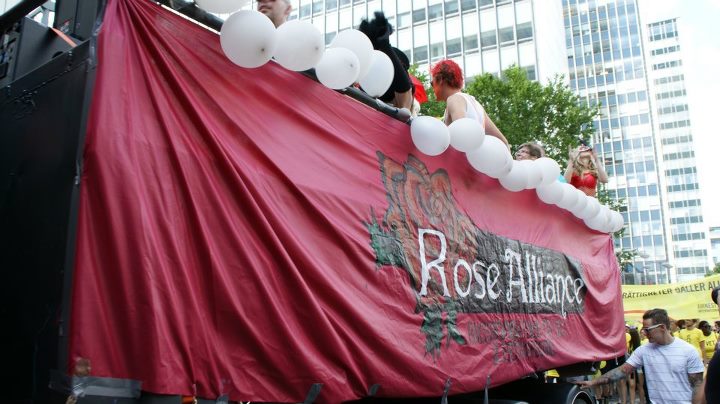
Sweden is one of the big-time gay-rights-friendly spots in the world: RFSL (Riksförbundet för homosexuellas, bisexuellas och transpersoners rättigheter – Swedish Federation for Lesbian, Gay, Bisexual and Transgender Rights) dates back to 1950 and receives government funding. So it is significant that RFSL supported and encouraged Sweden’s sex worker organisation Rose Alliance to participate in Stockholm’s Pride Parade this year. The argument is: Just as other sexual identities and orientations are marginalised and deprived of rights, so are sex workers. Obvious: sexual autonomy, the right to do what you want with your own body. Money is not a defining element.
The following video clips from JubBacon show the Rose Alliance float. You can read about this in Swedish from sex worker Greta Garbo and on Makthavare. PS: No one was attacked, threatened or shamed. Some of those along the route were surprised into silence, others cheered.
I suppose in a dictatorship it might be possible to write a law aimed at punishing traffickers where no meaningful evidence was required. Then arrests and convictions could shoot up and prisons be full of men who might or might not have had bad intentions or done anything wrong. But despite the unpleasant rhetoric and complete lack of interest in evidence evinced by some of Sweden’s Gender-Equality Warriors, the Swedish legal system operates as (in)effectively as those in other contemporary democratic-style states. This was made obvious in police comments on the difficulty of convicting men for buying sex and now here on the subject of convicting traffickers.
The story below attempts to explain why there have been so few convictions of traffickers, but the impossibility of getting the law’s wording right is obvious. Legal language is often tortuous, but this quality is exaggerated when it attempts to pin down ultimately indefinable states of mind: Note, in the key paragraph (in green below) the use of coercion, deception, abuse, vulnerable. defencelessness, dependent, improper means, controls, exploit. The meaning of each of these key words changes completely according to context and moment and easily mean different things to migrant (or victim), smuggler (or perpetrator) and rescuer.
The story comes from Ireland, where some legislators who want to penalise the buying of sex sent a delegation to Sweden – which absolutely everybody does, it’s the in thing, but all they usually do is talk to government representatives in Stockholm, who tell them what the visitors could have read online without taking an expensive junket. Note that this entire analysis makes no mention of migration at all, which continues to be the fundamental issue despite protestations that it is not because now we are talking about slavery.
When one looks at the numbers of successful prosecutions for human trafficking in Sweden over the last five years, one could easily be forgiven for thinking there had been little return for its major investment in combating the crime. Between 2003 and 2008, there were just 10 people convicted specifically of human trafficking out of 133 cases brought. However, the low return is not reflective of the true impact the prosecutions have had. The ambiguous wording of the trafficking law in Sweden up to July 2010 made it exceptionally difficult to get convictions. But the authorities had good reason for not being in a particular rush to correct that ambiguity. The sentences for aggravated pimping — the crime just below human trafficking carried the same maximum sentence of 10 years as the more serious misdemeanour.
“A lot of cases end up as serious pimping instead of human trafficking, because it was easier for the prosecutors and court to have a sentence for it,” said Detective Inspector Jonas Trolle of the Swedish surveillance unit who is an expert in investigating human trafficking. “I think it was sad, because our legislation on trafficking in human beings is a very good legislation and has a lot of possibilities to get convictions, but it was too complicated for the prosecutors and courts. Therefore, prosecutors would not push strongly for the highest sentence possible for aggravated pimping.”
When that category is taken into account, the successful prosecutions shoot up. The number of reported crimes rise to 601 and the convictions rise to 127. Nonetheless, it simply was not good enough not to have clear and detailed legislation. The problem was that a successful prosecution for human trafficking required the prosecutors to prove the defendant had taken control of the victim.
“We had two trafficking paragraphs before, which did not work,” said Kajsa Wahlberg. “The second paragraph had so many tiny little things which had to be correct. For instance, it said that the trafficker must use improper means in order to recruit or transport the person but it also said the trafficker must have control. Improper means is very much related to control also. It was mixed up. It also said the trafficker must have the intention at recruitment that he is going to exploit the person.”
She cited, as an example, an instance where a Swedish man trafficked a girl from Slovakia to the southern part of Sweden. “He claimed she was his girlfriend, they had lived there and they decided to move to Sweden,” she said. “He said he proposed for her to go into prostitution and that he recruited buyers for her but that he had no intention to traffic her to Sweden when he took her from Slovakia. He said it was an idea that came up when they got here.
“So many of these types of people got loose because we could not prove intention to traffic. It was also viewed that the second paragraph did not protect children as it should. Because of the confusion, 16-17 year olds were not being regarded as trafficking… The court required directly that the trafficker must have used improper means. The paragraph did not require that.”
In the forward to the new clause which came into the Swedish human trafficking law on July 1, 2010, the authors wrote: “The requisite that describes the improper means should be given in somewhat clearer and more readily-understood meaning than they have at present.” Therefore, the relevant paragraphs were rewritten to state: “Anyone who makes use of unlawful coercion or deception, abuses someone’s vulnerable situation, abuses someone’s youth or defencelessness or abuses someone’s dependent status has used such a means that may result in liability for trafficking in human beings. “The current list of kinds of acts of trafficking covered shall be supplemented by the possibility of a person, who by some improper means controls another in order to exploit her, in him being penalised for trafficking in human beings.”
It is too early to say whether the new language will make it easier to achieve the full human trafficking convictions authorities crave. As far as Jonas Trolle is concerned, there may still be issues. “I am worried about the situation now,” he said. “They have removed the control part, but I am not sure it is easy to have sentences for human trafficking.” He has reason to be worried. Police estimate that between 400 and 600 women are trafficked to Sweden every year and of those 200 to 300 are destined for Stockholm.
Furthermore, there is concern that even the new version of the law does require the accumulation of a large swathe of evidence before a conviction can be sought. Kajsa Wahlberg admits that that often means victims might be moved on before the police can move in and arrest the trafficker.
“After surveillance for a certain period of time, you might assume there are 30 women being exploited, but you don’t go in and identify them all, because you will reveal your investigation,” she said, “We are not always sure what is going on; if all of these women are being exploited or if they have another role in the apartment. When we strike, there might only be three left because some of them are being transported back and forth and we are not always clear of each and everyone’s role. We can interrogate the three, but we don’t know about the other 27.”
They will keep trying to get this right, though, we can be sure of that.
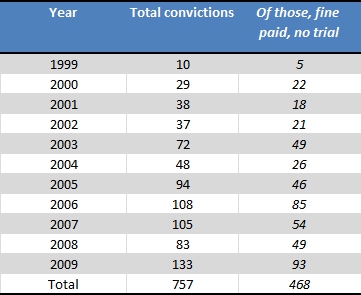
Back in March people in Canada contacted me to ask about Gunilla Ekberg’s claim, in talks given there, that there have been 3500 men found guilty under the Swedish law against buying sex (sexköpslagen) since it was passed in 1999. Why would Ekberg make a mistake about something that can be verified on the website of the Swedish National Council for Crime Prevention (BRÅ)? The total is 757 over eleven years.
Until recently, the maximum penalty for those convicted of buying sex was six months in jail or a rather small fine. No one was ever jailed, as far as I can tell; jail-time is not mandated when penalties are minor. Therefore, the nearly unanimous vote in the Swedish parliament last month was about making it possible for a convicted person to go to jail, as a year-penalty pushes the crime upwards in importance. Perhaps one could say, then, that this apparently fierce vote was more about making the original 1999 law more coherent: if you seriously believe something is a crime, then you don’t want it to be never punished. If you see what I mean.
Numbers of convictions for buying sex in Sweden by year, 1999-2009
Source: BRÅ
Is this a large or small number of convictions? How many men were detained by the police but the case dropped? That information isn’t available. Activists and scholars tend to focus on the law’s rhetoric and presumptions, but it is never easy to put such a law into practice. Consider the document BRÅ published in 1999 on the subject of these difficulties from a policing point of view:
Evidential difficulties are the most common reason for the discontinuation of police investigations into suspected offences of this type. The most difficult thing to prove has been that the parties have entered into an agreement that sexual services will be provided in exchange for payment. It is an offence without a complainant and even though the prostitutes are obliged to give evidence, this obligation is limited since they are not obliged to reveal that they have themselves participated in an act of prostitution. Even if the prostitutes might consider giving evidence about the incident, it has been deemed difficult to reach them to obtain their co-operation in investigations since they often have no fixed address or telephone number.
So although the Swedish parliament recently raised the maximum penalty from six months’ incarceration to a year, the difficulty of getting convictions remains.
Nouvelles également signalées aujourd’hui dans Ekstra Bladet: peut-être un réveil de la presse est il en cours?
Déclaration à la presse danoise des travailleurs du sexe de l’organisme d’intérêt SIO (Sexarbejdernes InteresseOrganisation) en réponse à l’évaluation de la Suède de leur loi contre l’achat de services sexuels. Paru le 3 juillet 2010.
Le rapport de la Suède repose sur des mauvais chiffres pour le Danemark: Maintenant Reden doit dire la vérité.
C’est sur la base de chiffres erronés que le rapport suédois conclut qu’il y a eu une forte augmentation du nombre de travailleurs du sexe dans les rues au Danemark. Les mauvais chiffres proviennent de Reden à Copenhague, qui doit maintenant se manifester et corriger leurs fausses informations, dont ils ont rendu compte sur un certain nombre d’années au public.
Dans les statistiques officielles, le nombre de visiteurs à Reden a été rendu égal au nombre de travailleurs du sexe travaillant dans la rue. Mais Reden a erronément reporté le nombre de visiteurs qu’ils ont, en vue de créer une image du Danemark comme “Le bordel des pays nordiques – à côté du paradis suédois.’’ La désinformation de Reden est documentée dans un certain nombre de réponses au Parlement de l’ex-ministre des Affaires sociales Ellemann Karen, et c’est en arrière-plan, la raison pour laquelle il a été demandé à SFI (un institut de recherche sociale national) de recommencer avec un tout nouveau comptage.
Reden a affirmé qu’il y avait plus de 1200 travailleurs du sexe dans les rues de Copenhague. Les estimations de la police et de Reden International indiquent que le nombre est limité à environ 200. A Århus ou Odense (villes de 2e et 3e importance au Danemark), il y a eu une baisse continue du nombre de travailleurs du sexe dans les rues au cours des dernières décennies et c’est même très probablement le cas à Copenhague (où Reden fait ses rapports).
Ainsi, les Suédois ne peuvent pas conclure que leur loi a eu pour effet de limiter le nombre de travailleurs du sexe.
Reden à Copenhague refuse toujours d’informer le nombre de visiteurs qu’ils ont vraiment. SIO exige que l’organisation dise la vérité. Reden reçoit chaque année des millions de financement du gouvernement et c’est un scandale qu’ils utilisent leur statut pour diffuser une propagande mensongère.
Pour des faits au sujet de la désinformation de la part Reden à Copenhague, voir les réponses du ministre des Affaires sociales Ellemann Karen ici.
Reden a trompé de 3 manières différentes:
1) Le nombre de visiteurs sont accumulés sur un certain nombre d’années au lieu de les comptabiliser uniquement pour un an à la fois.
2) Un minimum de 400 visiteurs sont enregistrés en double (enregistrés sous plusieurs noms d’utilisateurs différents).
3) Reden revendique que tous les visiteurs sont des travailleurs du sexe, même si beaucoup d’entre eux ne le sont pas.
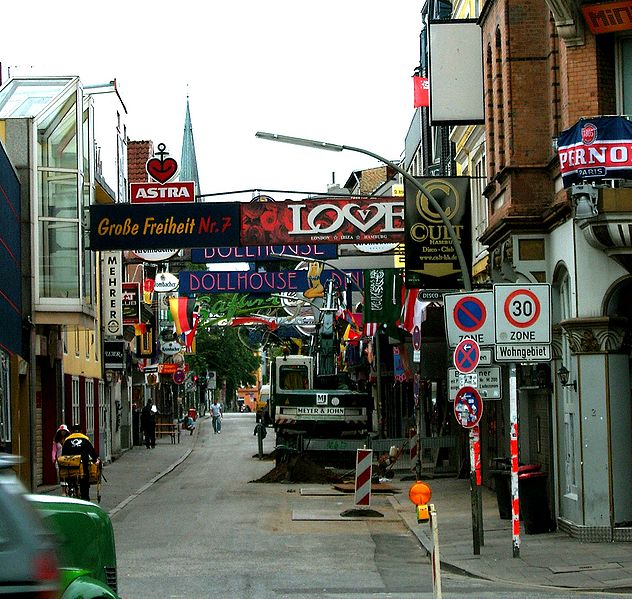
On the subject of sex, Denmark has traditionally positioned itself as less like its Nordic neighbours and more like Germany. Hamburg is not far away, which perhaps explains why the organisers of an abolitionist, anti-prostitution event in Copenhagen would name it Grosse Freiheit, a street off the Reeperbahn in St Pauli, Hamburg’s red-light district. After an embarrassingly late jump onto the Rescue Industry bandwagon, CNN recently accused Denmark of being the Brothel of Scandinavia (reported here in puppet-fashion with the usual dumb photo).
Grosse Freiheit, Hamburg
Or do the event organisers want to imply the event is about the great freedom prostituted women will enjoy once they are saved from slavery? Whatever they mean, Grosse Freiheit?, scheduled for the weekend of 7/8 May in Copenhagen, promises to club attendees into submission with back-to-back speakers who agree that prostitution should be abolished and clients of sex workers should be jailed. I don’t use the word conference for this sort of thing because no actual analysis, not to mention differences of opinion, occur: Revival meeting, campaign event, movement marketing are more descriptive (readers of Sex at the Margins may recall that I attended a 3-day version of such an event in Madrid a decade ago – sleep-inducing but very illuminating).
Two non-Nordic prostitution-haters, Janice Raymond and Julie Bindel, are on the agenda. Raymond hates transsexuals and transgender people, too – I imagine a lot of this event will be about hating, now apparently a central facet of Extremist Feminism (which I briefly discussed in Something Dark). Hate is how local Danish protesters refer to the appearance of Raymond and Bindel (more from modkraft here.) Swedish state feminists will also speak, but note that Danes would be very annoyed by the implication that they are being over-influenced by Sweden.
The event is part of a wider campaign which saw Danish feminists marching on International Women’s Day through an area of Copenhagen associated with street prostitution and drug markets, where they made a loud protest against even the idea of sex work. The egregious Anne-Grethe Bajrup Riis, who recently screeched at a sex worker on national television (and was deliciously satirised afterwards) led the march. A so-called Danish Modelis promoted by the organisers. Only real insiders will detect any difference here with other Nordic regimes – who wants to try?
Danish men opposed to sex-buying are part of the campaign. At the SIO event I spoke at in Copenhagen on 31 March, a couple of young male politicians intervened, making uninformed, purely ideological allegations and completely ignoring anything said back to them. Nothing quite so boobyish as Ashton Kutcher’s video mishaps about Real Men Not Buying Sex have been undertaken so far, but who knows what the future holds? I am told that the proposition to criminalise the buying of sex will probably be made – again, by certain leftists – but is unlikely to pass, given political coalitions in parliament. But the campaign to bring in such a law perhaps explains why just another anti-trafficking and anti-prostitution event has such a big profile.
Note how some leftist politicians wish to distance themselves from transphobia whilst simultaneously associating themselves with the abolition of prostitution . I have no sympathy for them. The Danish sex worker rights organisation SIO is of course opposed to the whole event. And no, although I sometimes live only a half hour from this event, I won’t be attending.
Jag har en artikel i aprils Arena. Upplagans tema: Invandraren är tillbaka. Vilka är vi och dom? och min artikel heter Migranten som resenär. Troligen är det första gången en sån behandling av migration och sex publiceras på svenska (jag skrev inte den titel, som är lite lam).
For those who thought it was impossible, an article of mine in the magazine Arena, whose April theme is migration. My article is called The Migrant as traveller and is about migration, gender, sex, tourism, neocolonialism and trafficking. The title is weak, and I didn’t choose it, but my opinions were not modified for or by the publication.The cover shown at the right shows someone being stamped them, as in us and them.
Publications by and about Laura Agustín Books The Three-Headed Dog, 2017. I published it, readable on all devices. Sex at the Margins: Migration, Labour Markets and...
At an event at the British Academy in London the other day I used the term Extremist Feminism to describe the sort that convicted a man for buying sex in Sweden although evidence was lacking to show he had bought it, on the ground that he should have known that someone must have paid. The court assumed the female playmates in a hotel room to be prostitutes because of their appearance and their foreign-accented English. Dismal stereotyping of women going on there – not so different from the comment about disreputable women made with impunity by a hotel magnate in Luxor. Extremist also describes feminists who evaluated the sex-buying law without doing any actual investigation but declared it a success on purely ideological principles. And who then proceeded to propose increased penalties for clients convicted. Extremism means assuming men have bad intentions towards women and seeing their sexualities, and in fact their bodies themselves, as inherently exploitative. Others have used extremist to refer to man-haters like Valerie Solanas, author of SCUM Manifesto, and people throw around ruder terms like feminazi. But I prefer not to sound like someone trying to discredit all sorts of feminism.
I usually use the term fundamentalist feminism, referring to a stream of feminism that wants to go back ‘to the roots’, by which they mean early 1960s universalist feminism, the idea that Woman can be known through a biologically female body and Women are all ultimately alike. Authoritarian Feminism is another possible term, this time putting emphasis on the tendency of fundamentalists to decree that their view is the only correct one and must be followed by everyone. Theory calling itself radical feminism in the 1960s has moved in a direction Orwell might have called Big Sister Feminism, where no disagreement is brooked. This particular feminism happens to hold power in Swedish government bureaucracy. It is State Feminism (coming from government employees empowered to set policy on women and gender), but there is no reason why State Feminism should have to be extremist; this is just how history has played out in Sweden. This view of women and men exists in every country I have lived in, and that is quite a few. And my, how many extremist feminists wish it would play out the same way in their countries! Here is the review of the BA event from Something Dark, in which government attempts to censor and silence were discussed in detail.
A UK academic organisation, the Onscenity* research network, hosted a seminar at the British Academy, London, on 1 February to draw attention to increasing state regulation of sex in relation to media, labour and the internet.
Julian Petley, professor of screen media and journalism at London’s Brunel University, chaired the seminar, and introduced it with his own presentation, “Censoring the image”. Petley is a veteran advocate of free speech, and he once again demonstrated his detailed grasp of a broad range of censorship and free speech issues in the United Kingdom.
Petley began his delivery with the sobering declaration that there were many UK laws limiting freedom of speech; he then tabled an overview of these laws, their history and their socio–legal impact today. He drew particular attention to the evolution and problems of the Obscene Publications Act (OPA), various child protection laws, and the Criminal Justice and Immigration Act (CJIA) 2008.
He pointed to how the typology of child sexual abuse imagery adopted by the UK legal system regarding the mildest category, “level 1” – which refers to “images depicting erotic posing with no sexual activity” – had led to “controversy”, for example, by allowing for “police bullying” of galleries exhibiting the work of artists such as Robert Mapplethorpe [see the feature articles concerning Mapplethorpe from page 28 in SomethingDark webmagazine issue 1, beginning with “Twenty years later: Mapplethorpe, art and politics”; see also our Latest News entry of 9 July 2010, “Further viewing – the art of Robert Mapplethorpe”].
Regarding the CJIA 2008, specifically the sections criminalising simple possession of “extreme pornographic material”, Petley repeated the oft-quoted charge of critical specialists by stating the law was so vague and subjective that it is impossible for anyone to know whether a great body of material will be regarded as illegal or not. He summarised the approach of regulators as one that tends to “collapse” the offensive into the harmful, “as if being offended is the same as being harmed”.
The first speaker, Martin Barker, professor of film and television studies at Aberystwyth University, in his presentation “The problems of speaking about porn”, outlined the difficulties faced by individuals, including academic researchers, in dealing with themes of sex and pornography due to the stigma often attached to critics of heavy-handed regulation by the advocates of such regulation.
Barker referred to “the politics of disgust” and summarised the results of a survey he had conducted on print media coverage of issues concerning pornography. He said tabloid press coverage of “pornography” had increased since 2000 but had fluctuated within this trend, and consisted of two attitudes: (a) a “prurient fascination”; and, (b) an exaggerated morality that proclaimed certain categories of sexually oriented material as kinky and unacceptable.
Revealingly, Barker spent more time on broadsheet coverage, particularly on a steady increase in their use of the term “porn” as a metaphor with a range of negative connotations. He maintained the evidence suggested that the individual and subjective, emotional response of disgust automatically authorises commentators to adopt a simplified, morally superior position when dealing with complex issues such as pornography, and that “the politics of disgust” was driving public discourse and regulation.
Yaman Akdeniz, formerly at the University of Leeds but now an associate professor of law at Istanbul Bilgi University, outlined his work in legal campaigns to reduce the growing censorship of the internet by the Turkish state. He emphasised his concern at the potential for a “domino effect” that would see developing countries seize upon internet- and website-blocking policies, either already implemented or proposed, in developed Western countries such as the United Kingdom, the European Union and Australia as justification for furthering their own, already relatively severe, censorship of the internet.
Turning his attention to the case being made for restricting internet access in the Western world, Akdeniz stressed the increasing prominence of arguments claiming that child protection demanded more robust, state-enforced internet regulation and censorship that targets all forms of sexual content, not just child abuse material. He cited an article in the Guardian newspaper from December to illustrate the pro-censorship argument being furthered in the United Kingdom, in this case as advocated by the UK parliamentary under-secretary of state for culture, communications and creative industries, Ed Vaizey.
Laura Agustín, a consultant anthropologist and author of Sex at the Margins: Migration, Labour Markets and the Rescue Industry (2007), focussed on attempts to regulate sexuality and society based on exaggerated claims regarding the extent of human trafficking in the international sex industry. She had recently counselled lawyers for Julian Assange of Wikileaks notoriety, who sought her advice on Swedish rape law in preparing their client’s defence against extradition to Sweden. Agustín, who has lived and worked in Sweden, criticised “state feminism” in the Scandinavian country, describing it as “extremism” that “has gone too far”. She went on to discuss Sweden’s “sex purchase law”, which criminalises those who pay for sexual services – a law that, using unsound and concocted, ideologically driven research, was last July evaluated by the Swedish government as having significantly reduced prostitution and prevented trafficking. It is a law that has been marketed with some success to other countries, including the United Kingdom.
Agustín narrated her experience as a panelist at the BBC World Debate Can Human Trafficking Be Stopped?, held in Luxor, Egypt, on 12 December 2010, which she likened to a “religious revivalism” meeting for “the rescue industry”. This industry, she maintained, bases much of its fervour on enthusiastically publicised – but bogus – statistics on the numbers of trafficked women. She emphasised the fact that sound and genuine research on the subject does not exist, but this does not deter the rescue industry from what is, in effect, a misguided and unrealistic attempt to eradicate prostitution globally, with damaging social consequences at ground level in individual countries [see Laura Agustín’s blog entry, “BBC World Debate on Trafficking Online: Sex, lies and videotaping”].
Clarissa Smith, senior lecturer in media and cultural studies at the University of Sunderland, rounded off the seminar with a summary of the issues and the work that lies ahead in contributing towards the realisation of a more mature society.
Onscenity is a research network dedicated to developing new approaches to the relationships between sex, commerce, media and technology. It draws on the work of leading scholars from around the world and is working to map a transformed landscape of sexual practices and to coordinate a new wave of research in relevant fields. The body was founded in 2009 with funding from the UK Arts & Humanities Research Council (AHRC). “Sex and Regulation” was Onscenity’s second seminar.
Louise Persson and I have twice complained loudly in the Swedish media about the complete absence of scientific principle and method in the government’s evaluation of its law criminalising clients of sex workers. Anna Skarhed never replied, nor did anyone else who might be expected to want to defend the report published in July. Now it turns out that in December Skarhed admitted quite openly to a reporter from the Swedish National Council for Crime Prevention that she never cared about science or methodology the slightest bit.
Some have objected to the scientific validity of our investigation. Which is fine, but in my view we have been able to show that the law has had a effect in accordance to the objective: to show that we don’t want prostitution in society.
[En del har haft invändningar mot vetenskapligheten i vår utredning. Det kan man ha, men enligt min syn har vi kunnat visa att lagen haft effekt utifrån syftet: att visa att vi inte vill ha prostitution i samhället.]
It is wrong to refer to effect when you have done no research to find out if one even exists, but Skarhed’s meaning is clear: The goal of the so-called evaluation was never to evaluate anything but instead to demonstrate ideology: a typical End Demand strategy. So it is Orwellian double-speak to claim anything was actually investigated or evaluated. All they did was pretend, and spend public money on it.
This should be front-page news! Although I know that many Swedish people object to this sort of philistine arrogance, it is not so easy to dismantle a policy once it has become embedded in bureaucracy and forms part of a national brand. However, there are indications that more people than usual are annoyed – about which, more later.
Given the considerable confusion about Julian Assange’s sex with a couple of women in Sweden, perhaps what I wrote last year about Swedish rape law can be clarifying.
As regular readers know, I’m trying to figure out how the lovely utopian goal of Gender Equality landed us in a future I never expected, where ‘progressive’ and ‘feminist’ could be associated with policies that position women as innately passive victims. Activists interested in sex-industry legislation usually cite Swedish prostitution law as the fount of all evil, with its criminalisation of the buying of sexual services. This law is a cornerstone of an overall Swedish policy to foment Gender Equality, and so is rape legislation that has led to bizarre statistics commented on in this story published in Sweden’s English-language daily The Local.
Rape is a complicated crime. A research project funded by the European Commission’s Daphne programme reveals that Sweden leads Europe in reports of rape. At 46.5 per 100,000 members of the population, Sweden far surpasses Iceland, which comes next with 36, and England and Wales after that with 26. At the same time, Sweden’s 10 percent conviction rate of rape suspects is one of Europe’s lowest.
The report’s comparative dimension should probably be ignored. Instead of assuming that there are four times as many rapes in Sweden as in neighbouring Denmark or Finland, as the figures suggest, to understand we would have to compare all the definitional and procedural differences between their legal systems. It is significant that Sweden counts every event between the same two people separately where other countries count them as one. Most of Sweden’s rapes involve people who know each other, in domestic settings (Sweden report here).
The countries reporting highest rates of rape are northern European with histories of social programming to end violence against women. In Sweden, Gender Equality is taught in schools and reinforced in public-service announcements. Should we believe that such education has no effect, or, much worse, an opposite effect? Raging anti-feminist men think so, and raging anti-immigrant Swedes blame foreigners. Amnesty International says patriarchal norms are intransigent in Swedish family life. Everyone faults the criminal justice system.
In contemporary Sweden, women and girls are encouraged to speak up assertively about gender bias and demand their rights. Public discussions have revolved around how to achieve equal sex: Gender Equality in the bedroom. We can consult okejsex.nu, an official campaign whose homepage shows pedestrians obliviously passing buildings full of scenes of violence, suggesting it is ubiquitous behind closed doors. Okejsex defines rape as any situation where sex occurs after someone has said no.
In many countries, and in many people’s minds, rape means penetration, usually by a penis, into a mouth, vagina or anus. In Swedish rape law, the word can be used for acts called assault or bodily harm in other countries.
That may be progressive, but it’s also confusing. You don’t have to be sexist or racist to imagine the misunderstandings that may arise. If younger people (or older, for that matter) have been out drinking and dancing and end up in a flat relaxing late at night, we are not surprised that the possibility of sex is raised. The process of getting turned on – and being seduced – is often vague and strange, involving looks and feelings rather than clear intentions. It is easy to go along and actively enjoy this process until some point when it becomes unenjoyable. We resist, but feebly. Sometimes we give in against our true wishes.
Sweden is also proud of its generous policy towards asylum-seekers and other migrants who may not instantly comprehend what Gender Equality means here, or that not explicitly violent or penetrative sex acts are understood as rape. That doesn’t mean that non-Swedes are rapists but that a large area exists where crossed signals are likely, for instance, amongst people out on the town drinking.
Discussions of rape nowadays use examples of women who are asleep, or have taken drugs or drunk too much alcohol, in order to argue that they cannot properly consent to sex. If they feel taken advantage of the next day, they may call what happened rape. The Daphne project’s Sweden researchers propose that those accused of rape ought to have to ‘prove consent’, but attempts to legislate and document seduction and desire are unlikely to succeed.
What isn’t questioned, in most public discussions, is the idea that the problem must be addressed by more laws, ever more explicit and strict. Contemporary society insists that punishment is the way to stop sexual violence, despite evidence suggesting that criminal law has little impact on sexual behaviour.
We want to think that if laws were perfectly written and police, prosecutors and judges were perfectly fair, then rapes would decrease because a) all rapists would go to jail and b) all potential rapists would be deterred from committing crime. Unfortunately, little evidence corroborates this idea. Debates crystallise in black-and-white simplifications that supposedly pit politically correct arguments against the common sense of regular folk. Subtleties and complications are buried under masses of rhetoric, and commentaries turn cynical: ‘Nothing will change’, ‘the police are pigs’, immigrants are terrorists, girls are liars.
Is it realistic or kind to teach that life in Sweden can always be safe, comfortable and impervious to outside influences? That, in the sexual sphere, everything disagreeable should be called rape and abuse? Although the ‘right’ to Gender Equality exists, we cannot expect daily life to change overnight because it does.
En vanlig teknik när man bedriver spionage eller illvilliga kampanjer är att sprida felaktig information. Desinformation. Om mig har det bland annat påståtts att: Hon är betald av sexindustrin. Och: Alla vet att hon är allierad med traffickerarna. Syftet har varit att manipulera känslorna hos en allmänhet som inte har kunskap nog att värdera sådana påståenden. Om Kajsa Ekis Ekman i Varat och varan inte avsiktligt ljugit om mig så är hennes forskningsförmåga sannerligen undermålig. Jag har bott i Malmö i två år och det är lätt att hitta min blogg med kontaktformuläret. Ekman kunde alltså ha kollat sina fakta med mig personligen, men har valt att inte göra det.
Jag är inte, som Ekman hävdar, ”anställd av lobbyorganisationen Network of Sex Work Projects” – vilket hon också kunde ha sett på deras webbsida. Jag är en oberoende forskare, skribent och talare. Jag arbetar som frilansare och är mest känd för boken Sex at the Margins: Migration, Labour Markets and the Rescue Industry (Zed, London). I Varat och varan undviker Ekman att nämna boken som av The New Statsman har kallats ”en av de viktigaste böckerna kring migration som publicerats de senaste åren”. Dessutom är varken denna bok, eller den spanska som jag skrev innan dess, korrekt beskrivna. Ekman kallar dem ”böcker om trafficking som mediemyt”.
Vem som helst som läser förlagets webbsida kan också se att jag i Sex at the Margins inte säger att vi ska ”sluta tala om trafficking”, vilket Ekman påstår, utan snarare att alla migrerande kvinnor som säljer sex inte upplever sig själva som bara offer, samt att när man drastiskt klassar varenda kvinna på det sättet avväpnar migranterna – medan det ökar makten hos människor som Ekman vilka tror att de vet bäst hur alla andra ska leva. Det är inte heller alls så att jag ”döper traffickingoffer till `migrerande sexarbetare´”. Det var Tampep, ett nätverk grundat 1993 av Europeiska kommissionen och som arbetar HIV/STI förebyggande och hälsofrämjande som gjorde det – och alltså långt innan jag dök upp på scenen.
Att plocka ut citat ur sin kontext är en standardtaktik hos skrupelfria korstågskämpar. Mot bakgrund av att jag har publicerat 50-talet artiklar och essäer, förutom en populär blogg, är det uppenbart att Ekman var ute efter att hitta ett ställe som – skiljt från sitt sammanhang – skulle få mig att låta som ett monster. När jag tillfrågades om att skriva för en bok kallad Women and the Politics of Place, där andra författare skrev om kvinnors placering i lokala områden, argumenterade jag för kosmopolitanism som en ”plats” som migranter bebor (därav titeln Challenging ‘Place’
Även om jag skattar mitt oberoende högt är lögner om mig till syvende och sist oviktiga: mitt rykte kommer inte raseras av en ideologs oreranden. Eftersom Leopard förlag säger att de publicerar ”historia, samhällsdebatt och populärvetenskap” måste Ekman tillhöra debattkategorin, för hon är inte någon historiker. Men oavsett kategori så har Leopard förlag utgivarplikt att undersöka påståenden om levande personer och förhindra författare att sprida desinformation eller utföra lågkvalitetsforskning. Skickade inte Leopard förlag ut Ekmans manuskript för översyn?
Däremot är förvrängningar och utelämnanden kring sociala rörelser viktigare att blottlägga. Ekman ger sken av att skriva en komplex rörelses historia, en rörelse som hon föraktar, nämligen den som arbetar för sexarbetares rättigheter. Men etiska, kompetenta historiker – oavsett om de är akademiker, journalister eller populärskribenter – manipulerar inte sitt material genom urval och utelämnanden i avsikt att göra en politisk markering. När jag blir tillsänd uppsatser för granskning eller redigering, och som vimlar av den sorts selektiva presentationer av fakta och polemisk ton som Ekmans bok består av, så returnerar jag dem. Författaren måste tänka om, omstrukturera och skriva om. I ett fall som Ekmans kan jag inte lista alla de felaktigheter, utelämnanden och citeringar som gjorts ur sitt sammanhang – det skulle ta för lång tid. Istället tillhandahåller jag några exempel och förväntar mig att författaren förstår lektionen och gör efterforskningen ordentligt.
För många seriösa aktivister, teoretiker, forskare, socialarbetare, epidemiologer, psykologer, policymakare och feminister världen över, är marginaliserade människors kamp att ha en röst i debatter som rör dem ingenting att håna över som Ekman gör. Sexarbetsrörelsen fokuserar på hälsorättigheter, sexuella rättigheter, arbetsrättigheter, individuella rättigheter eller mänskliga rättigheter, beroende av tid och plats. På ett eurocentriskt sätt fokuserar Ekman på några få länder nära Sverige, men sexarbetsrörelserna har rötter över hela världen: Empower grundades i Bangkok 1985, AMEPU 1986 i Uruguay, New Zealand Collective of Prostitutes 1987, Rede Brasileira de Prostitutas 1987, bland åtskilliga exempel. Många av dessa grupper startade innan Internet gjorde det enkelt att ”nätverka”, annonsera eller sprida information om problem och principer. DMSC, grundat i Kolkata 1995, har nu 65 000 sexarbetsmedlemmar från de mest missgynnade sociala klasserna. AMMAR har varit en del av den nationella arbetarfackföreningen CTA i Argentina sedan 1996.
Sexarbetsrörelsen har inte ett enskilt center eller styrelse. Utifrån lokala kulturer och behov stöps argument för sexarbetares rättigheter olika. Ibland kretsar argumentet kring sexuella rättigheter, som för det sydamerikanska projektet Ciudadanía Sexual. Ibland är mänskliga rättigheter grunden för kraven, som i fallet med aktivisters protester mot polis som tvingar människor in i rehabiliteringsprogram. Ingen av dessa organisationer påstår sig representera sexarbetare som en generell kategori; alla vet att det skulle vara omöjligt i det kriminaliserade, stigmatiserade sammanhang där de flesta människor säljer sex befinner sig. Vad de istället gör är att sammanföra människor med liknande värderingar, intressen och behov. Ibland fysiskt men ofta via nätet.
Notera att en del av dessa aktivister kallar sig själva prostituerade, vilket antyder att Ekman inte förstått att kärnan i denna rörelse inte handlar om att byta ut ord, något som är en av hennes grundteser i Varat och varan.Genom att reducera sexarbetsrörelsen till den enda aspekt som betyder något för henne – ideologi – förvränger Ekman – eller misslyckas med att förstå – kvinnovåldsdebattens historik på FN-nivån. Hon förefaller inte veta att ett officiellt uttalande gjordes om trafficking och prostitution i Wien-deklarationen kring våld mot kvinnor 1993 i avsikt att skilja mellan verkliga offer och människor som inte är fullständigt tvingade. Hon förefaller ovetande om den livliga och stridbara prostitutionsdebatten vid Beijing-konferensen 1995, vilkens slutliga plattform för handling efterlyste bekämpande av påtvingad prostitution och trafficking, inte prostitution i sig självt. Genom att utesluta dessa nyckelhändelser i samtida feministhistoria får Ekman specialrapportören kring våld mot kvinnor – Radhika Coomaraswamys – användande av båda termerna, sexarbetare och tvingad prostitution att låta som en del av en godtycklig och illvillig konspiration.
I Sverige är det kanske möjligt för Ekman att fnysa åt skadereduceringsrörelsen, men kan på intet vis ens förstå vidden av dess betydelse för resten av världen.Tror hon verkligen att skadereduktionsteori och -praktik inte borde användas för att minska förekomsten av HIV bland marginaliserade populationer i Asien? Gräsrotsnätverk för både drogbrukare och sexarbetare har blivit allt mer inflytelserika i forum som International Harm Reduction Association, där man använder sig av principer om sexuellt självbestämmande och kroppslig autonomi. Scarlet Alliance, grundat 1989, är ett nätverk av sexarbetarorganisationer som deltar i Australiens federation av AIDS-organisationer. De använder anslag, vilket inkluderar kamratutbildning, samhällsutveckling och advocacy. Sexarbetare i Ghanaerhåller HIV-förebyggande stöd på grund av att de är en högriskpopulation, liksom män som har sex med män och transsexuella människor.
De ghanesiska sexarbetarna kallar förresten sig själva för en fackförening. Ekman försöker avslöja själva idén om fackföreningar för sexarbetare genom selektiv forskning i Europa. Detta särskilt genom ett trångsynt hat mot Nederländerna som länge associerats med olika slags skadereduktionspolitik. Och trots att Ekman hävdar att hon forskat kring detta i två år så är den mesta av informationen hon presenterar tillgänglig på olika organisationers webbsidor. När hon insinuerar att hela sexarbetsrörelsen har byggts upp av några få holländska aktivister så är det ett tecken på en sann neokolonialistisk sinnesuppsättning: antydandet att människor utanför Europa är inkapabla att organisera sig själva eller att välja de principer de tror på.
Ekman plockar även russin ur kakan av den europeiska historien – om det inte är så att hon helt enkelt misslyckats med att upptäcka den. När hon hånfullt skriver att “agerar inte fackligt någonstans”, avslöjar hon en svensk oförmåga att förstå att i större delen av världen fungerar stödarbete och sociala rörelser som inte får betydande ekonomiskt understöd via nätet. Detta genom e-postdiskussionslistor, skypekonferenssamtal och social nätverksprogramvara. Dessutom ser Ekman bara delar av ICRSE:s webbsida, eftersom hon inte är medlem. Hon förlöjligar också en tidig sexarbetskonferens som hölls i Bryssel 1986, men lyckas ändå utesluta efterföljaren till evenemanget som hölls i. På denna konferens grundades ICRSE och 120 sexarbetare och 80 NGO-allierade från hela Europa deltog.
Jag behöver inte överdriva vad som har och inte har uppnåtts av en rörelse som har så många motståndare. Men det finns inte heller någon ursäkt för Ekman att, på ett ofeministiskt och osolidariskt sätt, håna de ansträngningar som gjorts av aktivister som inte delar hennes manikeistiska världsbild. Varför smutskastar Ekman denna rörelse? Varför hatar hon människor som främjar sin rätt till självbestämmande? Varför attackerar hon människor som försöker reducera spridningen av HIV? Varför verkar hon skadeglad när en sexarbetarförening (Comisiones Obreras i Barcelona) misslyckas med att locka medlemmar?
Genom att fokusera på Europa försöker Ekman få alla sexarbetarorganisationer låta löjliga, men hon förstår inte att traditionella fackföreningar endast är ett sätt att organisera och främja rättigheter. Det kan mycket väl vara så att klassiska fackföreningar inte är den föreningsmodell som passar sexarbetsrörelsen. I vart fall har fackföreningar i alla typer av branscher och länder mattats av och minskat. I fallet med sexbranschen är strävandena dessutom kraftigt försvagade av ett antal faktorer som Ekman inte förstår. Det är svårt för arbetare att förhandla med branscher som opererar i informella ekonomier. När människor som säljer sex är migranter utan arbetstillstånd och juridisk rät att bo någonstans, så förefaller fackföreningar irrelevanta. När stigmat att vara prostituerad är så starkt så vill de flesta inte etikettera sig själva, registrera sig hos staten eller på något annat sätt anta en professionell identitet.
Ekmans felaktiga påståenden om Londons IUSW (en del av det nationella GMB) kunde ha undvikits om hon hade gjort lite mer grundligt forskningsarbete istället för att förlita sig ensidigt på ett gammalt gräl i den brittiska bloggsfären. Hon kunde ha frågat mig, som var en aktiv medlem en gång. Mannen hon anklagar att sköta showen för IUSW gjorde det aldrig, och siffrorna hon tillhandahåller kring medlemskap är sju år gamla. Eftersom GMB tillåter direktörer att ansluta alla sina branscher, är det faktum att en eskortfirmas direktör anslöt sig mindre anmärkningsvärt och lömskt än Ekman vill få läsarna att tro. Hon försöker misskreditera STRASS i Frankrike genom att citera data från en abolitionistgrupp utan att ange datum för dess dokument, vilket ändå inte kan finnas på den webbadress hon tillhandahåller (not 167).
Ekmans skadeglädje är föga tilltalande. I ett nyligen taget domslut i Ontario som slog ner på flera diskriminerande aspekter i den kanadensiska prostitutionslagen, observerade domaren om ”expertvittnet” Melissa Farley (vars forskning Ekman använder i boken):
Dr Farleys val av språk är tidvis infekterat och förringar utifrån sina slutsatser… Dr Farley fastslog under korsförhör att en del av hennes åsikter kring prostitution hade formats före hennes forskning… Av dessa skäl fäster jag mindre vikt vid Dr Farleys bevis.
På samma sätt skulle domare utan tvekan avslå Ekmans bevis också, vilket också många läsare borde göra.
Om författaren: Laura Agustín är fil doktor, just nu gästprofessor i Gender and Migration vid schweiziska universitet, migrationsforskare, författare till Sex at the Margins, bloggare, föreläsare och bofast i Malmö. Hon heter också The Naked Anthropologist.

 The idea of criminalising the purchase of sex continues to be promoted round the world, usually as part of some politician’s campaign against immoral sex and the exploitation of children, with a subtext aimed at keeping women at home and migrants out. Sweden’s law is thrown out as the model, along with claims that prostitution is practically absent and trafficking nearly non-existent there. Neither of these has been proven. To explore this sort of claim, see tags to the right of this post (sweden, nordic model, laws, gender equality, for example.)