web analytics

travel

You are currently browsing articles tagged travel.

Here are excerpts from a BBC story from a couple of years ago that I post now because most people have no idea what ‘smuggling’ and ‘trafficking’ look like where they begin. An entire boat-building industry exists to supply vessels that will make one trip and then be destroyed at their destinations: see BBC photo collection. This story is about undocumented migrants leaving from Gambia and arriving at Spain’s Canary Islands.  

Gambia – new front in migrant trade
Lucy Fleming, 10 October 2006

The cost of the journey is between $880 to $1,250… “The agents tell you that you have a 50/50 chance – the boat may sink or you may get sent back,” says a tourist resort worker in his thirties, who was approached in Serrekunda about making a trip two months ago.

“Senegalese carpenters have been brought in to build the boats, which take about a month or two to build,” a local trader in the area explains. “That will cost more than 100,000 dalassis ($3,539), but the boats can hold between 60 to 120 men,” he says. As well as getting passengers and boats, the agents also purchase supplies: between 10 to 15 barrels of fuel, food for the trip – which takes about one week, water, first-aid packs and medicine for sea sickness.

Many Gambians complain about the near impossibility of obtaining a visa for the European Union; and the allure of being able to earn the equivalent to several months’ wages in one day . . .

Photos © BBC 

Share

Tags: , , ,

More and more people are having border experiences like the one described here in a piece first published on the Greek site Re-public in June 2008. For all the people writing to me about this sort of thing, and all those who were thinking about it, here it is again. Footnote: I’ve been through the queue at Stansted a few times since, this time with a new and better passport-visa combination, but I always feel the same spooky insecurity.

Border Thinking,

Last month, I flew into Stansted Airport, in the southeast of England, where the disembarking traveller is met by an enormous black structure looming high above the large passport-control area. UK BORDER it reads, in giant letters. In fact, at this point one is geographically well inside the country, the coast having been crossed while still in the air. But the message is clear and ominous: you aren’t In until you’ve got past the police.

As usual, waiting in the queue for Others – non-Europeans – is nerve-wracking. As I wait, I worry. Do I still look enough like my passport photo? Do I look like a drug dealer, terrorist, prostitute or
harmless tourist? Are my clothes wrong, is my hair okay? What will they think about how I speak English? Should I smile or rather demonstrate I understand the gravity of the situation? Which official will I get, the younger woman or the older man and which is better? And so on.

Holding my passport, I look down at the little white UK Landing Card and wonder, for the millionth time, why I am asked to tick one of two boxes, Male or Female. Apart from the pain this causes people who don’t definitely identify with one or the other, why do they ask this? Why do they ask for birth date and nationality, when all passports carry this information? I wonder where these cards wind up, in storage or dumped in the rubbish.

When it’s my turn, the official asks me for information she is already reading on my Landing Card, or on my visa. I answer, and then she repeats the questions, in the skeptical tone I have come to know so well. Finally she lets me through, and I have the sensation of having got away with something, even as I know I am not doing anything ‘wrong’. And every time I go through this it gets harder, as though they think that my continuing desire to be here were a crime.

No borders?

It is easy to complain about all this. It is easy to make border policy seem like a clear right-left choice between control and freedom, an oppressive device set up by our fathers, the men in business suits and military uniforms. From the border-keepers’ point of view, classifying and scrutinising travellers before they enter and while they are inside is essential to reducing risk and chaos for their own citizens. The project to make a European ‘union’ tries to celebrate diverse local nationalities, ethnicities and cultures while simultaneously identifying true pan-European values: enlightenment, humanism, rationality, progress. Inevitably this means that cultural systems arriving from outside may be viewed as inferior, backward or suspect – a repellent idea to many.

But to say ‘Let there be no borders’ is like saying let’s do away with traffic regulations, allowing unlicensed drivers to go as fast or slow as they want on streets with no stoplights, lanes or marked exits. Read the rest of this entry »

Share

Tags: , , ,

Recently on a history-of-sexuality list, people complained about blanket statements regarding ‘Africans’, given the enormous diversity of people and cultures across the many countries on that continent. I agreed with the complaints, but at the same time I don’t care much for national orientations, either, as though people labelled Kenyan or South African exhibited a set of defining characteristics that can be pinned down, just because they were born there.

The following story is about one man in one city in one country, but for those of us who work in or study the sex industry anywhere in the world, it’s a familiar story. The headline emphasises the social status of the clients – as though it were big news – but there are other interesting details, which I’ve highlighted in bold.

Behind The Mask – a website magazine on lesbian and gay affairs in Africa

kenyan male sex workers serve ‘politicians and religious leaders’
26 January 2009

Nanjala Majale

MOMBASA – 26 January 2009: Panning out to Mombasa, the second largest city in Kenya, a young good-looking well-groomed man sits on a bamboo chaise lounge. He is a male sex worker, who caters only for male clientele. He has a slightly bored expression on his face, but is willing to talk about his lifestyle and line of work.

“I don’t know why they think there are only a pocketful of homosexuals in this country”, Brian mused before the interview even started, staring absentmindedly at his nails. “Our main market is not the white tourists who come down here. We cater for people in Nairobi, Meru and even Mandera!” He went on to say, in a slightly feminine tone, that last December he spent the entire month, fully paid, in Nairobi. “I had fun!” Brian enthused.

Brian is one of many male sex workers who cater exclusively to male clients. He regularly attends one of four health centres that serve MSM in the coastal town, set up with the help of the International Centre for Reproductive Health (ICHR) an institution that teaches men about safe sex practices and offers occasional counselling. In a study published in the June 2007 edition of AIDS, researchers estimated that at least 739 MSM were selling sex to other men in and around the city of Mombasa, a “sizeable population that urgently needs to be targeted by HIV prevention strategies,” the research said.

24-year-old Brian says he initially got into the business to make money. “Nowadays sometimes I do it just for pleasure, but mostly it’s for the money. I work only five times a week,” he declared. Asked whether he is a homosexual Brian confided “I was raped by a neighbour when I was about eight years old and from that time I started getting sexual urges – more for men than women. I didn’t take any action after the rape, because I was threatened”, he revealed, explaining that he suffered emotionally for a while before coming to terms with it.

“I started actively going with boys when I was in secondary school. I was in a boarding school and I had about 40 boyfriends during my four years of studying there,” he said with a seemingly shy but proud expression. “I didn’t have sex with all of them, but I liked the romance. After college is when I came out and from then I would look for people who want serious relationships.”

Brian revealed that his first few relationships did not work. “Most people just wanted to have sex and then they would often cheat on me. I have never desired to have a sexual relationship with a woman though. Maybe one day I will, just to try.”

“In my business, I charge about KSH 1,200 per shot. But that’s on the lower side for the younger clients. I only give two shots, once at night and once in the morning. I don’t stretch myself.” “I don’t like old guys,” he confided with a low voice, “so with those ones I charge a bit extra, about KSH 2,500 and that is just for the night.” Brian says that despite the stigma that faces homosexuals, more specifically from society, police, and the church, their clientele is made up of people in these very segments.

It was revealed at a June 2007 conference on Peer Education, HIV and AIDS, in Nairobi, that MSM face high levels of stigma and discrimination. Agnes Runyiri of ICHR said at the forum that homosexuality is considered taboo, un-African and anti-Christian.

It [homosexuality] is very common. The only problem is stigma. That is why we are scared to come out. But in a real sense, our clients are politicians, businessmen, religious leaders – I’m very sorry to say – but it’s true,” Brian pointed out. Since every business has its own down sides Brian narrated that “sometimes you get bad customers who pay you less than the agreed amount or disappear with your money.”

“Luckily, I have never had a violent customer although I was in a violent relationship once. He used to beat me up and say that it was because I had become naughty, that is why I had to break it off”, he said shrugging.

He also underlined that safe sex is key in his line of work, and even generally with men who have sex with men. “There is a safe clinic [ICHR] that I work with. I started as a peer educator, but since I have a background in journalism, I now work as a counsellor. We have very many gays, who are messing about and they don’t know that they are. We deal with prevention of HIV/AIDS and it is helping because many of us were dying.”

He says it’s unfortunate that homosexuals are mistreated in most health institutions, an issue which he thinks the government should look into. “I wish that the government would sensitise the whole country to accept that this thing [homosexuality] is there and we have to help these guys out. The more we push it under the table, the more we are going to die.”

“What we need is health rights, not even marriage rights because I don’t think even my family would allow me to do that [be a homosexual]. They need sensitisation. People don’t understand that we are normal human beings, it is just that our sexual preferences are different”, he concluded.

Share

Tags: , , , , ,

This post reproduces a recent paper from one of the big immigration think-tanks. In a clear fashion the authors show how the meaning of ‘illegal’ changes with the times, and each generation’s particular ideas about which migrants should be let in and which kept out.

Yehuda Bauer believes that the term ‘illegal migration’ was first applied by the British in the 1930s to describe undesired Jewish migration to Palestine. Other terms are sometimes used: clandestine migration, undocumented migration, irregular migration and unauthorised migration. All posit a clean, correct, unambiguous opposite which is always ‘legal’.

The context of the following paper is the USA, where most people’s ancestors came from somewhere else. Resistance to new migrants nowadays often claims that past forms of migration were better, more orderly and respectful, more English-learning, more adapting and, therefore, less obnoxious and trouble-causing. This article explains why that’s a romantic view not supported by historical evidence. [Images of Ellis Island and Angel Island, immigrant entry points in New York and San Francisco, added by me.]

De-Romanticizing Our Immigrant Past: Why Claiming “My Family Came Legally” Is Often a Myth

Immigration Policy Center, Washington DC, 25 November 2008

Many people assume that their family immigrated to the U.S. legally, or did it “the right way.” In most cases, this statement does not reflect the fact that the U.S. immigration system was very different when their families arrived, and that their families might not have been allowed to enter had today’s laws been in effect. In some cases, claiming that a family came “legally” is simply inaccurate—undocumented immigration has been a reality for generations. Whether one immigrated “legally” or “illegally” depends on the laws in effect at the time. When many families arrived in the U.S., there were no numerical limitations on immigration, no requirements to have an existing family or employment relationship with someone in the U.S., and no requirement to obtain a visa prior to arriving. As numerical limitations were instituted and certain immigrants were restricted from entering the U.S., illegal immigration increased. The definition of who was “legal” and who was “illegal” changed with the evolution of immigration laws. Many of our ancestors would not have qualified under today’s immigration laws. Today’s requirements that potential immigrants have close family ties to qualified U.S. citizens or permanent residents, or have employment offers in particular fields, would have effectively restricted many of our families from coming legally to the U.S. Until the late 19th century, there was very little federal regulation of immigration—there were virtually no laws to break. The new nation needed workers, and immigration was “encouraged and virtually unfettered.”[1] There was no border surveillance to allow only those with proper documents to enter the U.S. Potential immigrants did not have to obtain visas at U.S. consulates before entering the country. Rather, immigrants would simply arrive at ports of entry (such as Ellis Island and other seaports), be inspected, and be allowed in if they didn’t fall into any of the excluded categories. Before the 20th century, there was virtually no bureaucracy responsible for enforcing immigration laws. Read the rest of this entry »

Share

Tags: , , , , ,

I wrote this as the UK’s Home Secretary launched her legislative proposal to criminalise the purchase of sex from those ‘controlled for another person’s gain’. An earlier attempt to criminalise all purchases of sex, always, was shouted down. This version of the abolitionist urge is totally unworkable, as well as silly and patronising towards men and women in general. Not only foreign, brown Others would be targeted – ordinary white Brits seen as insufficiently independent could be accused of being  ’controlled’ by others. Only in this line of work are people required to work alone and possibly lonely – no workplaces, no managers, no colleagues allowed!

The Guardian – Comment is Free

The Shadowy World of Sex Across Borders

The government’s latest proposals for sex workers do little to tackle the problem of human trafficking

Laura Agustín

19 November 2008

Today the government proposes that paying for sex with those “controlled for another person’s gain” be a criminal offence. High on the list are victims of trafficking, and punters’ defence that they didn’t know women were trafficked is declared inadmissible. But clients may still have an out. How, they will ask, can the police prove that sex workers were trafficked?

The police will have to identify the real trafficked victims in order to identify customers at fault – a notoriously difficult enterprise. In a few high-profile cases, self-identified victims name and help find their exploiters, and sometimes these traffickers are successfully prosecuted. But these cases are few and far between. More often it is difficult to point to migrants who knew nothing about their future jobs, who agreed to nothing about their illicit travels and who are willing to denounce perpetrators who may be family or former friends and lovers.

More than a decade ago, while working in a Caribbean Aids-prevention organisation, I visited a small town famous as a market for informal migration. In one cafe, a waiter offered me anything I asked for in return for helping him reach anywhere in Europe. Later, I met a woman determined to travel to Paris to work. Highly informed about prices, she steered clear of brokers promising to “take care of everything”.

I visited a village where most families spoke proudly of daughters who maintained them by selling sex abroad. And I met many people who arranged papers and transport for travellers, some charging fees and others as a family obligation. Scholars understand these as social networks and community strategies used to get migrations underway. Where few jobs are available at home, local institutions rarely try to prevent such trips. To those involved, this travel may feel irregular but not criminal, given the market for migrant labour abroad.

The rub is that most jobs available are not recognised by national immigration regimes that only value highly educated professionals and formal-sector employment. Work permits are not granted for low-prestige jobs in kitchens, sweatshops, night clubs or agriculture. The strict regulation of labour markets can fairly be said to promote an increase in unauthorised workers. Read the rest of this entry »

Share

Tags: , , , , , , , , , ,

Prostituées d’Europe
Un autre regard sur la prostitution

Mathilde Bouvard

La Maison du Livre
24-28, rue de Rome 1060 Bruxelles

EXPOSITION
du samedi 29 novembre 2008 au mercredi 7 janvier 2009

VERNISSAGE
samedi 29 novembre 2008 à partir de 18h00

« Prostituées d’Europe » est un projet socio-artistique à dimension européenne. Mathilde Bouvard a parcouru l’Europe à la rencontre de travailleur(e)s du sexe. Elle s’est rendu à Paris, Bruxelles, Berlin, Prague, Stockholm, Budapest, Hambourg, Amsterdam, Genève, Londres, Berne et Marseille. De ces rencontres sont restés des témoignages, des photographies, et parfois de simples moments de partage, que l´on ne trouvera sur aucun mur.

De ce photoreportage découle une sélection de 45 photographies en noir et blanc, accompagnées de 3 peintures sur étoffes et de témoignages écrits. Les photographies reflètent un regard différent sur la prostitution, loin des stéréotypes habituels qui évoluent entre le misérabilisme et l’image du « pied de grue ». Car la prostitution, comme le disait Pascale, ancienne du Bois de Boulogne, « c’est loin d’être un bout de trottoir. C’est toute une vie. Un art de vie. » Suivant les traces de feu Grisélidis Réal, les travailleurs du sexe rencontrés ont partagé avec Mathilde Bouvard un petit bout de cette vie. Read the rest of this entry »

Share

Tags: , , , , ,

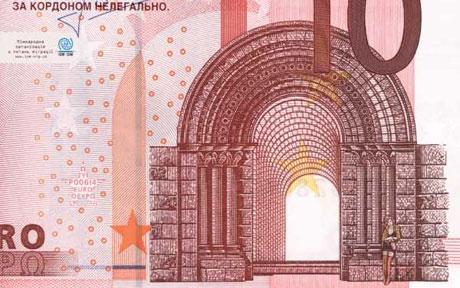
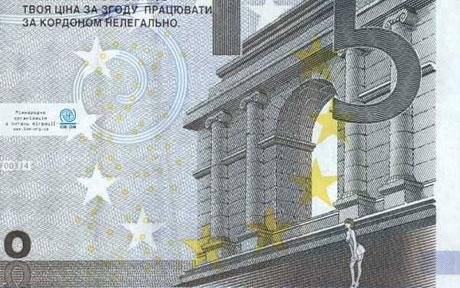
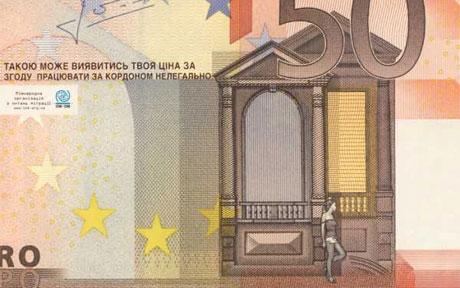
Since I first began thinking about people selling sex as part of their travels or migration projects, I’ve seen numerous strategies for warning them of the dangers. Governmental and charity projects alike have produced television commercials, posters, stickers, postcards. The latest tactic comes from the Ukraine, where almost perfect copies of euro-banknotes have appeared with images of prostitutes leaning on Europe’s monumental architecture.

Warning messages are printed at the top. The idea sounds clever, but is there any reason to think potential migrants will be influenced this way? I think the imagery actually glamourises prostitution, as the slender, feminine figures are positioned alluringly against the very emblems of European culture that attract them in the first place! It’s true the women look small next to the grand arches, but the effect is theatrical and the women become beautiful lone heroines on a classic stage.

Why banknotes? Is the idea that potential travellers will be more likely to pay attention to this warning message because they will be attracted to fake money? Perhaps.  But this only confirms that campaigners and migrants alike agree that money is essential, desirable and powerful.

And what of those who facilitate the unregulated travels, or migrations, of such migrants, will they be influenced by the banknote campaign? Whether you call them travel agents, pimps or traffickers, they also may feel almost flattered by the dramatic images.

This is all guesswork, however. Perhaps anti-trafficking activists ought to employ marketing experts to study which messages might get through to candidates for migration – or women who get into selling sex. Maybe there is some strategy that could overcome people’s disposition to take risks in order to get ahead, make more money faster than they could any other way and see some of the world outside their homes. But I doubt it.

Laura Agustín, the Naked Anthropologist

Share

Tags: , , , , , ,

Here’s a story about sex and borders where both sides of a cultural conflict are Europeans on holiday. The simple ability to travel between Poland and Germany without passport controls has caused people to wind up in the same space – a beach – only to offend each other. It’s instructive to see how different moralities confront each other this strenuously in what is, after all, a pretty mild situation. 

Europe: Grin and bare it, German naturists tell Poles

Jess Smee in Berlin

The Guardian, Monday July 28 2008

For decades, Germans holidaying on the white sandy beaches of Usedom have opted to leave their swimming trunks at home. Their penchant for naked bathing is nothing unusual in a country where naturism is popular and seen as, well, natural.

But this summer, border controls between Germany and Poland were dismantled as part of the Schengen agreement. Now flocks of Poles stroll along the leafy coastal paths to nearby German towns – and many are shocked by what they see.

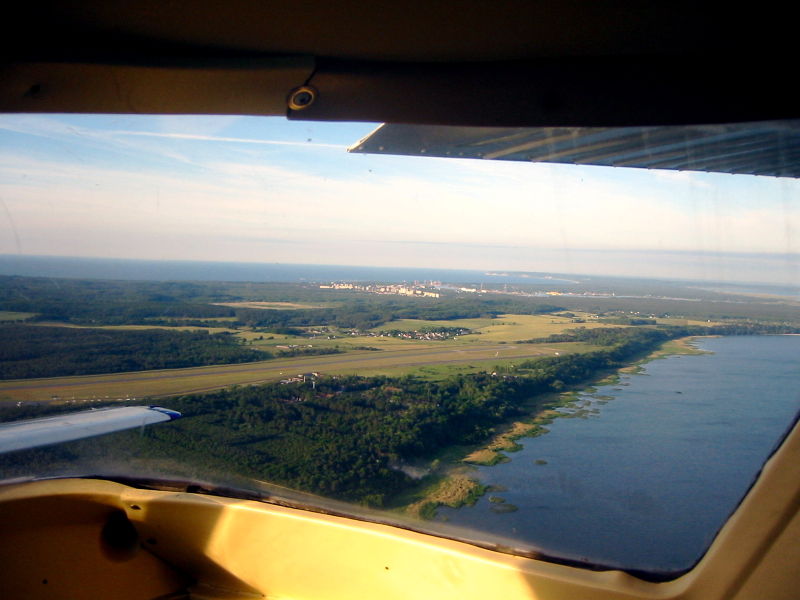
Approach to airport on Usedom

Approach to airport on Usedom

“It is unheard of. People sunning themselves in the nude! And right on the coast, where normal people go walking,” Stanislawa Borecka, a 63-year-old from the Polish town of Szczecin, told the Märkische Allgemeine newspaper. “What should I tell my grandson?”

But for Germans of all ages who enjoy swimming and sunbathing on naturist – or FKK (free body culture) – beaches, the disapproving glances from Polish walkers are incomprehensible and intrusive.

“It’s an FKK beach. It’s awful that fully dressed Polish people come and stare at us,” said 46-year-old Elke Bernholz.

Naturism is so popular on the Baltic coast island of Usedom that German travel agent Ossi Urlaub selected it as a destination for its first nudist charter flight, a trip which was later cancelled because of “moral concerns”.

The culture clash between the border towns is a recent phenomenon. Many cheered in December, when the barbed-wire fence was dismantled as part of the Schengen deal.

“Finally we can cross the border without passport controls,” said Szczecin’s mayor, Janusz Zmurkiewicz.

Little did he know that some German tourists prefer to stroll in their birthday suits. With the FKK beach lying close to the border, some naturists have strayed on to the Polish beach. For many, that is a step too far.

“It is disgusting,” said Edward Zajac, a Szczecin politician who wants to move the FKK beach from the Polish border.

But the Germans, who have been unfolding their towels on the beach year in year out, are unlikely to want to move. For the time being, authorities plan to put up signs marking the boundaries of the nudist beach – in both German and Polish.

Share

Tags: , , , ,

Amongst the Nigerian financial scams and offers of ways to improve my instrument with Cialis, this bizarre letter arrived the other day. The text is weirdly convincing and not bad English, with its talk of scanning, screening and serial numbers. For a minute I forgot I had never applied for a US visa!

But then look at the wacky list from the bottom called Explanatory Notes, referring to a job with big salary, free housing and ‘feeding’ as well as air ticket. This looks like an add-on by a completely different writer, perhaps one impatient with the foregoing prose. I can only hope it’s enough of a give-away that too many people don’t fall for this. People think ‘trafficking’ is bad, what about fake trafficking?

Embassy of the United States of America

U.S Consulate General
387 Wichayanond Road
Chiang Mai 50300,Thailand

Attn Winner,

Congratulations,you have been selected as one of the lucky winners of the US VISA through our internet email extracting and screening machine,your application was applied and processed by our internet email extracting and screening machine which randomly extracts and scans millions of email adresses across the world.

This Special visa programme is new and was innovated by the US embassy in Kuala lumpur Thailand last year november.The US Consulate in Chiang Mai launched the programme last November 2007,.The aim and objectives of the programme is to give free visas to citizens of developing countries around the world to enable them travel to the US and start a new life and work.The Chiang Mai consulate released 12 visas in this regards and hopes to increase the visa number to 24 by November 2009,you are among the 12 lucky people that won the visa and among the 5 foreigners that won the visa,7 visas were won by Thai nationals.

Your visa winner’s identity is:MM-52047 and your serial net visa passport with us is:JM-102648,your visa type permits you to travel with your family.Your visa duration is 10 years multiple entry to the U.S,it is renewable upon expiration and it permits you to work,study and own properties in the US.

In this respect you are directed to forward the following requirements for the immediate processing of your visa certificate and acknowledgement card:

Please be warned. please contact our claims Office agent with the verification form below:
Overseas Claims Unit African,Asian Pcific Fiduciary Office Agent for Mrs.–

Name: Mrs–
From African,Asian And Pacific Regional Visa Agent
Tel: +23480—,+64336—-35,+9665—1.
–00@gmail.com

1.Write in full your office and residential address.

2.Scanned copies of your recent passport photograph,members of your family passport photograph should be included if you have family members that wants to travel with you.

3.Scanned copies of your/members of your family international passport and i.d card,your family members above the age of 16 requires seperate international passports for travel.

4.Clearance and acceptance fee:U.S$615(Six Hundred and fifteen us dollars)only.This fee should be paid to the below accreditated agents Account Or through Western Union Money transfer.

Providing the above requirements will assure you your visa certificate/acknowledgement card and visa security pin code which we shall scan to your email adress.With the visa certificate/acknowledgement card and pincode we shall send to you,the U.S embassy in your home country or your country of residence will stamp the 10 years multiple entry visa on your/members of your family international passport within 3 working days immediately you present these documents to them because the Chiang mai Cosulate has confirmed your visa,all they will do is to log in to the U.S Immigration network database and key in your visa pincode there they will find your visa winning details.

Important notice:

According to the united states code of conduct in the constitution Vol:189/965:Act 220Sl guiding all immigrations,green cards,visas and permit agencies:if non-response after 31 days you receive this message,your winners status shall reveal no interest and we would in response refer your visa certificate/code and acknowledgement card back to the U.S government/immigrations service center.

We shall be anticipating your reply soon.

Warning:

You have to be very careful to avoid being duped by fake people who will want to use this visa lottery programme to dupe you. You should know that there are a lot of fraudsters on the internet.
If your regional visa agent asks you to pay any other money apart from the acceptance and clearance fee,you should report him to us.
Just adhere strictly to our directives and your greencard visa will be fully processed.

Explanatory Notes

1. Job attracts 8 working hours a day and 6 days a week

2. There will be regular overtime which also will be duly comensated.

3. The basic salary is circa $3,500 a month, excluding free feeding.

4. Living accommodation is also FREEE.

5. Free air travel ticket to U.S

Thanks

Mr.–
U.S Consulate Chiang Mai

N.B:DO NOT REPLY TO THIS EMAIL,SEND YOUR REPLY TO THE VISA AGENT,Mrs.–(–00@gmail.com)
Phone: etc etc et c

Share

Tags: ,

Newer entries »