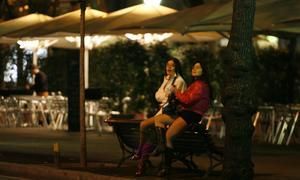
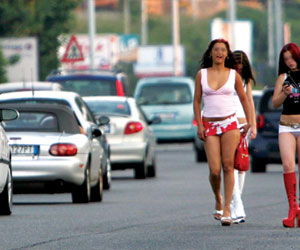
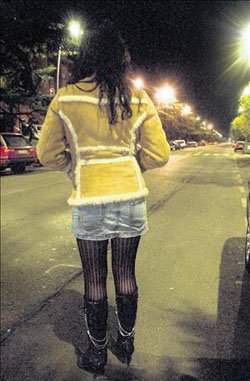
I vividly remember my visit to the Bonifica del Tronto road. It happened during a brief gig I had evaluating projects funded by the European Commission’s Daphne Programme (to combat violence against women); I was visiting a helping project on the coast nearby, accompanying people called cultural mediators in their outreach trips to see people selling sex along this road. We parked, got out of the van and approached a tall black woman who said, before the mediator could even speak: I don’t want to go to any house. Don’t talk to me about going to any house.
In this area of Italy a well-known roman catholic priest, Don Benzi, used to come to talk to prostitutes and take them to one of his safe houses. An obituary from 2007 says:
Above all, he was known for his confrontation with pimps and the prostitutes who can be seen touting for custom at Italy’s roadsides. Benzi was no liberal — he regarded homosexuality as deviancy — but he was a passionate crusader against prostitution, which he regarded as a form of violence against women perpetrated by their clients. If there was no demand, he would say, there would be no supply.
The second sentence is strange – surely it should read he was no liberal AND was a passionate crusader against prostitution? Anyway, note that he was an early propagator of the simplistic idea of supply and demand in prostitution markets: take away one and the other disappears. In 2001 Don Benzi claimed to have saved 3000 girls over a ten-year period. I don’t want to make fun of someone who dedicated his life to helping others, specially unhappy teenagers. I only point out that not everyone wants to be saved his way, and a lot of people in Rescue jobs cannot understand that.
In the story below, ecological activists are outraged because local authorities plan to chop down hundreds of trees along this same road, in another simplistic formula: take away the trees and the sex workers disappear. Maybe, but where’s the next bunch of trees?
. . . For decades, local law enforcement and politicians have struggled to police the Bonifica del Tronto road, a haven for the sex trade that runs inland for more than 10 miles from the Adriatic coast alongside the river Tronto. Over the years, cameras have been installed, raids mounted, 24-hour patrols implemented and the mayors of towns near the road have signed bylaws imposing fines on prostitutes’ clients. All to no avail.
At the end of last month, the regional government’s public works chief . . . said he had agreed with provincial and municipal representatives to cut down all the vegetation “around and along the banks [of the river Tronto]”, in which the prostitutes ply their trade. . .
A census this month by an NGO found almost 600 prostitutes at work on the Bonifica del Tronto. Most were Nigerians, but they included Romanians, Brazilians, Albanians and Chinese. . .
There are other images to show to illustrate news about striptease than stereotypical posed bodies on poles, or even bodies at all, including lap dancer solidarity (above) and efforts to unionise (below).
Here’s a clear-cut example with which to illustrate the concept of hypocrisy, if anyone needs one:
A 67-year-old guy is arrested by the FBI for illegally using marijuana, cocaine, and prescription painkillers with a stripper over many months. In addition to purchasing lap dances and sex with her at a strip club, he had a sexual relationship with her outside lasting many months. Nothing unusual about this. A lot of victimless crimes, but crimes nevertheless. It turns out that the guy is a longtime federal judge, appointed by Ronald Reagan. . .
And here are a few strip clubs located in interesting urban buildings.
I collect images of the sex industry, as part of a project to educate myself and others about the diversity actually involved, rather than staying with an oversimplified, unilluminating idea about prostitution. A lot of my picture collection can be seen here. The silent video below from Satoshi shows streets in a Yokohama red-light district with rows of small shops or cubicles used for sex work. Similar arrangements of sheds or ‘cribs’ were called chon-no-ma, and, until fairly recently, were open and staffed by non-Japanese women. Chon-no-ma were the target of anti-trafficking drives from about five years ago.
A few things strike me about this display. First, the silent, steady, slow movement of the camera. Second, the similarity of the windows and doors we’re taken past, like suburban shopping strips developers impose a style on. Third, the absence of humans, who would ordinarily be the object of our attention (perhaps the video was made in the early dawn). The result is mesmerising.
He estado comentando la ola de ordenanzas en España e Italia que especifican cada vez más cuales son las actividades y comportamientos indeseables (desde el punto de vista de los ayuntamientos compuestos de personas de la clase media). Publiqué una serie de fotos que para mí demuestran lo lindo del espacio público: gente que duerme, besa, lava y hasta molesta los demás, pero que vive. Recién fui totalmente escandalizada por la ordenanza en Bilbao que prohibe prácticas sexuales incívicas, incluyendo sexo pública y notoria su realización, de forma que resulte imposible no advertirlo o evitarlo por parte de la generalidad de la ciudadanía. Un comentario sobre la ordenanza granadina cita las actividades específicamente nombradas como prohibidas.
. . .más de 150 artículos decididos a burocratizar la convivencia entre personas, a controlar toda relación social en la ciudad de Granada y evitar que no haya actividad que se realice fuera de lo establecido (y por ende, controlado) por el Ayuntamiento.
Lo peor de esta Ordenanza no es que asuma que los granadinos no somos capaces de relacionarnos correctamente si no nos imponen cómo. Ni que obtusas mentes crean que una normativa que prohíbe y castiga pueda ser educativa. Tampoco es lo peor saber que ya se compara con leyes como la de vagos y maleantes de la II República y el franquismo. Podría ser lo peor que la policía local tenga la potestad de decir qué relaciones entran dentro de una “correcta convivencia”, pero no, lo peor es su contenido:
– Prohibida toda manifestación de arte espontáneo: mimos, pintores, malabaristas, payasos cantantes, guitarristas y músicos y artistas tienen negado su derecho a ejercer como tales en la vía pública sin un permiso del ayuntamiento y una licencia, bajo riesgo de multa y requisación de instrumentos, material y ganancias. No, perdonen, no es sólo eso, también significa que yo no podré irme con un amigo a un parque a tocar la guitarra, porque sería ilegal y me podrían multar por ello.
– Prohibido cualquier trabajo o relación monetaria en la vía pública. Es decir, no está permitido ningún trabajo, venta o transacción… Si tu gata ha dado a luz, ten cuidado con ofrecer los cachorros en la calle, puede que te salga caro.
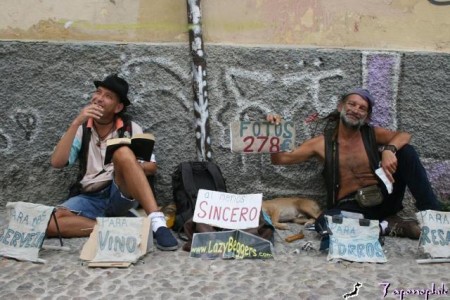
– Prohíben dormir en la calle, petición de limosna y, en definitiva, toda actividad que se asocie a pobreza y mendicidad, por supuesto, con multas asociadas. Nadie se plantea que quizás (solo quizás) si duermen en la calle, si tienen que pedir limosna, no es con gusto y disfrute. Y si lo es, creo que no hay duda de que una multa y requisación de lo ganado hasta el momento no solucionará nada.
– Se regula desde ahora dónde cómo y de que forma pueden los niños correr y jugar a la pelota, prohibiéndose en otros casos. Los niños molestan y no son rentables. No dan dinero, así que mejor quitarlos de nuestra vista (o al menos de la de los turistas, que son los que realmente importan).
– Prohibido sacudir mantas, regar macetas o colgar ropa en los balcones y ventanas. Sí.
–Prohibida toda muestra de actividad sexual (da igual si no hay dinero de por medio), dejando la valoración de qué es “actividad sexual” al Policía Local. Tengan cuidado con qué hacen con sus parejas porque pueden enfrentarse a multas importantes.
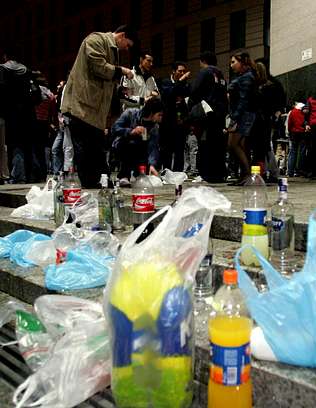
– Prohibido comer y beber en la calle. Da igual si es un bocadillo, un shawarma, un botellín de agua, o un refresco. Os podéis llevar una multa si la policía os ve.
– Prohibido el trabajo del sexo si éste es visible. La prostitución sólo será considerada falta muy grave si ésta se ejerce en el centro de la ciudad o cerca de centros educativos. Si están alejadas y no molestan, si no se ven, entonces sólo serán faltas leves…. Los trabajadores del sexo no nos importan, tan solo nos preocupa que la gente vea que existe en nuestra ciudad.
– Prohibido repartir panfletos o documentos de cualquier tipo en la calle, así como pegar carteles. Para culminar.
La ordenanza se puede bajar, ver página 42-artículo 72: Normas de conducta
Pero bueno, ¿existe algún límite? Parece que ahora ni vamos a poder reirnos en público.
Esta vez la prohibición va dirigida a prácticas sexuales incívicas, supuestamente para que quede claro que las autoridades no están discriminando al trabajo sexual sino incluyendo todo lo que no guste a – sí, ¿a quién exactamente? al Ayuntamiento, a personas que tienen ideas sobre lo que debería pasar y no en ese gran espacio que se denomina la calle. Recién publiqué muchos ejemplos de prohibiciones españolas e italianas: por ejemplo, el ultrajante problema de comer bocadillos en público. Comenté que con ese tipo de enfoque – lo que se está llamando el incivismo – se cuela el intercambio de sexo-dinero fácilmente. Ahora, lo que Bilbao propone aquí va más allá, hasta un concepto hiper-vago (prácticas sexuales) con el añadido de incívicas. Noto también que se refiere a multas de hasta 750 euros como leves – extraño cuando se piensa en la gente que puede quedar multada por hacer algo incívico al aire libre. No compensa que los fondos van a parar a proyectos de rescate a las prostitutas y otra gente que ofenda.
Ponen condiciones vagas también sobre prácticas como andar en bici, volar cometas, y tocar música – que quiere decir que la policía se sentirá libre a interpretar esos comportamientos como les da la gana. Para mí, es todo escandaloso.
El equipo de gobierno del Ayuntamiento de Bilbao ha dado luz verde a una nueva ordenanza del Espacio Público que reúne en un sólo texto de 134 artículos diversos aspectos normativos relacionados con el uso de la vía pública, hasta ahora dispersos en distintos apartados reguladores. La norma “supera el vacío legal” existente hasta el momento en tres actividades diferenciadas. De un lado, se pronuncia sobre las los actos de ofrecimiento y de demanda de servicios sexuales que tengan por objeto concertar servicios sexuales retribuidos, incluyendo la negociación y realización de los mismos en un espacio público. Estas prácticas quedan prohibidas, pero ello no implica el veto expreso a que las prostitutas sigan estando en la calle ni que los servicios no puedan ser prestados en pisos o locales. Fuentes municipales señalaron que el foco principal va a ponerse en los clientes y no tanto en las prostitutas. Y es que la portavoz de EB en el consistorio, Julia Madrazo, recalcó ayer que la regulación de la prostitución es tarea del Gobierno central, que no debe pasar esa “patata caliente a los Ayuntamientos”.
Las prácticas sexuales en la vía pública se prohíben a toda la población
La ordenanza también se refiere a las “prácticas sexuales incívicas“, que quedan prohibidas. Este concepto incluye los actos en los que el sexo sea explícito y sea “pública y notoria su realización, de forma que resulte imposible no advertirlo o evitarlo por parte de la generalidad de la ciudadanía”. Este punto no se refiere sólo a los servicios sexuales retribuidos, sino también a los que pudieran practicar las parejas en la calle o en un coche.
Las sanciones por incumplir alguna de estas normas serán por regla general leves (multas de hasta 750 euros). Ahora bien, si los hechos tienen lugar en lugares donde sea frecuente la afluencia de menores, existan centros escolares cerca o bien la actividad implique un deterioro del mobiliario urbano se considerarán graves y las multas podrían alcanzar hasta 1.500 euros.
Con el fin de demostrar que esta ordenanza no persigue un “afán recaudatorio”, el director de la Oficina de Uso Público, Tomas del Hierro, señaló que el importe de las sanciones que se impongan en materia de ofrecimiento y demanda de servicios sexuales irá destinado a la financiación de programas municipales o a la subvención de entidades que tengan por objeto la ayuda o colaboración con el colectivo de personas que ejercen la prostitución en la calle. Además, la recaudación de las multas que se impongan por la práctica del botellón, que sigue prohibido, irán a parar a la financiación de programas de ocio para jóvenes.
Otra novedad incluida en la ordenanza, que entrará en vigor en el tercer trimestre de este año, es el fin de la prohibición de actuaciones artísticas y musicales en la vía pública. Así, podrán cantar o tocar algún instrumento libremente quienes no molesten el tránsito peatonal, no se ubiquen en zonas de terrazas de hostelería y no requieran de forma activa la aportación de donativos, aunque sí pueden colocar un recipiente para ello. Eso sí, no podrán permanecer más de 45 minutos seguidos en un mismo punto. Pasado ese tiempo deberán trasladarse al menos a 200 metros. También tendrán horario -de 10.00 a 15.00 y de 17.00 a 22.00-.
La nueva norma regula también el tránsito por aceras y espacios peatonales. Queda prohibido andaren bicicleta salvo que la concurrencia de personas lo permita, tanto en el caso de adultos como de menores. No se puede zigzaguear y adelantar a personas con menos de dos metros de distancia. También queda prohibido volar cometas, aviones teledirigidos, boomerangs y similares. La ordenanza también simplifica los trámites para obtener licencias y regula la venta ambulante y la celebración de eventos.Inspectores vigilarán que se cumpla
Those concerned about justice for sex workers focus on the law. If you’re interested in culture, however, you find that the sex industry looks and acts quite similar no matter whichprostitution law is in place: the scene – the milieux – tend to be similar everywhere, with stylistic local differences. The health problems, the economics, the labour issues also are remarkably alike across cultures and borders, so that what workers experience in Ghana resembles what they experience in Thailand or France, and so on. Not so long ago I published a vague but suggestive story about the diversification of the sex industry in Pakistan, Now here’s another story from there about how that old favourite ‘street prostitution’ has changed with the times, so that mobile phones play a big role. The reporter’s tone is pleasantly neutral, and note that he ends with my point about the law: ‘In a country where commercial sex is officially prohibited, it is usually available just a few minutes’ drive away.’ Note: 100 pkr = 0.89 euro
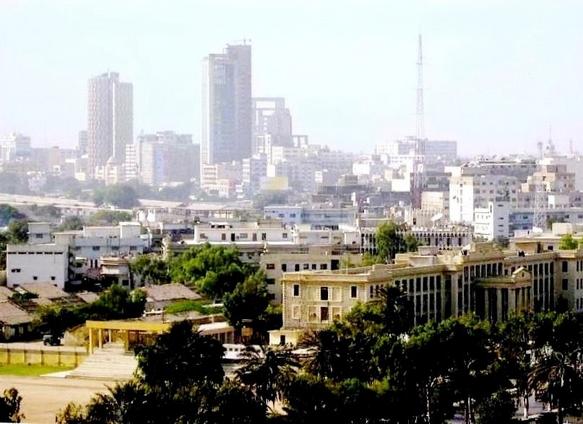
Karachi, Pakistan: In the simmering heat of the afternoon, two ladies, one in her early 20s wearing shalwar kameez and other in a burqa, stood on the pavement under the shadow of a tree. Several cars and motorcycles queued up beside them. A young man on a motorcycle talked to the ladies, the one in shalwar kameez shook her head in refusal and the man left.
Then a man in a car came by, rolled down the window, and spoke to the women. However, he left as well. Then another motorcyclist spoke to them for a while and the girl in the shalwar kameez went with him on his bike. The lady in the burqa stayed back. The queue was over and all of them went their way. This was a typical scene out of the many that take place daily outside the nation’s founder Quaid-e-Azam Muhammad Ali Jinnah’s mausoleum, where dozens of street prostitutes stand and wait for customers. Many of them have their own places where they can take their customers to provide their services.
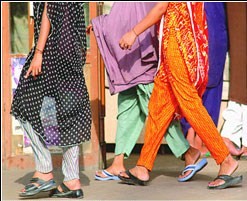
Gone are the days when the famous Napier Road in the downtown area of the city was supposed to be the centre of commercial sex. One can find street prostitutes waiting for customers at different spots while driving around the Mazar-e-Quaid, near the Do Talwar roundabout, on Shahrah-e-Faisal, MA Jinnah Road, Tipu Sultan Road, Main Korangi Road, etc. Their presence also becomes a nuisance for the other ladies taking a walk or waiting for buses, since the people ‘on a hunt’ often mistake them for sex workers and bug them. In recent years, Karachi has become a major market for prostitutes and attracts sex workers from other provinces since they can fetch higher rates for their services in the city.
One can find sex workers of different ages and ethnicity in Karachi. From a 15-year-old girl to a woman as old as 50, they could be of any ethnicity or even foreigners such as Russians and Burmese. The rates start from around Rs 400 and could go up 10 times this amount depending on the time, service, age and features of the sex worker. According to a sex worker, more than 150 street prostitutes roam inside the premises of Mazar-e-Quaid during the day. They usually sit on a bench in the lawn of the mausoleum so their customers can single them out easily.
Usually, they have regular customers, who know which spot they prefer and the sex worker then takes her customer to her home. “It is a risk to go with just anyone, so usually we rent a home and when we find a customer, we take him to our place. We charge extra amount for this service,” a sex worker told this scribe. She said the employees of the mausoleum know about their presence. “Sometimes we find two or three customers in a day, while on some days there are none.”
Convincing a street prostitute to let this scribe visit her house and speak about her business was not an easy job. However, when one finally agreed to it with the help of a politician who is her customer, this scribe drove towards the place thinking that the place would be something out of the movies, situated in a narrow lane, have a long row of rooms and sex workers turning up in odd make-ups, etc. But surprisingly, it was nothing like that and in fact, it was situated in a double-storied building in the Lighthouse area, where a young lady, who only told this scribe her nickname ‘Bindia’, lives with two of her colleagues. Bindia said cell phones had made their business much easier and the role of the ‘middlemen’ was almost finished now. She said that usually they manage to evade police, but if caught, they are asked for bhatta, which is provided in the form of a free-of-cost service. “most of the girls in this business are unaware about sexual diseases,” she said.
In a country where commercial sex is officially prohibited, it is usually available just a few minutes’ drive away.
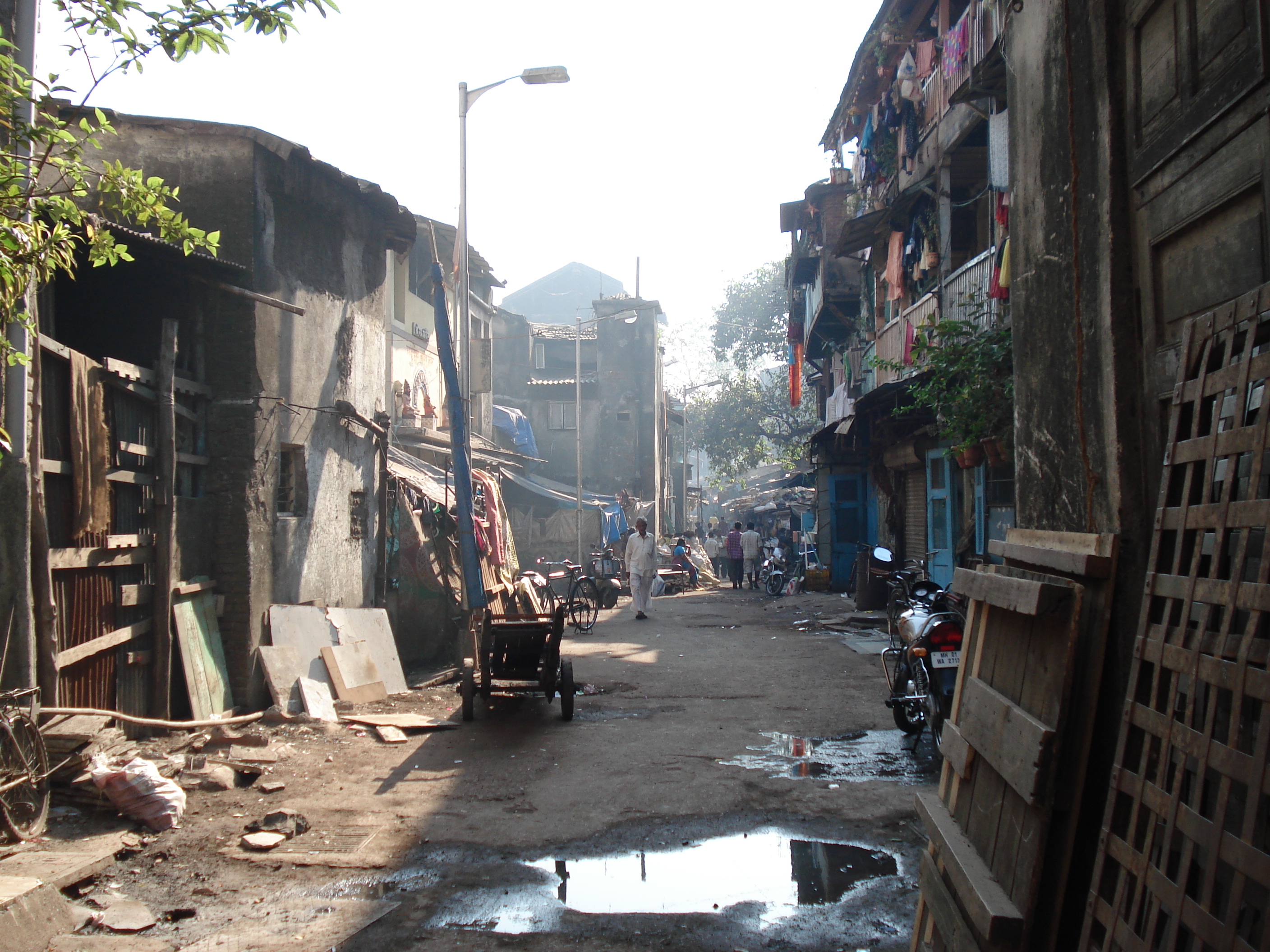
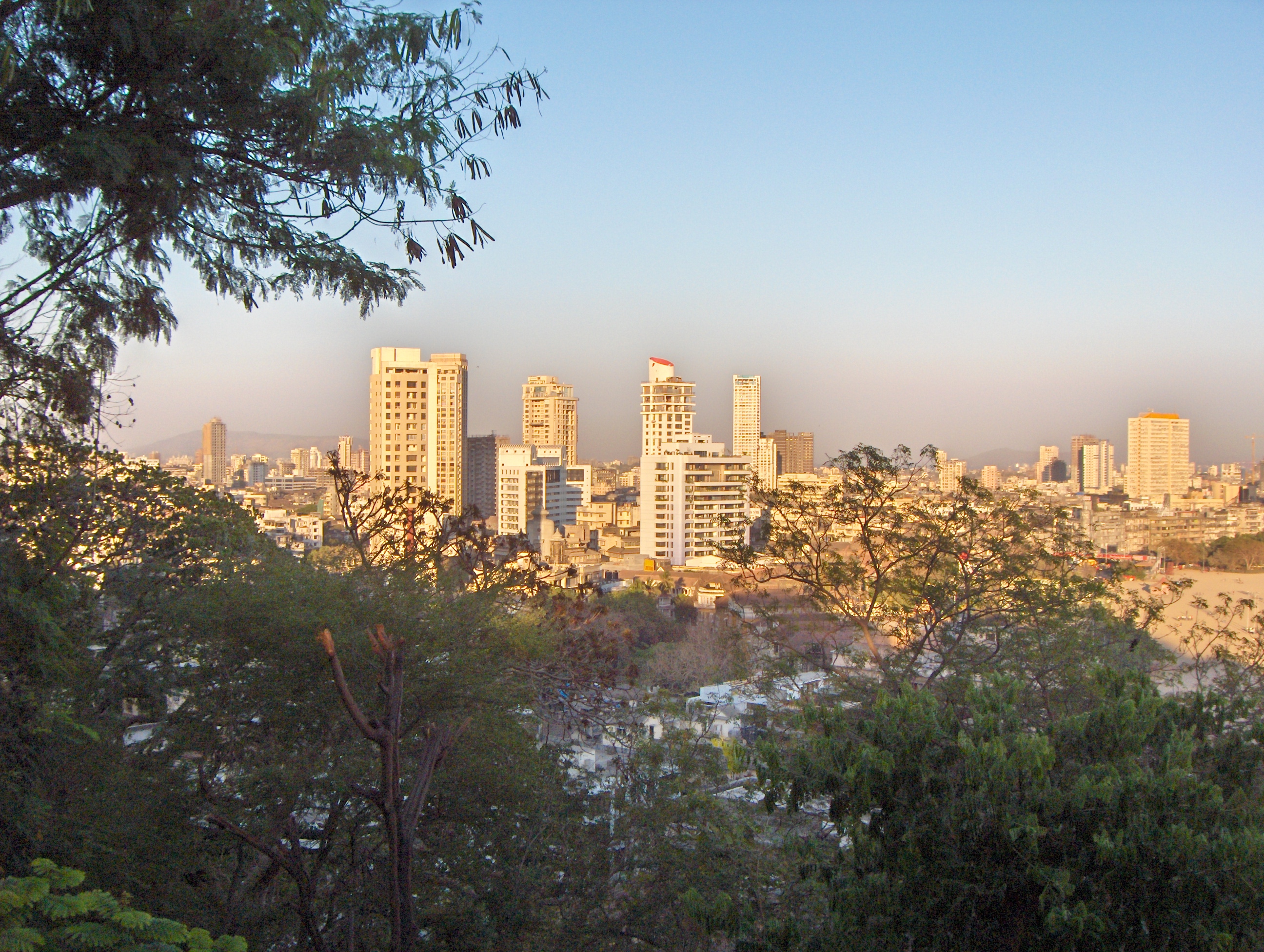
Gentrification always tries to make street life more orderly, less messy, more suited to middle-class tastes. Recently I published stories about city ordinances in Spain and Italy that name specific activities to be banned in public places: bathing in fountains, eating sandwiches, selling sex. This story about Mumbai describes how a traditional red-light (and slum) area is replaced during gentrification, with interesting attention to shifting social alliances and ideas about the sex industry.
Till about four years ago, garishly painted women in glittering attire were a common sight on Cursetji Shuklaji Street, a busy road in Mumbai’s notorious red light district, Kamathipura. Once known as Safed Gully (White Lane) on account of the European prostitutes that it housed during the British Raj, Shuklaji Street was the place where, for years on end, one could find sex workers plying their trade. These days however, they’re out there not to solicit but to await the private taxis that ferry them to dance bars in the suburbs.
From 50,000 sex workers in 1992 (a statistic recorded by the BMC as part of its AIDS documentation ) to a mere 1,600 today, Kamathipura and the adjoining Foras Road are a mere shadow of their former selves. The street-facing brothels have given way to little shops vending CDs and mobile phones; there’s also a clutch of video parlours where boisterous youngsters throng to catch the latest Telugu blockbuster.
Gentrification is slowly descending on Kamathipura , like it has on many of Mumbai’s distinctive boroughs. The one-storey, ground-hugging structures are making way for dizzy skyscrapers – two, of 35 storeys, have come up on Shuklaji Street, while another two, 47 storeys each, are nearing completion. Salim Balwa, director of DB Realty, the company that’s busy making over the area, is planning several more projects here. “The space crunch in Mumbai has meant that you go looking for land where no development has happened,” he says. All the towers overlook Kamathipura.
Balwa, who’s developed 10 lakh square feet in the area and is in the process of acquiring another 3.5 lakh, is sure that he’s on to a good thing. “All said and done, the place is centrally located, and it is better than living in far-off Mira Road,” he says. The present residents, most of whom live in houses that are about 100 sq ft in size, will get 300 sq ft after redevelopment, says Balwa. And, of course, there will be a more-than-neat profit for him.
It was the twin factors of AIDS and the Maharashtra government’s redevelopment policy that played a major role in getting sex workers to move out of the oldest profession in the world and subsequently out of Kamathipura. The AIDS scare led to the first serious government intervention in the area’s prostitution dens: Dr Jairaj Thanekar, Chief Executive Health Officer, BMC, who worked in Kamathipura for 15 years to implement the AIDS intervention programme, says the corporation played a key role in reducing the number of prostitutes . “From organising raids on the Yellappa markets down south – the main source of girls for Kamathipura – to raiding the brothels, we made it difficult for prostitution to function,” he says. “From 1999 onwards, the number of sex workers started dwindling.”
When the BMC intervened, the rate of transmission of HIV was a shocking four per cent. By then a large number of sex workers had died. “Brothel owners, faced with sex workers who kept falling ill, moved them out to other brothels in Mulund, Bhandup and Ghatkopar, but procuring new girls was also becoming difficult,” says Thanekar. This and other factors – a reluctance among landlords, newly aware of AIDS, to lease out their premises to prostitution, spiralling rents, police raids, and the emergence of a new generation of financiers who got into more lucrative ventures – hastened the downward spiral of prostitution in Kamathipura.
The reconstruction wave of dilapidated buildings completed the process. “Several people were bought out by the builders,” says a brothel owner. “Gangubai Chawl on 11th Kamathipura Lane was among the first to be torn down and reconstructed into a six-storey building by a private developer. Normal households moved in.” The stigma attached to Kamathipura began to dwindle somewhat, and the newly reconstructed prostitution dens began to be put to other uses – for the last four years, businessmen have been renting out the infamous rooms to small manufacturing units. Mohammed Israr, a 22-year-old native of Bihar, who assembles travel bags for a local manufacturer, has rented 600 sq feet in a one-storey structure in Kamathipura. He pays a stiff monthly rent of Rs 12,000 for the space, but says that it’s worth the money, given the central location.
Abdul Sattar, a local pan-beedi stall owner on Lane 13, has been in the business for the last 15 years. “Earlier, sex workers’ clients frequented my stall,” he says. “There were a lot of goons and hangers-on around. Now, proper businessmen come here. It’s a welcome change, as people working in the vicinity are no longer looked down upon. There was a time when we were ashamed to tell our relatives that we lived and worked in Kamathipura . But not any more.” Adds Sadiq Ismail, who owns a consumer goods shop on 12th Kamathipura Lane, “I live in a house above my shop with my wife, three sons and a daughter. There is nothing shameful about living here any more.”
Street named desire
Kamathipura is Mumbai’s oldest and Asia’s largest red light district. It got its name from the Kamathis (workers) of Andhra Pradesh. They worked as labourers on construction sites. The neighbourhood also had Chinese residents who worked as dockhands and ran restaurants. Kamathipura was formerly Lal Bazaar, an area set aside by the British for their troops’ sexual pleasures. By the end of the 19th century, Lal Bazaar was known as a “tolerated area” as prostitution was illegal. At the time, Bombay and to a lesser extent Calcutta were the most important cities in an expanding prostitution network. Cursetji Shuklaji Street in Kamathipura was called Safed Gully as it was home to European prostitutes. The brothels here were classified into first, second and third class. In 1916, the British set up the Venereal Disease Clinic, the first of its kind in Bombay. The BMC took over the clinic in 1925. Continue reading →
Red lights, sexual warmth, paid sex Red-light districts use red, pink and orange light for a reason: the warmth we feel at being bathed in them....
Cambodia Ladyboy Rescue Goes Wrong Here’s an attempt to help young people selling sex that’s put them in more danger. The article employs well-known rescue keywords. Best...
Activities deemed improper for public space: I’ve published on them several times in Spanish because the trend to formally prohibit particular behaviours is strong across Spain, where selling and buying sex are usually on the list. This is interesting to those who follow ideological debates about prostitution law – which law best ‘controls prostitution’, as the expression usually goes. Such general laws are largely ineffective anyway (ask me for an academic article on that).
Prohibited activities from the other day’s list – see wonderful pictures – are expanded today to include some Italian cities’ prohibitions. Planning policies that favour more regulation of public urban behaviours are frequently described as gentrification, by which middle-class ways of behaving are favoured. Thus drinking seated at an outdoor cafe is seen as all right, but drinking out of a can or cup while standing in the street nearby is not. Indoor activities are clearly favoured, especially when you have to pay to be inside. The behaviours to be prohibited are also often identified as coming from ‘outsiders’, not authentic local natives who know how to live properly. Activities mentioned in news stories like those below mix ways of living with commercial activities.
eating sandwiches while walking in the streets
eating sandwiches in public
eating a hamburger in a piazza
wielding sponges on street corners
gypsy camps
rowdy nightlife
arrogant behaviour towards motorists
public drug-taking and drinking
getting drunk
sleeping outdoors
going shirtless
washing animals in public fountains
smoking in playgrounds
begging
having sex in cars
selling pirated cds
gathering to mix and imbibe drinks
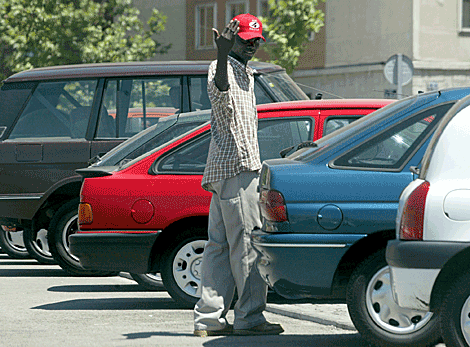
helping drivers find parking spaces
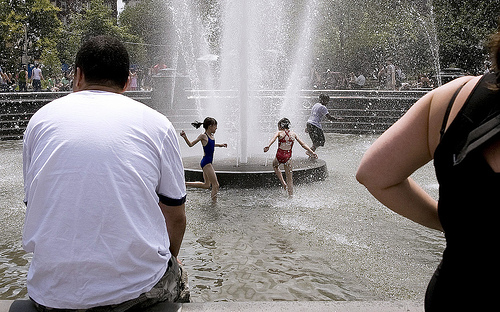
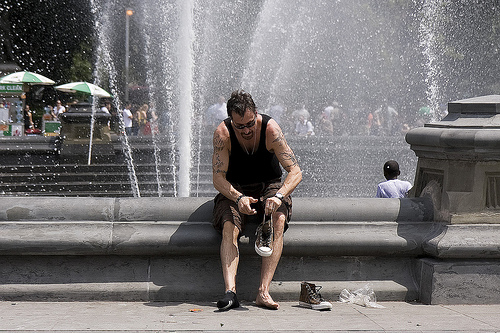
bathing in public fountains
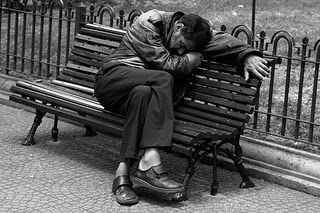
sleeping on public benches
general thuggery
selling sex
stopping cars near prostitutes
littering
Some similar occupations are tolerated: rose peddlers to couples in bars, street musicians who aren’t very good, folkoric performers for bored queue-waiters, vendors of umbrellas when it starts to rain. The tolerance suggests that prohibitions are whimsical. Notice also that some behaviours similar to the ones that get proscribed are idenfied as okay. Residents of Clinton Hill in Brooklyn described changes when mostly black and family residents were replaced by whites to Lance Freeman. The older residents liked to barbecue in the park, whereas the new residents like to sit and get tans or walk their dogs. Newer residents object to cigarette smoke in the street, children riding bikes and scooters and young men congregating for no particular purpose. Freeman said ‘You have on the one hand the more romantic view of public space as a place where people can come together unfettered unrestrained, compared with the view of public space as a place of ordered, controlled recreation. Gentrification is typically associated with the latter, as a place where space is controlled and privatized, with less opportunity for random interaction.’
Rome: Illegal immigrants in Italy earning a few coins by washing windscreens at traffic lights could face up to three months in jail after Florence launched a crackdown and other cities said they might follow suit. Many cities are already taking action against what is seen as “imported” behavior such as tourists taking off their shirts or eating hamburgers in the piazza in Venice, or getting drunk in public in Rome — something image-conscious Italians avoid. Foreigners are also blamed for much of the street crime in a relatively safe country. Most people wielding sponges on street corners are Romanian gypsies, often young women and children. . .
. . . Rome’s Mayor Walter Veltroni, who has taken action against illegal gypsy camps and now vows to clean up rowdy nightlife and public drug-taking and drinking in popular neighborhoods like Trastevere, said window-washers are so pushy “that people are virtually ravaged at every traffic light and street corner.” “People must realize that behind the window-washers there is exploitation of minors, which is a crime. Like prostitution this is a racket that must be smashed,” Veltroni told reporters.
In Verona, Mayor Flavio Tosi, who has previously taken action against people eating sandwiches in public, said he would monitor the experiment in Florence: “If the new regulation manages to deter the window-washers, we will adopt it too.” Some civic groups in Florence applauded the rules which city officials said acted on complaints of window-washers “becoming more aggressive, especially to women alone in their cars.” The city’s public safety officer Graziano Cioni stressed that the aim was “not to punish beggars or poor people” but to combat “arrogant and violent” behavior against motorists. However, leftist groups in the city called the new measure excessive and regional Communist party chief Niccolo Pecorini termed it “unworthy of Florence’s hospitable traditions.”
Mayor Flavio Tosi is the first Italian mayor to take advantage of a public security law voted into law last week by the new Berlusconi government and which gives city administrators greater powers regarding urban safety, including the right to increase pecuniary sanctions for clients of prostitutes even to as high as 500 euros, the equivalent of $780 dollars.
Mayor Tosi, a member of the separatist Northern League party, has been waging a war against prostitution, by women or transsexuals, for some time now. His first move was to ticket the drivers of cars stopping near prostitutes to negotiate prices by accusing them of interfering with traffic. But that fine amounted to only 36 euros and proved effective only with Veronesi men who wanted to avoid having to identify themselves to police on their home turf. People from other neighboring cities such as Brescia, Padua and Mantova, said the mayor, were not deterred.
In Verona, the city of Romeo and Juliet, the critical zone is the neighborhood around the train station, a residential area which every night sees hundreds of scantily clad prostitutes looking for business. So far 42 of the newly high fines have been issued an the mayor says he is eager to see that kind of effect it has. . .
. . . Mayor Tosi is in the forefront of this battle. But this week, Tosi signed two other controversial ordinances, one against begging in public as has already been done in Venice and Florence and the other to increase fines for the consumption of alcoholic beverages on the street. That ordinance also prohibits littering, sleeping outdoors, going shirtless, bathing or washing animals in public fountains, smoking in playgrounds and – once again as in Rome, the senseless law against eating sandwiches while walking down the street.
Varias municipalidades en España han optado por esquivar los debates parlamenta-rios sobre la prostitución en sí, incluyendo la venta de sexo en las actividades prohibidas por ordenanzas cívicas sobre el uso del espacio público (la calle). Así el vender sexo parece ser solo uno de una serie de comportamientos vistos como perjudiciales a la vida urbana, lo que se llama la convivencia. Es curioso ver cuales son las ocupaciones que supuestamente afean la ciudad y molestan los demás. Mira las fotos e intenta apostar qué es lo que tienen en común. Look at the pictures and guess what these activities have in common that cause city ordinances to name them as making cities ugly and disturbing peaceful coexistence.
Aquí son las actividades a veces mencionadas como prohibidas, una mezcla de formas de entretenerse y de ganarse la vida:
Ramón Ferrando Valencia, 21 enero 2010, levante-emv.com
Comunitat Valenciana: Los grandes ayuntamientos de la Comunitat Valenciana están detrás de la normativa de la Federación Valenciana de Municipios y Provincias que persigue la prostitución, la mendicidad, la actividad de los gorrillas o cualquier otra que perturbe la tranquilidad de los vecinos. La norma, como ayer adelantó Levante-EMV, es muy restrictiva y prevé sanciones de hasta 3.000 euros por mantener relaciones sexuales en un coche dentro de la ciudad o de 400 euros para las personas que compren música pirateada.
Un portavoz de la Federación Valenciana de Municipios y Provincias (FVMP) explicó que una comisión mixta formada por juristas y los responsables de las policías locales de Valencia, Alicante, Castelló, Elx, Paterna y Vila-real han trabajado durante cuatro meses en la elaboración del documento que prohíbe la mendicidad, la venta callejera sin licencia, la prostitución en la vía pública o la actividad de los gorrillas. La comisión ha celebrado una quincena de reuniones desde el 17 de agosto en las que de manera exhaustiva han dado forma al soporte legislativo que necesitaban los ayuntamientos para luchar contra fenómenos como el botellón o el vandalismo.
El texto, denominado Ordenanza de Protección del Espacio Público, cuenta con una amplio respaldo político. El portavoz de la FVMP recordó que lo aprobó por unanimidad el pleno de la federación y cuenta con apoyos de municipios como “Polinyà del Xúquer de Esquerra Unida, Torrent del Partido Popular o Muro d’Alcoi del Bloc”. Jaume Bronchud, edil de Participación Ciudadana de Mislata, apuntó que “es un documento marco que acogemos con optimismo porque puede contribuir a mejorar la convivencia“. El Ayuntamiento de Torrent ya está trabajando para aplicar las normas.
La Federación Valencia de Municipios y Provincias ha trabajado a fondo el texto para que no fracase como otras iniciativas. Elena Bastidas, presidenta de la federación de municipios valencianos y alcaldesa de Alzira, señaló: “Lo hemos hecho con la máxima rigurosidad. Han participado intendentes de las policías municipales y especialistas del ámbito jurídico. Es una norma muy completa que intenta dar respuesta a algunas de las cuestiones que nos planteaban. Ha sido auspiciada por todos los partidos y enriquecida desde el punto de vista técnico. Tiene un plus de garantía que posiblemente otras normas no tienen”.
La federación de municipios ha analizado normativas similares puestas en marcha con éxito en Barcelona, Lleida, Granada o Sevilla. Además, ha estudiado iniciativas como las del Ayuntamiento de Castelló contra las conductas incívicas, las de Alicante contra el botellón y los aparcacoches o las de Burriana que fija sanciones de hasta 3.000.
Elena Bastidas añadió que han previsto una gran cantidad de multas porque es “una normativa ambiciosa. No nos hemos limitado a los gorrillas o al botellón. Hemos abordado otros fenómenos que se han agravado con la crisis como la prostitución callejera. Tratamos de proporcionar normas específicas como la prohibición de lavarse en fuentes públicas o dormir en un banco“.
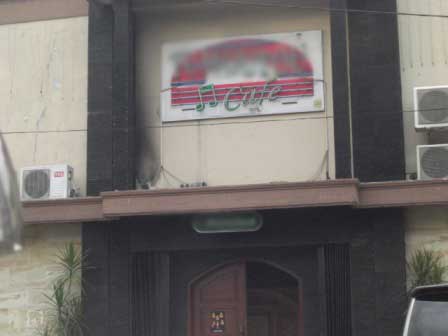
The fight for urban space: that’s what a lot of sex-industry news could be called. Jakarta cafes that provide opportunities for commercial sex are complained about by people who live nearby. The solution to tear down buildings en masse seems draconian compared with the manipulation of city ordinances common in Spain. The latter seek to get sex workers and clients off the streets and indoors, where they won’t offend certain residents’ sensibilities. In Jakarta, the offending market is already indoors. I know nothing about these particular businesses but suspect that a little work in the area of zoning or city planning might help avoid mass destruction of functioning businesses. It’s set to happen this week.
East Jakarta Municipal Administration is planning to conduct a raid on dozens of illegal cafes located in the area of Seruni flat, Pulogebang, Cakung next week, following public complaints over the existence of the cafes.
“We have sent letters to the managements of the cafes, urging them to immediately demolish their business places by themselves. We will tear down the buildings should they not conduct the order by next week,” said Murdhani, East Jakarta Mayor.
Agung (30), a local resident, said the cafes had become places for illegal sexual activities involving commercial sex workers. “The cafes also make noises, annoying the residents living nearby,” said Agung. There are around 20 units of cafe which also provide billiards located here. Every night, they are packed with visitors,” he said.
In the meantime, East Jakarta Public Order Police Squad (Satpol PP) head Tiangsa Surbakti said he had prepared a number of personnel for the operation. Regarding to the operation schedule, it is still waiting for the decision from East Jakarta mayor.
Commentators and laws make a crude distinction between indoor and outdoor prostitution, as though there were something essentially different in their natures. The photo below comes from Lyons, France; the short description from Paola Tabet is about an experience in northern Italy. In both countries, street prostitution is allowed whilst indoor sex businesses are prohibited and ‘street prostitution’ sometimes means money and sex exchanged inside vans. So which is sex in cars, inside or outside? Here Tabet reports the silent efficiency of one kind of sex-money exchange. [English translation below]
Tabet: J’ai été dans la camionnette quand elles travaillaient, c’était assez marrant et parfois même lumineux. Là j’ai eu en effet l’illustration de ce qu’elles veulent dire quand elles déclarent : « Nous, au client, nous ne donnons rien ». Donc à un moment un client habituel, un homme d’un certain âge, arrive : « Bonjour !» « Bonjour, ça va ? » Il monte dans la camionnette. Moi j’étais assise devant, j’entendais tout. Au début, la fille lui dit: « T’as vendu ta vieille voiture ? », il lui répond « oui ». Elle lui demande de baisser ou d’ouvrir son pantalon et lui donne le préservatif, on entend le camion bouger pendant un moment, puis elle reprend : « et combien on t’a donné pour la voiture ? » C’étaient pratiquement les seuls mots échangés.
I have been in the van when they were working, it was rather funny and sometimes even brilliant. There I actually had the illustration of what [sex workers] mean when they say ‘We give nothing to the client.’ Then at one point an habitual client, a man of a certain age, arrives. ‘Hello.’ ‘Hello, how are you?’ He gets in the van. I was seated in the front, I could hear everything. At the beginning, the girl says to him ‘Have you sold your old car?’ He replies ‘yes’. She asks him to lower or open his trousers and she gives him the condom, you could feel the truck move for a moment, then she continues ‘and how much did they give you for the car?’ They were practically the only words exchanged.
Témoinage de Karen, une prostituée lyonnaise Témoignage de Karen, prostituée lyonnaise Les prostituées manifestent à Paris 24 mars 2010, Agence France Presse Une centaine de personnes,...
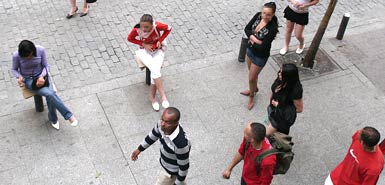
Es cada vez más común que las munici- palidades intentan controlar la prostitución callejera sin recurrir a los debates parlamentarios. Resulta perfectamente lógico, porque los últimos nunca llegan a ningún acuerdo puntual sino se estancan en conflictos ideológicos. Hace no tanto tiempo Granada impuso una ordenanza cívica del tipo que se ha comentado mucho en Barcelona (ver comentario e imágenes de los controles). En Granada una alianza de organizaciones que no quiere ver este tipo de control policial en su ciudad se enfrenta con el ayuntamiento y cuestionan la idea de la ‘convivencia ciudadana’ usada como justificación de la ordenanza. Cuando mucha gente oye tal frase le parece benévola, como si dijera que todos queremos vivir en paz. Pero así no es, sino, como los juristas objetan: un nuevo modelo de control de la ciudad que criminaliza a las marginalidades, oposiciones o disidencias político-culturales. En la foto se ve una calle desde arriba donde hay personas de pié, sentadas y que caminan. ¿Tiene un grupo más derecho de estar allí que otros? ¿Qué pasa si una mujer en minifalda se siente ofendida por un hombre en camiseta roja?
Granada: Recogiendo las quejas de las asociaciones y plataformas “antiordenanza” y añadiendo su propia consideración de que resulta “contraria” a la Carta europa de salvaguarda de los Derechos Humanos, la asociación Grupo de Juristas 17 de marzo ha presentado un recurso contencioso-administrativo ante el Tribunal Superior de Justicia de Andalucía (TSJA) contra la “ordenanza para la convivencia” aprobada el pasado septiembre por el Ayuntamiento de Granada y célebre por perseguir la prostitución callejera.
Los juristas consideran que la norma “excede de las competencias municipales” al no estar “amparada en ninguna Ley estatal o autonómica” y la califican de “un nuevo modelo de control de la ciudad que criminaliza a las marginalidades, oposiciones o disidencias político-culturales, inherentes a la conflictividad urbana”. Añaden que “puede vulnerar derechos fundamentales como el de reunión, manifestación y libertad de expresión”.
En la explicación de sus motivaciones, los juristas afirman que el texto “hace una protección aparente y no real de los bienes jurídico presuntamente protegidos”, esto es, la convivencia ciudadana. Llegan a afirmar que la norma “puede desencadenar situaciones de crispación conflictividad e incluso alarma social”. También argumentan que con esta se amplían “peligrosamente” los poderes de la Policía Local, de manera que “recuerda una tradición propia de otras épocas”.
Finalmente, el grupo incide igualmente en los “déficits democráticos” de la elaboración de la norma, opinando que “la base de cualquier normativa municipal debe ser el derecho a la participación política en su elaboración. Actualmente hay un gran movimiento ciudadano de oposición”.
黄(huang2) (yellow) means pornography and prostitution. 扫黄 (sao3huang2) means sweeping the yellow, referring to police crackdowns, also known as cleanup campaigns and rooting out ‘vice’ and consisting of general harassment of sex workers. Such a sweep is underway in Dongguan, a manufacturing centre in Guangdong province known as China’s sex capital. What’s more interesting is how this city’s sex industry uses modern business techniques. Southern Metropolis Weekly’snew cover shows a typical sms message advertising sex services received by visitors and explains how Dongguan’s manufacturing practices have seeped over into the sex industry in the form of standardised services. Complaints aboutt the uncertain nature of services provided by ordinary sex establishments go like this: ‘Whether you pay 300 or 1,500 yuan, what you pay for isn’t what you end up getting. Say there’s a girl who claims to be skilled in a particular service. She’ll actually be rough and clumsy. And because it’s all grey-market, if they overcharge you, you just have to accept that you’re getting screwed.’ The following excerpts explain how standardisation works, including how sex workers train themselves. Note: 100 yuan = 10 euros
. . . The catchy phrases manage, in the space of a few dozen characters, to clearly lay out an establishment’s offerings — usually “Dongguan-style service” — price, and contact person. The goal is clear: practically all men of means across the Pearl River Delta will receive these messages. Mai, the manager of a mass SMS distribution company in Houjiezhen said, “For just 200 yuan, you can have a company send a text message to 7,000 car owners in the Pearl River Delta.”
. . . The saunas of Dongguan and its surroundings are known for the following: for 400 to 600 yuan, sex workers will provide 15 to 30 different types of services over the course of two hours. These sex services are standardized, from the opening strip tease and the sex worker’s expression to the number of times the customer can climax. The rise of the manufacturing industry in recent years has brought ideas about standardized production along with it. Workers in local manufacturing who frequent Dongguan’s sex industry jokingly call the sex standards the industry’s “ISO,” which even has its own ex-post evaluation system. Practically all of Dongguan’s hotels and saunas will ask customers for an itemized assessment, and if any girl is thought to be slacking off or is no longer attractive to customers, her wages will be cut.
To keep up turnover rates, saunas in Dongguan are set up with many rooms on multiple floors, all of which are furnished with the waterbeds and dance floors needed for services, but the steam rooms and lounge areas found in ordinary saunas are not found. Reporters found that because of “ISO,” competition revolves around the opulence of furnishings, and the size or particular characteristics of its group of sex workers . . .
Reporters found that no one in that line of work could say with certainty where these services originated. Some described them as coming from the “Thai baths” (aka body massage) that are familiar to men in Hong Kong and Taiwan, but in training centers, sex workers typically used adult videos from Japan as their source for new techniques. The training process is more intense than the technical training given to factory workers, and its contents include the use of fruit to increase sex workers’ mouth strength. “A dozen days of training is enough to take the skin off your knees,” one sex worker who recently entered the profession told this reporter.
Here’s a beautiful example of a protest with red umbrellas, symbol of sex worker rights used here by students in Rome in front of Berlusconi’s residence. As in many such demonstrations in Europe these days, alliances are sought between those concerned about ever more precarious employment (not least for students), migrants and people who sell sex. Here protesters refer overtly to government measures that force women to be either victims or a social problem policymakers have to Do Something about. Yet another bill is proposed in Italy to suppress street prostitution, this time of course in the name of criminalising trafficking and exploitation. At the end of the video note the struggle between larger male security types and smaller female protesters on a narrow street: Cinematic.
Oggi 100 donne, studentesse, precarie, migranti hanno manifestato di fronte a Palazzo Grazioli contro il ddl Carfagna e il blocco alla commercializzazione della RU486, approvato ieri dalla commissione salute del Senato. Nonostante l’inutile aggressività della polizia le donne sono riuscite ad aprire uno striscione con su scritto: “NESSUNA CASA E’ PIU CHIUSA DI PALAZZO GRAZIOLI. NO ALLA LEGGE CARFAGNA”. Rossetti rossi e ombrelli rossi, simbolo internazionale delle sexworkers, sono stati i simboli scelti per comunicare la nostra solidarietà alle prostitute di strada che con la nuova proposta di legge rischiano l’arresto. Tra gli slogan “Ma quali Escort, ma che moralità, vogliamo diritti in tutte le città”, “Basta ipocrisia, basta sfruttamento, libere di scegliere in ogni momento”. L’azione ha voluto denunciare le politiche di governo e parlamento contro la libertà di scegliere delle donne, che si concretizzano in misure e proposte di legge che in nome della sicurezza perimetrano la nostra libertà e controllano i nostri corpi.
Il comunicato
La giornata mondiale contro la violenza sulle donne in Italia cade nel pieno del secondo scandalo di “sesso e potere” dell’anno. Dopo le escort di Berlusconi arrivano le trans di Marrazzo.
E le imbarazzanti rivelazioni sui meccanismi di reclutamento delle donne interni alla PDL e per le cariche elettive e di governo lasciano il posto all’ennesimo mistero italiano, l’omicidio di Brenda, in cui potere politico, criminalità organizzata e carabinieri si sovrappongono e confondono in un quadro inquietante.
Ma non sono serviti gli scandali e le rivelazioni sulle abitudini, i gusti e la propensione al sesso a pagamento di alcuni suoi eminenti rappresentanti a costringere la classe politica italiana ad abbandonare le ipocrisie e a fare i conti con la realtà.
Mentre l’opposizione, bacchettona e morbosa, inorridisce di fronte alle frequentazioni tanto di Berlusconi che di Marrazzo e lancia la crociata anti-Berlusconi parallelamente alle purghe interne, abbiamo una maggioranza di governo che fa passare con la solita scusa della sicurezza la legge Carfagna contro la prostituzione, il cui leader Berlusconi rivendica per sè il diritto alla privacy. La libertà è di tutti e non solo delle alte cariche dello stato: se Palazzo Grazioli è zona franca, allora entriamo noi!
La legge Carfagna, anticipata dalle ordinanza dei sindaci, vuole apparentemente essere un intervento punitivo contro lo sfruttamento della prostituzione, ma in realtà, invece che punire gli sfruttatori, colpisce solo le prostitute di strada e i loro clienti con l’arresto, additandole tra i nemici pubblici numero uno. Lungi dal contrastare la tratta delle migranti spesso minorenni, costringe le prostitute a ritornare alle case chiuse – bandite dalla legge Merlin del 1958 – luoghi di ghettizzazione, sfruttamento e violenza fuori da qualsiasi visibilità e controllo. Molto più utile sarebbe abolire lo status di clandestinità, condizione sine qua non dello sfruttamento sessuale e non delle e dei migranti.
Tutto questo accade mentre le statistiche parlano di una fetta sempre più ampia della popolazione maschile che ricorre al sesso a pagamento. In più il caso D’Addario ha reso esplicito che la prostituzione non è fatta soltanto di sfruttamento e costrizione ma può essere una libera scelta per quanto per alcuni difficile da comprendere.
Nel momento in cui le prostitute e i loro clienti hanno avuto tale e tanto “autorevole” visibilità ci saremmo aspettate maggior rispetto per delle lavoratrici e maggior onestà nell’ammettere che non si può punire e condannare pubblicamente ciò di cui si gode nel privato delle proprie case.
Infine, apprendiamo con indignazione che ieri la commissione salute del Senato ha votato un documento che pone il veto alla commercializzazione della RU486, la pillola abortiva al centro del più ampio dibattito sulla libertà di scelta. Le inquietanti motivazioni di tale voto sono l’ennesima testimonianza di come ad avere la giusta rilevanza non sia il tema della tutela della salute fisica e psicologica e della libertà delle donne ma, al contrario, la necessità di costruire sempre più capillari e intrusive pratiche di controllo sui nostri corpi.
No al reato di clandestinità
No alle case chiuse
No alla segregazione e allo sfruttamento
Per il diritto di scegliere della propria vita e sul proprio corpo
Verità per Brenda
Libertà, diritti e dignità per tutt@
Studentesse e precarie in solidarietà con le sex workers
This story shows how sex worker migration can be a result of rising property prices in major urban centres – not trafficking. Women in Mumbai are moving to Pune, about 100 km away, because rents are cheaper. The ‘better police cooperation’ referred to in Pune seems to mean less police interference and harassment. Comments toward the end by an NGO doctor sound like pure speculation: clients reducing because of fear of HIV and sex workers offering condomless services give reasons for NGOs to exist. Proof, please.
Sex workers moving from Mumbai to Pune say it is the low rent and better ‘police co-operation’ here that attracts them
Kamathipura, the famous sex hub of Mumbai, is drying up quickly. And the reason is Pune. The city’s relatively low real estate prices and ‘police co-operation’ are drawing sex workers by the dozens from Mumbai, where they are troubled by abnormal rents and land sharks.
Figures obtained from NGOs working in the two cities show that while the Commercial Sex Worker population in Mumbai is shrinking, it is rising in Pune. “Mumbai’s sex streets like Kamathipura, Falkland Road, etc, had a total of about 18,000 to 20,000 prostitutes till two years ago. But with land sharks eyeing this prime land for redevelopment and brothel owners hiking rent rates, most sex workers have migrated to neighbouring suburbs and Pune,” said Manish Pawar, co-ordinator of Asha Mahila, a government-run project for sex workers that is based in Mumbai’s Grant Road area.
Too much pressure
Nandita (31), used to live in a brothel in Kamathipura, but migrated to Pune about a year ago after she couldn’t handle the pressure from the brothel keeper. “I used to pay a rent of Rs 7,500 and give some part of my earnings to her. But then she wanted to hike the rent. We heard that a builder had offered money to her, so she wanted us out. I knew people here and even cops don’t harass us much, so I decided to come here.” Rent for brothels in Pune ranges between Rs 5,000 to Rs 6,500 a month. Some CSWs don’t pay rent, but simply share the money earned with the brothel keeper.
While Nandita didn’t reveal how much she earns, she said it was better than her hand-to-mouth existence in Mumbai. “Here I charge the same price and pay less rent. Besides, here I don’t live in a brothel,” said Nandita, who shares a flat with another girl in Pimpri. According to current estimates, there are approximately 10,000 sex workers in the red-light areas of Mumbai.
Other reasons
Another reason for migration is fewer customers. “Many women complain that they are moving from Mumbai, as the clients are very few. With HIV/AIDS awareness rising, the clientele is reducing,” said Dr I S Gilada, founder of People’s Health Organisation, an NGO in Kamathipura, Mumbai.
The rate has increased over the past two years. “It’s not just sex workers. Even bar girls have migrated to Pune. After the ban on dance bars, they took to sex work. Maybe they can’t afford Mumbai and Pune is cheaper,” said Dr Laxmi Mali, who runs a health clinic for NGO Vanchit Vikas in Budhwar Peth, Pune.
In the long run
Experts say that while this migration might have not affected prices yet, increased competition might be a problem in the long run. “These women are insecure about their business at the moment. So, they will offer any service to lure customers, even without condoms sometimes. This can create huge problems not just for them, but the local sex workers as well,” said Gilada.
Sex worker union raises prices in Ghana Again a different sort of tone from an African country. Here, the raising of prices by sex workers is reported as...
. . . Operation Princess and its sister campaigns were launched by the police in seeming disregard for the fact thatprostitution is legal in Brazil. The Pentecostal evangelical leaders of Rio . . . gave biblical legitimacy to the campaign, brushing aside questions of legality or sex workers’ resistance to being ‘rescued’. . . .
. . . proclaimed he would purge corruption and promote moral rectitude . . . by bringing back the spirit of the Vice Police stations (Delegacias de Costumes), which had been closed for the most part in the 1940s when prostitution was legalized. Simultaneously, President Lula declared a nationwide war against sex trafficking . . .
. . . ‘Operation Princess’ resonated perfectly with the 19th-century iconography of missionarism, child rescue, and abolition in Brazil. . . Avenida Princesa Isabel is the grand boulevard that brings travelers . . . into Copacabana Beach, a mixed-class and mixed-race coastal community that also serves as a center of sex tourism and international diplomatic conferences.Copacabana was a focal point of the new vice-policing operations. . . the statue of Princess Isabel, with her arms outstretched, blessing those she liberated from slavery and radiating a spirit of tolerance and welcome at the gateway to the topless dance clubs and all-night saunas of the Lido. . .
. . . [the] Black Movement in Brazil ha[s] rigorously critiqued the ‘Princess Isabel Syndrome’, or the commemoration of this child monarch as the agent of abolition. . . it takes credit away from the centuries of sacrifice and mobilization among Brazil’s Afro-descendants and their efforts . . . Thus, the princess metaphor in Rio de Janeiro . . . resonates vibrantly with the politics of social ‘whitening’ (embrancamento), infantilization of black slave agency, and religious moralization.
. . . By the time Lula assumed power in 2003, a massive child-rescue initiative was deemed essential to Brazil’s plans to legitimize and empower itself on the world stage, as well as to address social-justice concerns at home. For Brazil to assume leadership of the democratic global south and make a claim to the proposed new seat on the Security Council, it wanted to change the image of Brazilian law enforcement from death squad to rescue mission, authoritarian to humanitarian. The national landscape had to be cleared of lawless, victimized children.
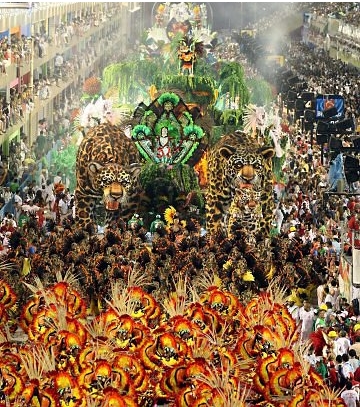
‘Operation Carnival’ became the first test of this revived vice-police campaign. As if to mock the new police operations, a ‘Group A’ Samba School . . . celebrated ‘Prostitution in Copacabana’ as their theme that year; their 4,000 sequined dancers, the ‘Lions of Nova Iguaçu’, marched through the downtown Sambadrome, singing a samba about the joys of the sex trade. In its debut, the police’s anti-sex-trafficking campaign netted a total of one arrest . . .
During ‘Operation Shangrilá’, the Federal Police raided a showboat in Rio’s Guanabara Bay. Forty Brazilian prostitutes and twenty-nine American tourists werearrested for having committed the crime of ‘sex tourism’. This incident was immediately trumpeted as a major bust of a ‘human trafficking’ operation. . . . But . . no Brazilian law had been violated. None of the prostitutes were underage, nor had they violated any pimping or brothel laws. The only way this situation could be imagined as ‘trafficking’ was because the tourists had crossed international frontiers, although without breaking any laws or visa restrictions. Furthermore, ‘sex tourism’ is not against any Brazilian law, unless one assumes that sex tourism is the same thing as forced sex trafficking.
Exchange on an anti-trafficking hotline High Hopes for refuge for human trafficking survivors seemed like just another story about small Rescue-Industry projects getting big funding...
Tanta bulla sobre el uso de la calle. Durante los 15 años que he seguido el conflicto sobre la industria del sexo en España, el tema se ha debatido una y otra vez en el congreso nacional, con múltiples invitaciones a una gama de ‘expertos’ para hablar del significativo de la prostitución. Nunca se llega a ninguna conclusión, pero siempre se dice que hay que hacer algo. Los periodistas también vuelven repetidamente al mismo tema. Esta vez sale en El Mundo un nuevo intento de darles voz a algunas de las prostitutas-trabajadoras del sexo en Madrid (siempre dejan fuera a los hombres trabajadores). Siguen extractos de un artículo escogidos por que proporcionan información sobre el trabajo de calle, no solo opiniones. Como verán, existen motivos razonables que gente de fuera parecen incapaz de entender.
Después viene el testimonio de una latina que conocí por primera vez hace muchos años. Se trata de un video cuyo título lo dice todo: ‘Trabajo en la prostitución porque yo lo he elegido’
. . . Ana -nombre ficticio- mira tímida con unos enormes ojos verdes mientras permanece sentada en el bordillo de un portal próximo a la Gran Vía. . . . Ana esboza a continuación una teoría que sostendrán después la mayoría de las mujeres a las que se pregunta en la zona Centro de Madrid: prefieren trabajar en la calle. ¿Sus motivos? “Si estás en un club tienes que dar parte del dinero al dueño y además tienes que trabajar las horas que te diga y coger los servicios porque si no, no puedes volver al día siguiente. En la calle, sin embargo, nosotras decidimos las horas que estamos y con quién nos vamos. Nos sentimos más libres”. Y eso a pesar de que el precio de sus servicios cae cuando se ofrece al aire libre.
. . . Las prostitutas han saltado al centro del debate público después de las denuncias por las prácticas en plena calle en Barcelona. La mayoría de las preguntadas en Madrid ni siquiera conoce la polémica. “Pero, ¿cómo en la calle? ¿En mitad de la gente, con todos pasando?”, pregunta sorprendida Laura -nombre ficticio-. Ronda los 50, es española y viste un llamativo mono de leopardo. Está sentada en un taburete en una esquina de la calle Ballesta, el sitio que ocupa desde hace ya varios años. “Eso aquí no pasa. Contactamos con los clientes en la calle pero luego nos vamos a pisos alquilados o a los hostales, donde pagamos cinco euros por la habitación”. También ella reivindica el trabajo en la calle. “Yo prefiero estar aquí, me siento más segura”, repite, como sus compañeras. Pero irte con un desconocido a un hostal no es muy seguro… “Ya, pero en los hostales hay personas que trabajan para protegernos”, contesta. ¿Quién contrata a esas personas? Silencio. Laura tiene cuatro hijos y un nieto a los que mantener porque nadie más trabaja en su familia.
. . . A dos calles de Laura trabaja María -una vez más el nombre es ficticio. . . . Tiene 28 años, habla un inglés perfecto y cursó hasta 3º de Comercio Exterior en su país natal, Rumanía, del que llegó hace tres años. Ha probado todo lo que tenía a su alcance para salir adelante. Ha sido empleada del hogar y camarera, con la mala suerte de caer en casas y locales en los que después se negaron a pagarle. También se ha prostituido en clubs y al final ha optado por echarse a la calle. “Es en el único sitio en el que sólo dependo de mí”, dice. María está sobradamente cualificada, pero se ve obligada a trabajar con su cuerpo. Ella sí reclama que se regularice la situación. “Por lo menos podría tener seguridad social y no ahora que llevo tres años trabajando y no ha servido para nada”, dice. En el último mes, María vuelve a casa con entre 60 y 100 euros en el bolso. “Se nota la crisis -cuenta- antes podía ganar hasta 400 al día. Los mejores son los turistas ingleses”.
. . . “Lo ideal sería que se regulase y que tengamos los mismo derechos que cualquier otro trabajador. Creo que la calle no es un lugar seguro para nadie, ni para un vendedor de cupones”. . . .
Viajó desde Ecuador a Europa en vacaciones y terminó trabajando como prostituta en Madrid. Un hombre se le acercó en un bar, le ofreció dinero a cambio de sexo y le abrió las puertas a un mundo que a ella se le antojó el mejor salvoconducto económico para su vida. Y lleva ya 12 años en ello
Carolina Hernández trabaja en la calle por decisión propia y comparte sus problemas con su familia, sus amigos y su pareja. En esta entrevista ofrece una visión de la profesión alejada del mito y los lugares comunes. Cuenta que quiere tener un hijo, colabora con la organización Hetaria, desde la que pide la regulación de la prostitución, yasegura que es feliz.
Mientras los políticos debaten su profesión en el Congreso, ella pide que se termine con la hipocresía: “No vivamos en una sociedad retrógrada y machista”, reclama como principal anhelo.
The terms massage parlour and sauna cover many sorts of businesses, some of which are brothels where the massage is probably not skilled or healthful, others of which employ people skilled in massage who also offer services variously known as full-body massage, body rubs and happy endings and some of which offer nothing sexual at all. Non-sexual massage businesses are granted licences in many cities. Inspections to make sure all these places are always sex-free would be an overwhelmingly expensive task for city councils, with the result that even some licenced places become known for providing sex for money. Many such businessplaces are located in ordinary commercial strips but appear rather blank, since no goods are displayed in the windows. There is a lot of variation if you look closely, however, so here are some more photos of the sex industry as part of everyday life. A growing collection can be viewed here, without being a member of facebook.
European brothels in the daylight Commentators and academics often distinguish between two large, general types: indoor and outdoor or street prostitution. But both these categories come...
English below. Mucha gente no entiende cómo es posible que haya tanto rechazo y acciones policiales en contra de las trabajadoras sexuales migrantes en Europa y sin embargo siguen estando tantas allí, ejerciendo la prostitución. El otro día coloqué un video sobre redadas en España que demostró cuán normal se han vuelto. También puse algo sobre algunos taxistas que no quieren que la policía mallorquina pasen tanto tiempo acosando a sus pasajeras del oeste de Africa. Many people don’t understand how there can be so much protest and police action against migrant prostitutes in Europe and yet there are always so many there.
Este artículo de Barcelona se enfoca en el grupo que molesta más a los europeos: las mujeres negras de Nigeria y paises vecinos, y explica los impedimentos a sacarlas: 1) la prostitución en sí no es delito en España; 2) se les detiene por una infracción menor, a la ordenanza cívica, o bien 3) porque no tienen papeles que demuestran su permiso de estar; así que 4) se les intenta expulsar del país; pero 5) no se puede acreditar a cuál país estarían destinadas; o 6) se van las mujeres en vez de mantenerse localizables para cumplir los requisitos burocráticos. ¿Qué tal? This article from Barcelona focuses on the group that bothers Europeans most: black women from Nigerian and neighbouring countries, and explains the obstacles to getting rid of them: 1) prostitution is not a crime in Spain; 2) they are arrested for a minor infraction, of a civic ordinance, or 3) because they have no papers demonstrating their permission to be there; so that 4) they try to expel them; but 5) they cannot prove what country they would be sent back to; or 6) the women go somewhere else instead of staying where police can locate them and get them to fulfil the paperwork necessary. Some contradiction, no?
El artículo interesa también porque dice secamente que no se puede saber fácilmente cuáles de estas mujeres son víctimas y cuáles están vendiendo sexo porque les parece la mejor opción del momento. The article also says, as though it’s not big news, that it is not easy to know which of the women are victims and which are selling sex because it seems to them to be their best present option.
Barcelona: La Policía Nacional ha detenido en lo que va de año a más de un centenar de prostitutas de nacionalidad nigeriana en situación irregular en seis redadas en La Rambla de Barcelona, en las que se identificaron a cerca de un centenar de ellas en cada una de las operaciones. Según han informado fuentes de la Jefatura Superior de Policía de Catalunya, en 2008 se realizaron menos operaciones de este tipo, en las que se detuvo a 50 prostitutas en tres redadas por infracción a la Ley de Extranjería, todas ellas nigerianas. En estos últimos años han proliferado las prostitutas de esta nacionalidad en La Rambla, que en ocasiones protagonizan altercados con potenciales clientes, muchos de ellos turistas, a los que abordan en plena vía y a los que a veces tratan de robar.
Según explicaron las citadas fuentes, la mayoría llega en una situación muy precaria a la ciudad, después de un viaje que empezó cruzando el Estrecho en patera, y con una deuda con quien les ha facilitado su llegada a España. Algunas fuentes apuntan a que esta deuda puede servir para explotarlas, aunque no es fácil determinar si son víctimas de redes de proxenetismo o si ejercen la prostitución ante la falta de otra salida.
La Policía no puede detenerlas por prostitución, ya que se trata de una infracción a la ordenanza de civismo del Ayuntamiento, aunque sí las detiene por infringir la Ley de Extranjería, si bien la mayoría de ellas no tiene ningún tipo de documento y es imposible expulsarlas porque no se puede acreditar oficialmente cuál es su país de origen.
En el caso de abrirles un expediente de expulsión, muchas veces éste no prospera porque las mujeres no son localizables y no siguen el procedimiento, que requiere del cumplimiento de varios trámites.
Laws: the kneejerk response to every social difficulty these days. As though there were no other way to change culture, as though prohibiting activities were known to be an effective way to make them go away. Obviously a lot of people feel good when they see a law that says It’s wrong to have anal sex, or You are a criminal if you buy sex, or It’s illegal to smoke dope. Perhaps laws discourage some people who are timid or who accept the state’s absolute authority on any issue. But for lots of people, laws prohibiting sex and drugs are perceived as ridiculous and unfair. The prohibition of alcohol in the USA in the 1930s led directly to an enormous flourishing in the making and sale of alcohol, and the dominance of criminal gangs engaged in these. Refusing to look at history is not a sign of intelligence.
Recently there were stories from Goa and Switzerland/Italy and earlier news from Korea, all showing how prohibition encourages buyers and sellers of sex, and those who organise the business, to create new forms and sites for the market. These are just a few examples. Read on.
Seoul: As police crackdowns on brothels in traditional red light zones have been intensifying after the special anti-prostitution law was passed in 2004, desperate owners have found creative ways to fly below the police radar. Brothel owners have swiftly changed the faces of their businesses, which masquerade as massage parlors or telephone chat rooms, but authorities have also clamped down on these new sex shops.
Amid this game of cat and mouse, a new kind of business has appeared — “Kiss Bang” or kissing rooms, where men pay to kiss female workers. Such establishments are an unintended effect of the special anti-prostitution law passed in 2004, which penalizes both the dealer and client of sex services, experts say.
“The balloon effect accompanies the special anti-prostitution law. Those brothel owners have rearranged themselves in different ways to avoid the law since the crackdown has become suffocating,” said Song Ki-hwan, a member of the Nationwide Movement for the Banishment of Prostitution (NMBP), which was launched June 2. “This is why the number of red light districts has declined, but other forms of sex services have appeared rapidly.”
According to a triennial study conducted by the Ministry of Gender Equality in 2007, the number of brothels in Korea decreased 41 percent, from 1,679 shops in 2004 to 992 in 2007. Also, the number of women working in the sex industry decreased from 5,567 in 2004 to 2,523, dropping 55 percent. However, the number of massage parlors and other businesses suspected of engaging in the sex trade nearly doubled to 9,451 in 2007 from 5,481 in 2005.
The number of kissing rooms in operation, however, remains a mystery. “We don’t know how many of these kissing rooms there are across the country, but they are proliferating quickly,” said Shin Hei-soo, co-representative of the NMBP and associate professor at Ewha Woman’s University’s Graduate School of International Studies.
Although one Web site says kissing rooms offer no sexual services beyond kissing, anti-prostitution civic groups are worried that additional arrangements can easily be provided by kissing rooms that could lead to prostitution. “We are worried that it is highly likely that after kissing, additional, actual sex might be arranged,” added Shin. But it is difficult for authorities to crack down on this new type of business because there are no laws against kissing for money.
Kissing rooms grew enough in number to cause concern within the government, which began to study ways to cope with them. Gender Equality Minister Byun Do-yoon said last month that her ministry would, with the aid of local police, carry out a large-scale crackdown on kissing rooms and other new types of sex related establishments. A government official said she is studying ways to cope with this new kind of business, and that the government recognizes the special anti-prostitution law unintentionally bred the problem of altered sexual services.
“For now, the only thing we can do about kissing rooms is strengthen on-the-spot crackdowns and find an actual sex trade there. Then we can suspend their businesses for sexual acts,” said Kim Ga-ro, director of Women’s Rights Planning Division at the Ministry of Gender Equality. “We are closely studying ways to penalize these establishments.” Administrators are not the only ones who try to overcome the difficulties in coping with the changing face of the sex trade.
Police who participate in crackdowns say it is not easy to find these clandestine businesses. Kissing rooms receive clients only through online reservations, and surveillance cameras are installed in front of their buildings, making raids difficult. Continue reading →

 I vividly remember my visit to the Bonifica del Tronto road. It happened during a brief gig I had evaluating projects funded by the European Commission’s Daphne Programme (to combat violence against women); I was visiting a helping project on the coast nearby, accompanying people called cultural mediators in their outreach trips to see people selling sex along this road. We parked, got out of the van and approached a tall black woman who said, before the mediator could even speak: I don’t want to go to any house. Don’t talk to me about going to any house.