
web analytics

police

You are currently browsing articles tagged police.

Sex tourism, gays, western perversion – what is this story, and these arrests, actually about? No mention is made of any trafficking accusation in this report of a police raid on a brothel in Cambodia – just the cop’s satisfaction at having spent a month investigating a place where people pay for sex. The rather ridiculous salacious slant would have us believe that this brothel is different because gays, lesbians, old ladies and foreigners use it. Well! Presumably the most special customer is a non-young non-Cambodian woman who likes women? Is this a category the police are afraid of? Are we meant to read between the lines that anyone employed in this brothel must have been trafficked and forced (are old-fashioned heterosexist brothels better, then?

It is old news that the US imperialist Trafficking in Persons report has caused Cambodia to institute legislation that has police persecuting sex businesses on principle. This is merely an early stage of the movement that now has a new name: End Demand, which can be followed by several phrases: sometimes we hear End Demand for Sex Trafficking, and sometimes End Demand for Commercial Sex Exploitation, and then there is End Demand for Modern-Day Slavery. All are semantically strange, since the demand these campaigners don’t like is a demand to pay for sex. The demand isn’t for the process – traffiicking, slavery or exploitation. I wonder why the whiz-kid business consultants didn’t make sure the slogan was clearer.

Perhaps there was a special frisson in the fact that a guesthouse has become a brothel, although the report also doesn’t explain what the evidence for that is, either. Presence of sex workers in the building? Manager shows guests an album with pictures of possible escorts? Or is there something noteworthy in the fact that the business is the type associated with alternative-style travel, less luxe, more home-like, cheaper?

Note that all this surveillance for a whole month netted them 14 people, only 3 of whom can be charged with anything - the clients and workers they don’t know what to do with.

Raid closes specialty brothel

Buth Reaksmey Kongkea, 27 February 2011, Phnom Penh Post

Anti-human trafficking officials last week cracked down on a guesthouse in Phnom Penh’s Prampi Makara district that offered sexual services for a select clientele. Keo Thea, director of the municipal Anti-Human Trafficking and Juvenile Protection Office at the Ministry of Interior, said a raid of the guesthouse-turned-brothel in Veal Vong commune netted a total of 14 arrests, including the guesthouse owner, two accomplices and 11 sex workers, on Saturday. “We have been investigating this house for about a month before we took superb action in cracking down on it,” he said. Keo Thea added that the guesthouse offered specific sexual services.

This place is hidden and illegal and provides sexual services for [gay] men, lesbians, old ladies and foreign people in Phnom Penh.

He said police research had uncovered that the guesthouse had been a popular destination for people seeking its specific services for many years. The detained were being held at the Phnom Penh Municipal Police Department for questioning prior to being sent to provincial court today to face charges, Keo Thea said, though he expressed doubts about the fate of some of the people arrested during Saturday’s raid.

We are now waiting for the order from our superiors about what we should do with these 11 people, who are sexual service providers and those who had come for sex. But for the house owner and the two accomplices, we will send them to court for charges.

–Laura Agustín, the Naked Anthropologist

Share

Tags: , , , ,

Like the Bangladeshi women who had been working at an Indian brothel and were reportedly rescued by police but later rioted at the shelter where they had been sent, some Chinese migrants in Congo have resisted rescue. It is good to hear that they were not forced to be deported or put in a shelter and interesting that a mainstream media source like Time should find sex worker resistance newsworthy, perhaps because of the public monies spent to carry out the raid. Chinese police flew all the way from Sichuan to Congo to go to a karaoke bar . . .

Note that the migrants are said to have wanted to go to Paris but have made do successfully with Kinshasa.

Chinese prostitutes resist effort to rescue them from Africa

1 Jan 2011,  Sapa-dpa, Time.com

Eleven Chinese women lured into prostitution in Africa have refused to be rescued after being tracked down by police from their home country, a news report said Saturday. Police from China flew to the Democratic Republic of Congo in November in the country’s first operation to rescue women trafficked to Africa, according to the Hong Kong-based South China Morning Post. They found 11 Chinese women who had been promised decent jobs in Paris by traffickers but ended up working in a Chinese-owned karaoke bar in the country’s capital Kinshasa, the newspaper said.

After a joint raid by Chinese and Congolese police on the karaoke bar, however, the women decided to stay in the country, saying it was easier to make good money there than in China. Chinese police official Yin Guohai told the newspaper, “They make 100 US dollars for receiving one guest – half of the money goes to their boss and they keep the other half.” As well as prostitution, the women, mostly from China’s underdeveloped Sichuan province, were able to take cheap goods from China to Africa after visits home and sell them for big profits, Yin said.

An estimated 5,000 to 6,000 Chinese people, many of them traders or businessmen involved in the mining industries, live in the Congolese capital Kinshasa.

–Laura Agustín, the Naked Anthropologist

Share

Tags: , , , ,

You would scarcely know that selling sex on your own is legal in England from reading this story about a town in the Midlands. Residents get annoyed by the sight and sound of interactions between street workers and punters, and contradictory laws make pleasing everyone impossible. But note how this particular ‘prostitution campaign’ is aimed at stopping it, at moving prostitutes on – to where? To nowhere.

How is this possible if it is legal to sell sex? Because a lot of other activities are not legal, including kerb-crawling, owning a brothel, working in a brothel and a range of promotional activities, including soliciting, loitering and putting up cards with contact information in public places. The result is that the person standing in the street looking for customers gets moved on, over and over.

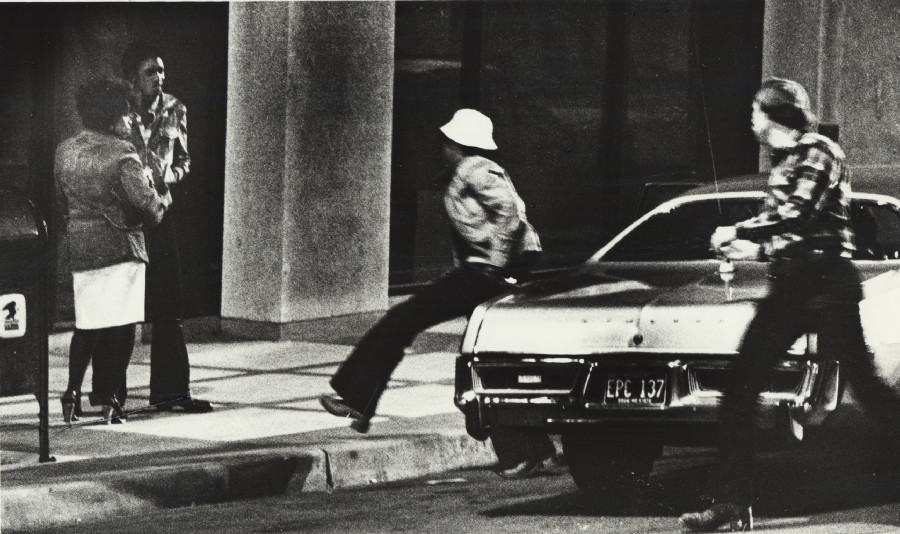
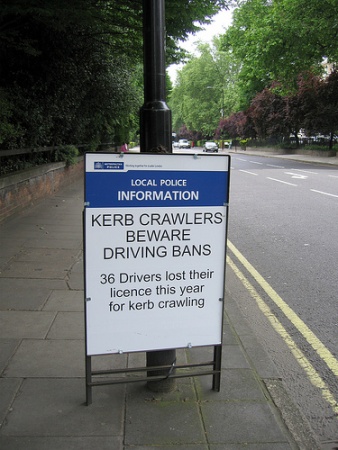
Campaigns against kerb-crawling belong to the now-common End Demand strategy, which, in its most pretentious form aspires to stop everyone on the planet from ever buying sex from other people. Other techniques include attempting to shame world-be clients about their masculinity, as Spanish billboards illustrate. Kerb-crawling is a far more modest police target which only wants to stop cars from stopping to discuss sexual transactions with people in the street. Tactics include signs like these, closed-circuit television cameras, threats to post names publicly and the occasional street operation to arrest drivers, to which the media are invited so pictures will show how active the police are. Meanwhile, the sex workers are moved on. Here is the story from Luton.

Prostitution campaign is ‘successful’

24 December 2010, Luton Today

Police are hailing a four month long operation to combat prostitution in High Town as a resounding success. The number of complaints made to officers regarding sex workers and anti-social behaviour in the area have fallen dramatically say police, after an operation involving several other local authorities including Luton Borough Council, began in August. The three phased campaign was launched after mounting anger from residents.

It included an observation stage where officers talked to sex workers followed by high profile police action and publicity aimed at deterring kerb crawlers. The latest phase of the campaign, which lasted eight weeks, came to an end last week with the metal lamp post signs and billboard at Dudley Street being removed.

Regular patrols aimed at deterring and arresting kerb crawlers has seen the number of vehicles fall and far fewer people loitering on street corners. . .

. . . we think the three phase approach has really worked to deter the problem and at the last High Town meeting, residents said that they were keen to see the signs and billboard used elsewhere should it be necessary. Obviously, the sex trade has been and will continue to be, a longer term problem so the partnership is still actively responding to residents’ concerns. Where we’ve heard of sex workers loitering at new locations we’ve visited the affected residents, started observations and redeployed street cleaning services to remove litter and needles.

The Luton News exclusively revealed in September how Operation Turtle had seen police step up patrols in High Town asking sex workers to move on, issuing warning letters to kerb-crawlers and adding their details to the police Automatic Number Plate Recognition database so they could be easily identified if they reoffended. . .

Operation Turtle?

Laura Agustín, the Naked Anthropologist

Share

Tags: , , , , ,

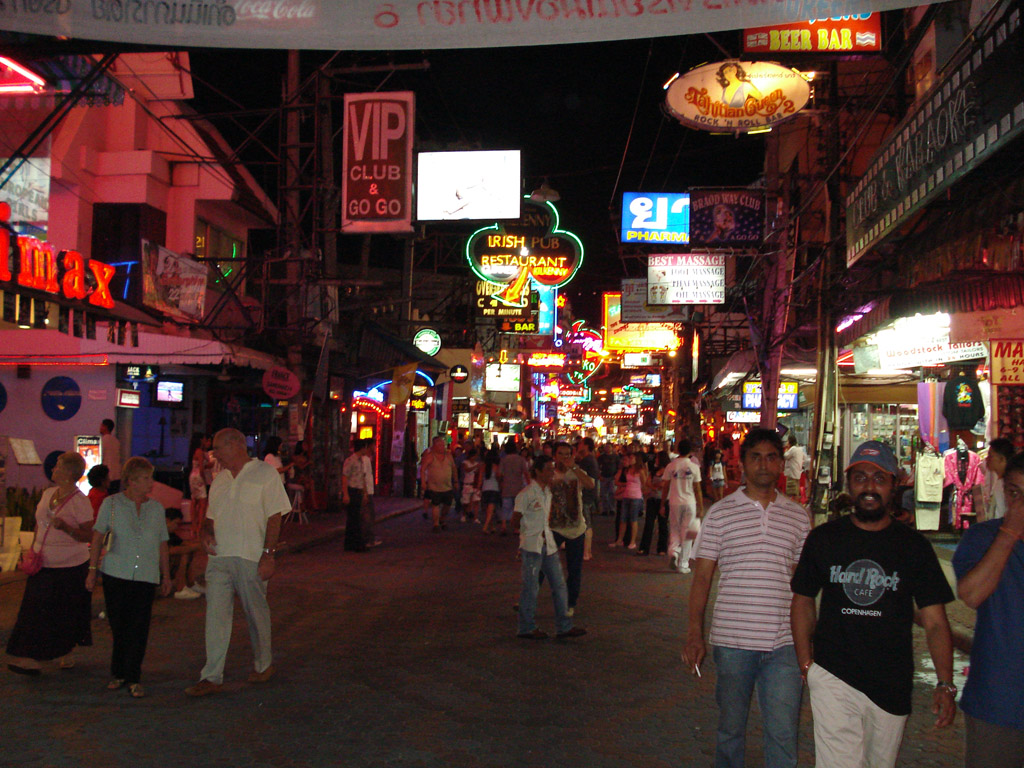
Could a visible police presence help to prevent trafficking? Some people say that every bit helps, but it’s hard to believe that handing out leaflets and stickers will discourage any real bad guys. Put some punters off? Possibly. Cause a lot of young women to hide indoors while the police are walking by? Definitely. Note that the big catch described in the operation shown below was a 16-year-old who police suspected of being a prostitute, who said she was sightseeing and whom they forced to go home to her parents. It is hardly a trafficking story, and the cop’s swaggering, gum-chewing imitation of John Wayne doesn’t help. I do think outreach can be useful in raising awareness about some social problems, but the police need some advice in thinking this one through.

Walking street visited by police to prevent human trafficking, Pattaya People Weekly

On Thursday night, a team of 20 police under the supervision of Pol. Col. Worawong Tongpaiboob –the Superintendent of Human Trade Suppression, Region 2, and Pol. Maj. Nipon Jarernpon –a Deputy Superintendent, visited Walking Street to distribute leaflets, stickers and information regarding the Human Trade Crime Suppression Plan to local people and tourists. The police need help from all of Pattaya’s communities to solve the problems of Human Trafficking Crimes, such as Prostitution, Child Labor, Child Beggars and Child Prostitution more effectively. As Pattaya is a World Class tourist attraction, the number and variety of tourists here draws many criminals to the city.

Human Trafficking statistics in Pattaya are very high, as the city is full of bars, discos and many other adult entertainment venues. Communities must realize that Human Trafficking is one of the worst crimes one person can commit against another, causing great pain to those who are enslaved.

While visiting Walking St., the police found a 16 year old girl sitting with a foreigner in a bar, behaving suspiciously like a prostitute. She was detained and questioned, but claimed that she was only visiting Walking Street for a night of sightseeing. The police warned her about the outcome of the path that the police deemed she was walking on, and contacted her parents to take her home.

– Laura Agustín, the Naked Anthropologist
Share

Tags: , ,

I accepted an invitation to talk about the much-publicised US child-trafficking sweep last week that resulted in lots of arrests of adults and rescues of a small number of people under 18. I wrote about this FBI-led event the other day, and I was initially reluctant to speak on a public-radio show from Las Vegas, Nevada, that seemed to be composed exclusively of crime- and rescue-oriented people. But the producer asked me for suggestions for other speakers, and I was able to get a couple of names to her fast enough, with the result that the panel became reasonably balanced.

Child Prostitution in Nevada, an audio link to the hour-long programme, illustrates four points of view: a court defender of young people caught selling sex, a psychologist who tries to help them feel better, a harm-reduction project for teenagers in New York (Safe Horizons) and me on childhood, migration and sex.

I find the format of such programmes repressive, the taking turns and inability to converse normally with other participants. The public defender seemed to say the word pimp a dozen times, expressing frustration that the girls refuse to denounce any. How can I help them if they won’t give up their exploiters? she wails. How do you know they actually have pimps? I wanted to ask. There could be some classic pimp figures involved, but it is very possible that she is generalising lots of boyfriends, girlfriends, family members and other folk who live with or share the girls’ earnings as pimps whom the girls themselves do not see that way. I doubt that many of them look like the picture above.

A local paper’s news story about the raids illustrates clearly the police focus. Most of those picked up were adults, and they can’t all be traffickers, which makes it obvious that consenting adults carrying out sex-money exchanges are those suffering most from such operations. The article’s title even admits the operation was a sting, and the gallery of arrested faces, one crying, is enough to make one sick: National prostitution sting nets 20 locally.

There are other ways to think about young people who don’t want to stay home, or who can’t, than trafficking, prostitution and pimps: the children tag on this blog provides a few.

– Laura Agustín, the Naked Anthropologist

Share

Tags: , , , , , ,

Teenager said to be vulnerable sitting on a bench

Press Release, 8 November 2010: Over the past 72 hours, the FBI, its local and state law enforcement partners, and the National Center for Missing and Exploited Children concluded Operation Cross Country V, a three-day national enforcement action as part of the Innocence Lost National Initiative. The operation included enforcement actions in 40 cities across 34 FBI divisions around the country and led to the recovery of 69 children who were being victimized through prostitution. Additionally, nearly 885 others, including 99 pimps, were arrested on state and local charges.

There is a very long history of alarms about children and their sexual activities, and numerous researchers have had insightful things to say about the contemporary fear of childrenandsex, which is not my area of specialisation. But.

It turns out that the US-government-funded Federal Bureau of Investigation has a human-trafficking programme. Well, they would, of course, and, in fact, given the framework of catching perpetrators of border-crossing crimes they make more sense as criminal-hunters than local or state police.

We’re working hard to stop human trafficking—not only because of the personal and psychological toll it takes on society, but also because it facilitates the illegal movement of immigrants across borders and provides a ready source of income for organized crime groups and even terrorists.

I actually prefer this sort of clarity to the hypocrisy of so many Rescue Industry projects: Here, we know where we are. According to the general description, sex-related trafficking is not the FBI’s only interest. But they have a sub-project on ‘missing children’ called Innocence Lost, where the sex link is overt, their achievements since 2003 described as working

to rescue more than 1,200 children. Investigations have successfully led to the conviction of over 600 pimps, madams, and their associates who exploit children through prostitution. These convictions have resulted in lengthy sentences, including multiple 25-year-to-life sentences and the seizure of real property, vehicles, and monetary assets.

I find that last line disturbing – bragging about how long the sentences are as well as the stuff taken from those involved, but those are the kind of indicators police use to show they are doing something – rescue being, after all, a pretty vague concept (and they know it).

But Innocence Lost turns out to be more than an FBI project; it is a National Initiative (this link takes you to a site on Missing and Exploited Children), composed of no fewer than

37 dedicated task forces and working groups throughout the United States involving federal, state, and local law-enforcement agencies working in tandem with U.S. Attorney’s Offices.

Their fear is the growing problem of domestic child sex slavery in the form of child prostitution in the United States.

I would like to see evidence that the number of children taking money for sex is growing, since research has for a long time addressed young people who leave home and then survive by selling sex. Calling it child sex slavery is exciting, but the issue is the same. Leaving home is not always a bad thing, anyway.

But the question has to be: The 37 dedicated task forces and working groups get $26.1 million to do this work. If they have rescued 1200 children since 2003, each rescued child costs more than $20 000.

IF there is an immense and growing number of enslaved children worth investing huge amounts of money in, then some effort should be made to figure out how to find and save more of them. What is the money being spent on?

NCMEC has trained more than 1,000 members of law enforcement on the issue of child victims of prostitution. These specialized courses, developed and conducted in partnership with the Federal Bureau of Investigation, have trained multi-disciplinary teams, with membership drawn from state, local, and federal law-enforcement agencies and local social-service providers from cities all over the country.

All that training and so few children rescued?

– Laura Agustín, the Naked Anthropologist
Share

Tags: , , , , , ,

Photo Jignesh Mistry

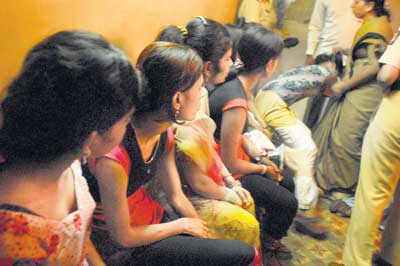
Saved at last: CSWs were sent to the Rescue Foundation at Hadapsar was the original caption on this photo. It went with a story the other day that recounted a rescue operation in Budhwar Peth, an area of Pune (Maharashtra, India) known for electronics shops and sex workers. The report said the workers were saved but recorded a couple of oddities: 1) the police got a translator but the women gave a fictitious address (there is more than one reason they might have done that) and 2) the police claim ‘medical tests’ will determine the women’s exact age (I don’t believe such a test exists yet).

Two days later, the sex workers are reported to have rioted at the rescue home. The person in charge there is not worried, because it has happened before and because she believes the girls are programmed to lie. True Rescue Ideology. It is quite possible, of course, that the women don’t want to do sex work, just as it is likely that they don’t want to be placed in a ‘home’.

Note: The redundant label CSW-commercial sex worker appears sometimes, though it is difficult to see what the word commercial adds to the meaning. If you call people workers, you imply they are doing a job in exchange for money, no?

Sex workers don’t want rescue, 23 October 2010, Mid-Day.com

21 sent to Pune shelter clamour to return to brothel, manhandle staff

More than a score commercial sex workers rescued on Wednesday and sent to a shelter in the city began a violent clamour last morning for a return ticket to brothel life. The demands began barely 24 hours since they were brought to the shelter, said Shaini Padiyare, in-charge of the Rescue Foundation home in Hadapsar that sheltered the 21 sex workers. At 9 am, all 21 sex workers stomped out and created a ruckus. They broke off the grill and engaged in a fight with the management. “The rescued sex workers began insisting on going back to Budhwar Peth,” she said.

Budhwar Peth is the red light district of the city and the sex workers were found at a brothel there. Nine of the rescued sex workers are believed to be minors, and all of them Bangladeshis.

In yesterday’s drama a member of the management suffered a minor injury on the arm. No sex worker was hurt. A case was registered at the Vanudi police station. “In major raids, initially such things happen,” said Padiyare. “In an earlier raid, when 46 girls were brought, the same thing had happened.”

The police suspect the sex workers were illegally brought into the country and forced into prostitution, though this could not be established from their statements taken after Wednesday’s raid as these were found to be misleading. “They are programmed to lie, so we don’t have correct information about them,” said Padiyare. “They even lie about their origin.” Padiyare said they were sure six of the sex workers were minors and these were produced before the Child Welfare Community.

Here is the original story:

Rescued sex workers confuse cops, 21 October 2010, Mid-Day.com

9 minors among 21 sex workers rescued; cops need Bengali translator’s services to take their statements

The police employed the services of a Bengali translator after they rescued 21 commercial sex workers (CSWs), nine of them minors, from a Budhwar Peth brothel yesterday evening.

Late in the night, the translator eventually found out that the information provided by the girls had many problems. PSI Sharmila Sutar, the investigating officer, said, “It was difficult to comprehend the address given by these girls. Many of them claimed to be from Khigirpur village in Autganj district of West Bengal. But this place is not in existence.” The brothel owners and the CSWs were later sent to the Rescue Foundation at Hadapsar.

Medical test to know their exact age will be made after these girls will be brought before the court tomorrow,” said Sutar.

The police also arrested brothel owners Gauri Tamang and Reshma Tamang. Cases against Gauri Tamang (40) and Reshma Tamang (50) were filed under the Immoral Traffic (Prevention) Act, 1986 (PITA). Filing of charges continued even after the midnight at Faraskhana police station.

Acting on tip-off from anti-immoral trafficking activist Shyam Kamble from Marian Trust, ACP Ranjeet Dhure along with police inspector Rajendra Kadam of Khadak police station, PSI Sutar and others raided the ground floor of Sagar building in Budhwar Peth, the place where the brothel functioned.

According to police sources, most of the CSWs were brought to the city from Bangladesh illegally. Brothel keeper Gauri Tamang has been arrested before under similar charges. Of the rescued 21 sex workers, 10 of them seemed less than 16 years old.

Debi Walker, a women’s rights activist, said, “The brothel ‘madams’ had warned these girls not to approach the police. By creating horror stories about the police machinery, they wanted to prevent the girls from approaching the police station for any help.”

– Laura Agustín, the Naked Anthropologist

Share

Tags: , , ,

I vividly remember my visit to the Bonifica del Tronto road. It happened during a brief gig I had evaluating projects funded by the European Commission’s Daphne Programme (to combat violence against women); I was visiting a helping project on the coast nearby, accompanying people called cultural mediators in their outreach trips to see people selling sex along this road. We parked, got out of the van and approached a tall black woman who said, before the mediator could even speak: I don’t want to go to any house. Don’t talk to me about going to any house.

In this area of Italy a well-known roman catholic priest, Don Benzi, used to come to talk to prostitutes and take them to one of his safe houses. An obituary from 2007 says:

Above all, he was known for his confrontation with pimps and the prostitutes who can be seen touting for custom at Italy’s roadsides. Benzi was no liberal — he regarded homosexuality as deviancy — but he was a passionate crusader against prostitution, which he regarded as a form of violence against women perpetrated by their clients. If there was no demand, he would say, there would be no supply.

The second sentence is strange – surely it should read he was no liberal AND was a passionate crusader against prostitution? Anyway, note that he was an early propagator of the simplistic idea of supply and demand in prostitution markets: take away one and the other disappears. In 2001 Don Benzi claimed to have saved 3000 girls over a ten-year period. I don’t want to make fun of someone who dedicated his life to helping others, specially unhappy teenagers. I only point out that not everyone wants to be saved his way, and a lot of people in Rescue jobs cannot understand that.

In the story below, ecological activists are outraged because local authorities plan to chop down hundreds of trees along this same road, in another simplistic formula: take away the trees and the sex workers disappear. Maybe, but where’s the next bunch of trees?

Italy to combat prostitution by cutting trees

John Hooper, guardian.co.uk, 12 October 2010

. . . For decades, local law enforcement and politicians have struggled to police the Bonifica del Tronto road, a haven for the sex trade that runs inland for more than 10 miles from the Adriatic coast alongside the river Tronto. Over the years, cameras have been installed, raids mounted, 24-hour patrols implemented and the mayors of towns near the road have signed bylaws imposing fines on prostitutes’ clients. All to no avail.

At the end of last month, the regional government’s public works chief . . . said he had agreed with provincial and municipal representatives to cut down all the vegetation “around and along the banks [of the river Tronto]“, in which the prostitutes ply their trade. . .

A census this month by an NGO found almost 600 prostitutes at work on the Bonifica del Tronto. Most were Nigerians, but they included Romanians, Brazilians, Albanians and Chinese. . .

– Laura Agustín, the Naked Anthropologist
Share

Tags: , , , , ,

No claim of 40 000 victims of trafficking for this big race held annually in Cheltenham. But it is interesting to see how the police describe the actual crimes that concern them in connexion with the sex industry – here, lap dancing clubs. Although there is some stuff about indecency and the reporter mentions sex trafficking, police concern seems to be about violent competition between people taking advantage of temporary licences for lap dancing.

The report illustrates something I’ve believed for some time: that women and sex are actually not the core issue. This is a struggle between the men in the centre – men in suits – and the men they fear, who live in alternative arenas of power and under different laws. This police report brings that out without the usual trappings of horror over the fate of women.

Fears over Gold Cup week lap dancing turf wars in Cheltenham

11 October 2010, This is Gloucestershire

Fears of organised gang crime and sex trafficking have prompted police to call for tough new laws on lap dancing in Cheltenham. Officers say the flurry of temporary strip clubs which spring up in the town during Gold Cup week sparks turf wars between agents and nightclub owners.

The borough council will consider today whether to adopt new government legislation, which would tighten controls – and police have urged councillors to rubber-stamp the move. Licensing officer Andy Cook said:

We support the adoption of this legislation as it will assist further in controlling such activity and help minimise associated incidents of disorder. Each year, during race week, the constabulary receives a few complaints from members of the public about such activity and the marketing which surrounds it. Regular checks are made on all licensed venues to ensure they are upholding the conditions of their licence.

According to police records, disputes between lap dancing agents and club owners in Cheltenham have led to a petrol bomb being thrown at a nightclub window. A bouncer was also hospitalised when an agent’s minders tried to attack a club manager who had employed girls without his approval.

Officers said lap dancers could earn up to £5,000 a week – making the industry an attractive prospect for criminal gangs and international traffickers. Police believe there are direct links between lap dancing and prostitution, drugs, pornography and illegal immigrants.

The council has also received complaints of “scantily-clad women” patrolling the town centre to attract business from racing fans. A report for today’s meeting said council officers found handbills providing “adult entertainment” all over the town in March. It also said there had been complaints of “indecent flyers being distributed and being left on the ground for children to find the next day”.

At the moment, licensed venues can transform into strip clubs if owners serve the council with a temporary event notice. During Gold Cup this year, six businesses served the borough with a notice, which meant they could hold events for up to a maximum of 96 hours as long as they informed the council and police.

The new powers under Section 27 of the Policing and Crime Act 2009 not only outlaw the temporary notices, but also give local authorities the power to impose tighter rules on lap dancing clubs by forcing them to apply for a sex establishment licence rather than a public entertainment licence.

Currently, the Blue Room in St Margaret’s Road is Cheltenham’s only licensed lap dancing club. If it is adopted, the new legislation will mainly be used to give the borough council more control over whether new clubs should be allowed to set up in the town. At the moment, councillors can only turn down applications for a lap dancing club on the grounds of crime, public safety and the protection of children. Today’s full council meeting will be held in the Municipal Offices at 2.30pm.

Share

Tags: , , ,

All week people have been sending me a news story whose source is a press release from the Spanish National Police claiming another triumph in the crusade against sex trafficking. In the years I lived in Spain such stories of breaking up gangster networks were published continuously – so often that I wondered why police didn’t soften the claim. The implication was, and is, that endless police actions are necessary against an infinite number of organised trafficking rings. The possibility that police are not actually breaking up rings but rather taking down a few organisers and lots of undocumented migrants is not mentioned. The theory and practice of policing of this social problem is crude and ineffective, like sticking a finger in a leaky dam.

The Policía Nacional, in charge of keeping smuggled migrants and smuggled drugs out of Spain, issue press releases to advertise successful operations. The investigation in question led to picking up both undocumented migrants and people moving them around the country, finding them jobs and making money off them – whether you call them traffickers, entrepreneurs, fixers or pimps. The fixing they do is standard in migration settings and can be done abusively or in a normal, businesslike way, whether the migrants work selling sex or doing some other job and whether they are men, women or transgender. As the police acknowledged, many of the migrants admitted they knew what sort of work they would be doing in Spain.

Of course it’s crap when migrants have been misled about the conditions they’ll have for living and working and feel trapped. The press release referred to the squalid flats some migrants were living in. Look at the police video and judge for yourself how demonic it looks. The narrator says migrants had to give 50% of their earnings to the people in charge plus pay for food and lodging. It’s a bad deal but it isn’t slavery and it is not unusual amongst undocumented migrants. The debt mentioned, €4 000, is also not a high amount for a trip from Brazil, where most of the migrants were said to come.

This Spanish press release relates how police captured members of a network dealing with (and in) men rather than women. But that doesn’t mean there weren’t such networks before, or that smuggling rings are all gender-specific, or that things are really getting bad when men begin to be treated like women.

It also doesn’t mean something specially demonic is going on because drugs are mentioned -the Policía Nacional are also charged with stopping drug trafficking, remember, so they mention any they find. The presence of viagra makes the scenario sound more titillating and sex-slavey, but I think one can understand that drug in the same way one can understand alcohol, hash and cocaine in these settings – substances some people use to feel better or more capable of performing or enduring unpleasantness or having fun. Without knowing how many of the migrants complained that these drugs were forced on them or that they were not allowed to sleep, we might refrain from getting all het up.

Police interrogations of migrants picked up in raids tend towards fruitlessness and dodgy information. Undocumented people want to avoid being deported at all cost. The police want to find traffickers above all. The atmosphere is conducive to telling a certain kind of story of ignorance and victimisation: interrogations are not moments for the detained to strongly assert agency about buying false documents, selling sex or taking drugs.

This ring-bust might be a significant one, there’s no way to know. The proliferation of the limited, exciting-sounding information from a single press release into all the major media, treating it as Big Terrible Urgent news is about the Internet – not journalism, or not what we used to think of as journalism. An egregious example comes from Diario Vasco: Prostitutos forzosos 24 horas a base de viagra (prostitutes forced 24 hours with viagra), followed by the typical thoughtless cliché Venían con la promesa de ser bailarines o ejercer la prostitución de alto ‘standing’, pero vivían hacinados y explotados.

So, could this be a particularly bad trafficking story? Maybe, but I doubt it. Does it deserve all the hullaballoo it’s getting? Definitely not.

Share

Tags: , , , , ,

« Older entries § Newer entries »