I am Kthi Win from Myanmar and I am a sex worker. I manage a national organisation for female, male and transgender sex workers in Burma and I am also the chairperson of the Asia Pacific Network of Sex Workers. Until now, organising anything in Myanmar has been very difficult. People ask, How did you set up a national programme for sex workers? And my answer to them is Our work is illegal. Every night we manage to earn money without getting arrested by the police. We used to work and organise together, so we use this knowledge in order to work out how we can set up the National Network without making the government angry.
This is the opening of Kthi’s plenary speech last Saturday at the AWID conference in Istanbul; at the end Kthi asked those in the hall – 1500-2000 – to stand and repeat with her Sex work is work! Most people did what she asked; no one protested. I presume hard-core abolitionists chose to stay away from this session. You can listen to Kthi’s speech, too.
Photo by Debolina Dutta
I was at this event most of last week, part of a group promoting a vision of sex work, migration and feminism that emphasises agency, the state of being in action, taking power, making decisions even when presented with few options. We overtly challenged the reductionist, infantilising ideology that has come to dominate mainstream policy and faux journalism (like The New York Times’s) by attending many sessions and commenting.
I spoke at Don’t Talk to Us About Sewing Machines, moderated by Meena Seshu from SANGRAM in Sangli, India. Wi from Empower spoke first about her research into the state of sex work in Thailand; then she showed the film Last Rescue in Siam, which makes fun of police raids on bars where people are harmlessly singing and drinking. Dale from APNSW then showed a clip from a raid in India that shows sex workers physically resisting police ‘rescue’.
Large amounts of money go into these programmes to rescue people who in many, many, many cases do not want to be rescued, she said, adding that many women choose sex work as a preference to jobs such as domestic work.
We’re talking about the ability to recognise that someone else can make a different decision from your own about her economic or mental or emotional empowerment, she added. That if you want to rescue someone you need to know very well first what it is that they want before you rush in to help them.
I hope our interventions in this very large international women’s event have been worthwhile: one never knows.
Oh for goodness’ sake, does everyone in the USA have to take on sex trafficking as their special mission? How conformist! Ashley Judd has joined the list; it turns out she once wrote a school paper on the topic, so the UN invited her to come be an expert recently, and rather than blame Judd for her lack of imagination I charge the UN for utter irresponsibility. I expect Mira Sorvino is annoyed as well, displaced from her Queen Bee position. Both women are smugly calling themselves philanthropists now, showing perfectly the correctness of my theory of Rescue as identity marker for under-employed middle-class women.
Now here is Gloria Steinem, founder of Ms Magazine and veteran politicker in the women’s movement, spouting fundamentalist cliches in India, where she was invited to talk about prostitution and trafficking. Feminist conflict on these subjects is as common in India as anywhere else, so the fact that Steinem’s remarks caused a kerfuffle is not surprising, but The Hindu newspaper has allowed a true blossoming of quarrels today – really quite absurd if you read through them all. Steinem’s original talk at a university, reported as Up against the epidemic of trafficking, was repressive towards sex workers and their allies who attended, followed by Prostitution is one of the oldest oppressions, not profession, which includes more unsubstantiated statistics from Rescue project Apne Aap
the number of child victims trafficked globally for sexual exploitation or cheap labour is 1.2 million annually. The National Human Rights Commission estimates that almost half the children trafficked within India are between the ages of 11 and 14.
Steinem’s own errors and cliches include:
The average age for children to be pushed into sex trafficking is between 12 and 13 in the United States and between 9 and 12 in India. The perception is that very young children are less likely to have AIDS. Quoting from her experiences in different countries, she said women who are trafficked suffer a great deal because of patriarchal structures and religions.
. . . the less “valuable” women who are not expected to maintain the “purity” of a class, caste or race are the ones most likely to fall prey to human trafficking worldwide.
She could be crucified for comments like the last one but was presumably surrounded by groupies so not in danger. Isn’t it nice to know that she now has travel plans with Apne Aap to look at real live sex trafficking and prostitution around India? More Reality Tourism, I call it, with a biased guide. Has she met Siddharth Kara yet?
I suspect that the event’s organiser, Kumkum Roy of Jawaharlal University’s Women Studies Programme, had not properly investigated Steinem before inviting her, because she nearly apologised for exclusion of sex workers at Steinem’s talk in Need for a nuanced debate. Shohini Ghosh, another academic, refuted Steinem’s nonsense more clearly in Moralistic assumptions.
However the icing on this quarrelsome cake is in a piece by Steinem herself called Body Invasion is De-humanising, as a reply to the above criticism. Steinem’s unfamiliarity with this particular debate is glaringly obvious, so that she leans on 1970s Dworkian rhetoric and errors of fact that have been debunked hundreds of times. As with the pea-brained actors, Steinem is reduced to using anecdotal evidence, claiming that the unhappy prostitutes she happens to have met represent all, and she says no one has ever told her they want their daughter to grow up to be a prostitute. My land, isn’t that amazing! This sort of embarrassing cant is easily avoided by never accepting an invitation to talk on a subject where most of the audience knows much more than you ever will: Public Speaking 101.
I’ll be speaking briefly at the AWID International Forum on Women’s Rights and Development in Istanbul later this month. This very large conference is held every few years by the Association for Women’s Rights in Development. The website says attendees include people interested in women’s rights, international development and social justice, particularly from the Global South, young women and groups that historically have had difficulty getting their agendas heard.
This year’s theme is Transforming economic power… are you up to the challenge? In other words, ideas about money and power. The APNSW group I am part of will have a pre-meeting to strategise having sex worker voices in all streams of the conference and therefore the wider women’s movement. Our session is going to have short presentations and lots of discussion, so please come and participate.
Day 3 – April 21, 11:30 – 13:00 Kasimpasa 1 & 2
Don’t Talk to Us About Sewing Machines–Talk to Us About Workers’ Rights (20957 E,F,T)
Sex work is work. Trafficking is as an issue of poverty that causes many women to willingly/unwillingly enter into agreements with traffickers because they seek to escape / explore better livelihoods. This session will reflect on the evidence base and the experiences of sex worker rights organisations in this area.
Speakers: Meena Seshu-SANGRAM, Sachumi Mayeo-Empower, Laura Agustín
The other day, discussing the recommendation that DNA should be taken from men who buy sex, I ended with a question: how can anyone maintain a utopic vision about gender equality that relies on punishing so many people as criminals? That reminded me I had asked the same question in an article published more than ten years ago.
Although I wouldn’t write it exactly the same way now, I stand by its basic ideas. If Gender Equality is one of feminism’s goals, how can we imagine it without reducing everything to black and white, perpetrator and victim, crime, crime, crime? Click for the pdf or keep reading here.
In the movement to construct a discourse of ‘violence against women’, and thus to raise consciousness about kinds of mistreatment which before were invisible, the stage has been reached where defining crime and achieving punishment appears to be the goal. While it is progressive to raise consciousness about violence and exploitation in an attempt to deter the commitment of crimes, I hope to show that the present emphasis on discipline is very far from a utopic vision and that we should now begin to move toward other suggestions for solutions.
The following argument uses the example of prostitution or ‘sexual exploitation’ as an instance of ‘violence against women’, but the approach can apply to any attempt to deal with not only definitions of gender and sexual violence but with proposals to deal with them. When applied to adult prostitution, the term ‘sexual exploitation’ attempts to change language to make ‘voluntary’ prostitution impossible. For those who wish to ‘abolish’ prostitution, therefore, this change in terms represents progress, for now language itself will not be complicit with the violence involved. For those who may or may not want to ‘abolish’ prostitution but who in the present put the priority on improving the everyday lot of prostitutes, this language change totalizes a variety of situations involving different levels of personal will and makes it more difficult to propose practical solutions. When applied to the prostitution of children, the term ‘sexual exploitation’ represents a project to change perceptions about childhood. For those who believe that the current western model of childhood as a time of innocence should become the ‘right’ of all children in the world, this term is very important.
Criminalization of clients
Efforts to change sexist, racist and other discriminatory forms of language have long been a focus of projects of social justice in western societies, and the push to define ‘violence against women’ clearly forms part of this movement. Along with this, we see a strong move to have actions that fall within these new definitions proclaimed as crimes and their perpetrators punished. If prostitution is globally redefined as sexual exploitation (by ‘globally’ I mean that no distinctions are made according to whether prostitutes say they ‘chose’ sex work to any extent), therefore, all those who purchase sexual services, called usually ‘clients’, become ‘exploiters’.
Obviously, different terms function better or coincide more with different situations, but when social movements consciously work to change language they almost inevitably eliminate these differences. Since there are still plenty of places in the world where prostitutes are simplistically viewed as evil, contaminated, immoral and diseased, campaigns to change language so as to see the lack of choice and elements of exploitation in prostitutes’ situations are positive efforts to help them. Why, then, do these positive efforts have to be based on finding a different villain, to replace the old one?
I am referring to the discipline-and-punishment model that these efforts to change language and change perception inevitably use: in constructing a victim they also construct a victimizer—the ‘exploiter’, the bad person. After that, it is inevitable that punishment becomes the focus of efforts: passing laws against the offense and deciding what price the offender should pay. This model of ‘law and order’ is familiar to most of us as an oppressive, dysfunctional criminal justice system. We know that prisons rarely rehabilitate offenders against the law; we know that in some countries prison conditions are so bad that riots occur frequently, and if they don’t, perhaps they should. We also know that it is usually extremely difficult to prove sexual offenses (because of how the law is constructed, because of the difficulty of all these definitions of victimization, because legal advice can find ways out, etc.). Yet we continue to insist on better policing and more effective punishment, as though we didn’t know all of this.
International regulations on trafficking and sexual exploitation
My own work examines both the discourses and the practical programming surrounding the European phenomenon of migrant prostitution, the term used to describe non-Europeans working in the European sex industry (and, indeed, everyone who travels from one place to another in that vast network of diverse businesses). In most countries of the European Union, migrants appear now to constitute more than half of working prostitutes, and in some countries possibly up to 90 percent (Tampep, 1999). This situation has caused a change in the thinking on violence: now ‘traffickers’ of sex workers are discussed more than their clients. Because so many of the migrants come from ‘third world’ countries, ‘trafficking’ discourses have become a forum for addressing ‘development’ projects such as structural adjustment policies of the International Monetary Fund. But the more active debates have concerned violence, in a way that constructs them as organized crime.
One of the fora of this highly conflictive discussion was the United Nations Commission for the Prevention of Crime and Penal Justice, which met various times in Vienna to elaborate protocols on the trafficking of migrant workers. Two distinct lobbying groups argued over definitions of words such as consent, obligation, force, coercion, deceit, abuse of power and exploitation. Two distinct protocols were produced, one which applies to the ‘trafficking of women and children’ while the other to ‘smuggling of migrants’. The gender distinction is clear, expressing a greater disposition of women –along with children– to be deceived (above all about sex work), and also expressing an apparently lesser disposition to migrate. Men, on the other hand, are seen as capable of migrating but of sometimes being handled like contraband, thus the word agreed on is not trafficking but smuggling. The resulting protocols now form part of the UN Convention Against Transnational Organized Crime (UN, 2000), which member countries will debate individually and decide to sign or not.
What is the problem? In an effort to save as many victims as possible, the protocols totalize the experience of all women migrants working in the sex industry, and all those who help them migrate—a wide array of family, friends, lovers, agents and entrepreneurs, as well as small-time delinquents and (probably, but this is not proved) big-time criminal networks—are defined as traffickers. Every kind of help, from preparing false working papers, visas or passports to meeting migrants at the airport and finding them a place to stay, is defined as the crime of trafficking.
The Coalition Against Trafficking in Women (CATW) specifically tries, both at the Vienna meetings and internationally, to fuse the two concepts of ‘trafficking’ and ‘prostitution’ and to define them both as crimes of violence against women. Not only everyone who helps people migrate and work in the sex industry but everyone who buys sexual services ends up defined as an exploiter, a rapist and a criminal. CATW favours legislation to penalize clients of prostitutes (CATW, 2000).
The booming sex market
The problem with proposing the penalization of sexual ‘exploiters’, or clients of prostitutes, comes from the magnitude of the phenomenon, which is almost never confronted. Statistics are unreliable for all sectors of an industry overwhelmingly unrecognized legally or in government accounting, and which operates informally and relies on bribes, legal loopholes and facades. However, we can understand from the many studies of different aspects of the sex industry that it is booming. Prostitution and exploitation sites are so numerous everywhere that customers cannot be exceptional cases (yet they are often spoken of as if they were ‘perverts’ or ‘deviants’). Rather it is clear that adult and adolescent men everywhere consider it permissible to buy sexual services, and some estimates calculate that most men do it at some time in their lives.
More than 20 years ago, one Roman prostitute calculated this way:
Rome was known to have 5,000 prostitutes. Let’s say that each one took home at least 50,000 liras a day. Men don’t go more than once a day. That means that for someone who asked 3,000 liras in a car, to arrive at 50,000 she had to do a lot, maybe twenty or so. Figure it out, 20 times 5,000 comes to 100,000 clients. Since it’s rare for them to go every day, maybe they go once or twice a week, the total comes to between 400,000 and 600,000 men going to whores every week. How many men live in Rome? A million and a half. Take away the old men, the children, the homosexuals and the impotent. I mean, definitely, more or less all men go. (Cutrufelli, 1988: 26, author’s translation)
I gave a talk the other day that mentioned sex trafficking, sex work, surrogate motherhood, child sexuality, sex tourism and international marriage broking. Held at the Institute for Development Studies in Brighton, (UK, where the University of Sussex is), it was a lunchtime seminar, which are often small affairs, but 50 people crowded together for this one. My title was Five Steps Backward: How women become second-class citizens of globalisation, so people came who were interested in gender policy, sexualities, globalisation, migration, development and queerness.
As soon as I finished talking, a hand shot up from a woman who said it was irresponsible of me to talk that way. I had made the argument that Gender Equality policy, promoted by State Feminists (professionally employed to set policy affecting women), now tends to recreate women as always already unempowered victims rather than protagonists of their own lives who opt for one or another of the limited alternatives available – in the context of inflexible patriarchy and a globalisation that promotes precarious workers and their migrations – regardless of their sex or gender identity.
It is hardly news that a state-oriented feminist disagreed with me. Someone I ran into at the National Film Theatre bar in London said You have that effect on people. But the suggestion that I should shut up is comment-worthy. The belief in Free Speech is claimed as a fundamental characteristic of western democracies and sometimes seems like a fetish in anglo countries. At protests in the US, whether they are students on campuses or Occupy Wall Street, First Amendment rights are continually cited, and the UK is similarly insistent about free speech. Yet the objector to my talk the other day seemed to be saying that dissent is dangerous – like Mira Sorvino, who suggested I not be allowed to speak on the BBC world debate on human trafficking held in Luxor. As though I might undermine the war on trafficking, as wartime posters warned against careless talk lest enemies benefit.
Highlights from the exchange with an apparently senior academic who did not introduce herself begin with her comment to me that
As an academic, you should – which I interrupted to say
I am not an academic.
All right, she said, as a researcher, as a person invited to talk in this space, you should not talk this way because Where do you draw the line?What about clitoridectomy? she demanded.
I stated at the beginning of my talk that I am not constructing another big all-inclusive meta-narrative that will Explain Everything once and for all.
But where do you draw the line? she insisted.
I am not in the line-drawing business. Also I have not researched clitoridectomy myself so I would not presume to pronounce about it.
This cultural relativism, she sputtered.
Cultural relativism is an anthropological tool. It means trying to understand the logic and meaning in situations from the standpoint of people inside them. It is not about defining universal Goods and Bads. Some people want to write laws that will apply to everyone all over the world in all situations. I am not doing that.
You don’t take power relations into account, she said, clearly meaning a view of power reduced to Male-Female in the abstract. I wrote recently about this in The Bad Vibrations of Fundamentalist Feminism, where I referred to World Gender War.
I take power relations into account, all right, but not the simplified one you are referring to.
From a human-rights perspective –
I don’t personally use a human-rights argument, though many others do. In debates on trafficking, everyone claims to be fighting for human rights even when their arguments are diametrically opposed.
You talk about personal choice —
I did not use that term. I said that even people with few and poor alternatives can and do prefer one of them to the others.
In the neoliberal discourse, the idea of choice is very problematic —
I didn’t talk about choice, don’t put words in my mouth.
You cannot have true choice without equality.
Hm, so what are women supposed to do until absolute full and true equality is achieved?
Many are not able to articulate for themselves [what they want or need], she said.
I deeply disagree with you about that. I have complete confidence that everyone in this room can judge for themselves whether my ideas are rubbish or not.
I finally cut her off so that others in the audience could ask questions, and funnily enough one young woman returned to this point, asking the objector:
Are you saying that I am not capable of listening and figuring out for myself how I feel about what Laura is saying?
And there, alas, she backed down rather than defending her belief that people like herself Know Better than other people what the right way is to live and think about men, women, sex, money, power and many other things. She may not have meant to imply that about that woman, just about a lot of other women too poor and pathetic to make it to a room like that in Sussex. If I had invited her to come and perform this stuff I couldn’t have had a better didactic tool.
PS: She said she would be writing to me but has not, and I still don’t know her name.
Here is another article that required persistence and patience to get through the academic journal review process and into publication. Migrants in the Mistress’s House: Other Voices in the ‘Trafficking’ Debate, published in 2005, used testimonies of women selling sex who do not consider themselves coerced, forced, trafficked or enslaved or who, even if they were coerced by economic circumstance, are not searching for Rescue. Click on the title for the pdf.
Whatever levels of knowledge and ‘consent’ are involved, however, women are never made aware of the extent to which they will be indebted, intimidated, exploited and controlled. They believe . . . that they can travel to a richer country and earn large amounts of money in a short space of time, which they can then use to move themselves and their families out of poverty and despair. In reality, they are told they owe a huge debt which must be repaid through providing sexual services, and they are able to exercise virtually no control at all over their hours of work, the number of customers they serve, and the kinds of sex they have to provide. (Kelly and Regan 2000, 5)
with migrant testimonies like this:
I arrived in Almería through a friend’s mediation. I began to work as a domestic, I was badly paid and mistreated. Sundays I came to the edge of the sea and cried. One Sunday a Moroccan man saw me crying, I explained my situation to him, he took me to his house. I was a virgin, he promised he was going to marry me . . . he got me a residence card. . . . He found me work in a restaurant and let me stay in his studio, he told me I had to pay rent. I began to sleep with some clients from the restaurant. . . . Now, I would like to go to France, I want to get married. . . . My sister who lives in Bézier says she’s going to find me a Frenchman, to get a residence card. (Moroccan woman; Lahbabi and Rodríguez 2000, 18)
or this:
Once I was talking with a friend and she asked if I wanted to go to Spain. I knew why, so I said: ‘Ah, do you want to?’ . . . and I don’t know where she met this guy, he got the papers for us . . . the money and we left. . . . This guy went to look for work, where are the best places to work, where there are men. . . . Because one place has a lot of men, another doesn’t. . . . I worked in Logroño a month or so . . . then back to Málaga . . . a month or two, then I came here. . . . He talked first with the boss of this place . . . said he was looking for work for us. (Ukrainian woman in Spain; Agustín 2001)
The men in both stories would be called pimps and traffickers by the cited feminists.
In 2005 this was still mainly a feminist quarrel, so those are the arguments I attempted to answer. I called it Migrants in the mistress’s house in reference to working-class servants in rich people’s homes, where they may become subversive members of the family, and, in the female case, have sexual relationships with some of them that may be coerced but may also be manipulative and self-serving. Full references in the paper itself.
I was going to write about Extremist Feminism again but this latest is over the line into wackiness. By what twisted logic did the European Women’s Lobby decide that a film of a man pretending to lick a series of pussies would work to discourage other men from paying to lick pussies or have their own parts licked, or both? The incoherency of this End Demand product is mind-boggling.
The EWL, as noted not long ago in a post about European anti-prostitution trends, has been running a Together for a Europe Free From Prostitution campaign, despite the fact that some members of the EU legally permit and regulate some branches of the sex industry. The EWL is not run democratically, however, instead picking names from member countries willing to go along with their insider fiats. Yet the European Commission funds them just as though they truly represented all women in Europe. It is an old scandal, and if I am not in possession of all the facts then that is because the EWL provides none on their website. I am also told they accept money from other parts of the world and would not be surprised to find that Hunt Alternatives is a source, since the international End Demand campaign begins there.
Europeans will like to know that their money has gone to make versions of this video in many languages besides EN (BG, CZ, DE, DK, ES, FN, FR, HU, IT, MT, NL, POR, RO, SE, TR) with voice-overs and/or subtitles in a bunch and subtitles only in others. And we are in a financial crisis? What a boondoggle.
In the one-minute video, the man (meant to be a sex worker though he looks anything but) doing the licking acts out feeling sickened by it. He brushes his teeth a lot. In contrast, the women throwing themselves back on his bed look quite pleased. Just how is this meant to discourage men from paying for sex? It seems possible that women seeing the film will think how great it would be if they could hire someone for oral sex, though they are always said to want a lot of cuddling and romancing first (which is a silly essentialising of ‘female’ desire). In any case, the psychology of this campaign certainly shows how anti-sex the campaigners are.
This time I think they’ve outwitted themselves, these anti-everything campaigners. For all their money, this approach can only backfire, as I imagine more women starting to search for . . .
I feel like the veteran of a long, drawn-out war. I first knew it as the War Between the Sexes (back when I thought there were only two). Now it feels like a World Gender War, in which a small number of women endeavour to bring all men and all disagreeing women to their knees (the existence of other sexes or gender identities is routinely dismissed). In this war, masculinity is equated with patriarchy (a strategy of domination), the penis becomes a weapon of mass destruction and the vagina is an open, constantly violated wound.
Sexual acts involving women and men are the major battlefield of this war, outperforming unequal job opportunities and wages, unpaid housekeeping and caring labour, inadequate health care, sexist stigmas and poverty itself as crimes against women. For crusaders, the male body is the problem of patriarchy and sexual relationships over-riding concerns. Particular sexual relationships are said to be correct and a wide range of others, where power is defined as ‘unbalanced’, are the target of eradication campaigns, in Europe as well as the US. Pornography, prostitution and rape at the top of the list, but surrogate motherhood and transsexuality are not exempt.
Nowadays, the 1950s are dismissed as a Dark Age for women ejected from wartime jobs into neurotic house-cleaning, child-rearing and the vaginal orgasm. I remember that period and wouldn’t want to bring it back, but a lot of what I hear now is not better. 1960s women’s liberation was about women acknowledging and standing up for their desires and ambitions. Legislative and wider political proposals emerged, but the foundation was about individual women understanding their oppression and learning how to express their own selves, whatever those were. The initial stage was not about political correctness or ideology, and it felt liberating, all right.
For some of the 1970s, I lived in San Francisco, and I recall the day I noticed a shop had opened near my house at 22nd Street and Guerrero. The window displayed dark metallic objects I couldn’t identify, so I went through the door to a space no bigger than some closets where a woman explained the mysteries of antique vibrating objects. Although some now laugh at or dismiss the phrase sexual liberation (pace Foucault), it did not sound funny then. Learning about sex – the acts of sex – was important at a time when almost no information was available at all. The Myth of the Vaginal Orgasm was a breakthrough essay, and then others said it wasn’t entirely a myth, and so it went, constant discoveries that every sort of sexual configuration and activity was feasible and satisfying for someone. What a deliverance: Now there would be no need to live up to anyone else’s idea of Good Sex.
The names Andrea Dworkin and Catharine MacKinnon crop up these days as people struggle to understand the reductionist, unforgiving ideas associated with a particular version of feminism that claims itself to be the One True Faith. The first US Take Back the Night march, where Dworkin spoke, was held in San Francisco in 1978, but even though I was living in the city I didn’t know anyone who went. I wouldn’t have felt opposed but rather that my concerns were different, and I wouldn’t have understood why the march was going through red-light areas: the link between rape and the sex industry was not apparent to my own young feminist self.
I often meet women annoyed that the term radical feminist should go to mean-spirited, authoritarian and apparently sex-hating folk. I don’t blame them for wanting to reclaim radical, since a stream of thought that once proposed revolution now wants to make us obey a narrow set of sexual rules – like in the 1950s and other repressive eras. This is fundamentalist ideology, a claim that there is only one truth about sex and women. The opposite of grassroots politics, this fundamentalism is transmitted by an elite cadre of leaders who forbid differences of opinion. No cultural relativism or local history is permitted to interfere with simplistic, reductionist principles that are applied to all people despite what they feel themselves.
Dworkin famously likens the penis to an invading weapon in her book Intercourse. In this war zone, male sexuality is inherently violent, exploitative and imperialistic, reduced to the penis which is said to have to push past the vulva’s muscles. Male sexuality is described as a weapon of predation and violence that only criminal law and punishment can solve.This is anatomical fundamentalism, in which an erect penis is said to be capable of doing more harm than other body parts might do – a stiff tongue, hard nose, knee or finger. Vaginas are imagined as not doing anything but defencelessly wait to be invaded (amusing when one remembers the old idea of women’s dangerous, toothed vagina, not to mention spider women and other scary types). But this sort of anatomical determinism comes up in contexts far from Dworkin’s thinking; for example a recent report claimed that the way female rats curve their backs and raise their hips for sex means they are submissive. But neither physical traits nor bodily positions have inherent meanings, as any sane commentator knows.
Movements resisting sexual repression have to contend with difficult contradictions: that men tend to be physically stronger than women, that male arousal and orgasm are more evident than female and that violence against women and sexism are still ubiquitous. Who could have predicted that my way of thinking about migration and selling sex could end up being seen as a sign of collusion with the enemy? Women like myself who were alive in the 60s are viewed as particularly sinister traitors to the fundamentalist cause, because we ought to know how things should have turned out. When I nearly ran into MacKinnon recently at a Swiss university I could imagine the potential confusion felt by people hearing us both, because, despite our similar age, our mental universes seem spectacularly opposed.
The World Gender War is most evident nowadays in campaigns to criminalise men accused of causing prostitution and human trafficking through their willingness to buy sex. Ideological crusades assuming all women want the same things include the European Women’s Lobby’s Prostitution-free Europe to Hunt Alternatives’ End Demand and Ashton Kutcher’s Real Men Don’t Buy Sex. I am accused of being a pimp or pornographer because I don’t think male sexuality per se is the problem. Instead I believe we are all engaged in a slow process of working out how to get along sexually with different sorts of equipment, different desires and different ways of going about satisfying them.
I wrote about hate and hating last year in a somewhat jocular tone, noting that I maintain a sort of parallel cv in which Important Enemies appear as a category (note that readers’ comments were highly entertaining). I also noted that some anti-prostitution activists question the right of people even to disagree with them. Then not long ago ex-movie star Sorvino attempted to stop me from talking on a BBC World Debate where I was a panelist – without succeeding, but her sense of entitlement is amazing (BBC editors softened the effect of her attack considerably in the published version).
Here is an example of another actress, Anne Grethe Bjarup Riis, making a nasty attack on a mainstream Danish television show (Go’ Morgen Danmark, TV2). Here no editing has softened the full effect; even without subtitles, even with the sound turned off completely, you get the gist. Bjarup Riis feels entitled to scream at and interrupt the other guest, hog screen time and use insulting language (fissehul = cunthole). The object of her attack is Susanne Møller, spokesperson for SIO, sex worker rights organisation in Denmark. Sus reacts to the attack by smiling and remaining calm.
Anne Grethe Bjarup Riis’ pinlige optræden på Go’ Morgen Danmark, TV2
The attack backfired, since SIO got lots of positive attention from viewers who did not appreciate Bjarup Riis’s behaviour and, especially, from those who repudiated her claim that she speaks for all women. This is a perverted version of feminism, to put it mildly. A parody was soon made of the encounter which is quite funny, and this time the presenter has a way to turn the screeching off.
Live fra Bremen 4 – Diskussion om sexarbejderne – Nyhederne sådan cirka!, DKWebTV
27 februar 1300 – 1800 Festival begins at Jemtelandsgade 3, Kvarterhuset, near Amagerbro Metro station (the metro to and from Vanløse to the airport). Map.
12:30 – 13:00 – Ankomst – Kom gerne i god tid
13:00 – 13:15 – Velkommen – Eini Carina Grønvold fra De røde paraplyer byder velkommen og fortæller om dagens forløb
13:15 -14:00 – Antropologen Laura Agustín taler om migrante sexarbejdere
14:00 -14:30 – spørgsmål og debat
14:30 – 15:15 Sexarbejderaktivisten Pye Jakobsson taler om forholdene for de Svenske sexarbejdere
15:15 – 15:45 spørgsmål og debat
15:45 – 16:00 Pause
16:00 – 16:30 Historikeren Nina Søndergaard vil kort skitsere op hvordan prostitution er blevet opfattet og reguleret i Vesteuropa gennem de sidste 150 år.
16:30 -16:45 spørgsmål
16:45 – 17:15 Talskvinde for SIO, Susanne Møller, vil fortælle om SIOs kamp for sexarbejderrettigheder
17:15 -17.45 spørgsmål og debat
17:45 – 18:00 – afrunding og og tak for i dag
1 marts kl 18:30 – 20:30
Filmaften i Virus Bio på Valhalsgade 4, 2200
Der vil blive vist film, der tematiserer sexarbejde fra forskellige vinkler. Efterfølgende debat. Entré 20 kr.
3 marts kl 17:00 – 19:00
Festivalen slutter d. 3 marts hvor vi vil markere Sexarbejdernes Internationale Rettighedsdag med en demonstration FOR sexarbejderrettigheder og IMOD sexkøbsforbud fra Rådhuspladsen til Halmtorvet. Alle er velkomne!
At an event at the British Academy in London the other day I used the term Extremist Feminism to describe the sort that convicted a man for buying sex in Sweden although evidence was lacking to show he had bought it, on the ground that he should have known that someone must have paid. The court assumed the female playmates in a hotel room to be prostitutes because of their appearance and their foreign-accented English. Dismal stereotyping of women going on there – not so different from the comment about disreputable women made with impunity by a hotel magnate in Luxor. Extremist also describes feminists who evaluated the sex-buying law without doing any actual investigation but declared it a success on purely ideological principles. And who then proceeded to propose increased penalties for clients convicted. Extremism means assuming men have bad intentions towards women and seeing their sexualities, and in fact their bodies themselves, as inherently exploitative. Others have used extremist to refer to man-haters like Valerie Solanas, author of SCUM Manifesto, and people throw around ruder terms like feminazi. But I prefer not to sound like someone trying to discredit all sorts of feminism.
I usually use the term fundamentalist feminism, referring to a stream of feminism that wants to go back ‘to the roots’, by which they mean early 1960s universalist feminism, the idea that Woman can be known through a biologically female body and Women are all ultimately alike. Authoritarian Feminism is another possible term, this time putting emphasis on the tendency of fundamentalists to decree that their view is the only correct one and must be followed by everyone. Theory calling itself radical feminism in the 1960s has moved in a direction Orwell might have called Big Sister Feminism, where no disagreement is brooked. This particular feminism happens to hold power in Swedish government bureaucracy. It is State Feminism (coming from government employees empowered to set policy on women and gender), but there is no reason why State Feminism should have to be extremist; this is just how history has played out in Sweden. This view of women and men exists in every country I have lived in, and that is quite a few. And my, how many extremist feminists wish it would play out the same way in their countries! Here is the review of the BA event from Something Dark, in which government attempts to censor and silence were discussed in detail.
A UK academic organisation, the Onscenity* research network, hosted a seminar at the British Academy, London, on 1 February to draw attention to increasing state regulation of sex in relation to media, labour and the internet.
Julian Petley, professor of screen media and journalism at London’s Brunel University, chaired the seminar, and introduced it with his own presentation, “Censoring the image”. Petley is a veteran advocate of free speech, and he once again demonstrated his detailed grasp of a broad range of censorship and free speech issues in the United Kingdom.
Petley began his delivery with the sobering declaration that there were many UK laws limiting freedom of speech; he then tabled an overview of these laws, their history and their socio–legal impact today. He drew particular attention to the evolution and problems of the Obscene Publications Act (OPA), various child protection laws, and the Criminal Justice and Immigration Act (CJIA) 2008.
He pointed to how the typology of child sexual abuse imagery adopted by the UK legal system regarding the mildest category, “level 1” – which refers to “images depicting erotic posing with no sexual activity” – had led to “controversy”, for example, by allowing for “police bullying” of galleries exhibiting the work of artists such as Robert Mapplethorpe [see the feature articles concerning Mapplethorpe from page 28 in SomethingDark webmagazine issue 1, beginning with “Twenty years later: Mapplethorpe, art and politics”; see also our Latest News entry of 9 July 2010, “Further viewing – the art of Robert Mapplethorpe”].
Regarding the CJIA 2008, specifically the sections criminalising simple possession of “extreme pornographic material”, Petley repeated the oft-quoted charge of critical specialists by stating the law was so vague and subjective that it is impossible for anyone to know whether a great body of material will be regarded as illegal or not. He summarised the approach of regulators as one that tends to “collapse” the offensive into the harmful, “as if being offended is the same as being harmed”.
The first speaker, Martin Barker, professor of film and television studies at Aberystwyth University, in his presentation “The problems of speaking about porn”, outlined the difficulties faced by individuals, including academic researchers, in dealing with themes of sex and pornography due to the stigma often attached to critics of heavy-handed regulation by the advocates of such regulation.
Barker referred to “the politics of disgust” and summarised the results of a survey he had conducted on print media coverage of issues concerning pornography. He said tabloid press coverage of “pornography” had increased since 2000 but had fluctuated within this trend, and consisted of two attitudes: (a) a “prurient fascination”; and, (b) an exaggerated morality that proclaimed certain categories of sexually oriented material as kinky and unacceptable.
Revealingly, Barker spent more time on broadsheet coverage, particularly on a steady increase in their use of the term “porn” as a metaphor with a range of negative connotations. He maintained the evidence suggested that the individual and subjective, emotional response of disgust automatically authorises commentators to adopt a simplified, morally superior position when dealing with complex issues such as pornography, and that “the politics of disgust” was driving public discourse and regulation.
Yaman Akdeniz, formerly at the University of Leeds but now an associate professor of law at Istanbul Bilgi University, outlined his work in legal campaigns to reduce the growing censorship of the internet by the Turkish state. He emphasised his concern at the potential for a “domino effect” that would see developing countries seize upon internet- and website-blocking policies, either already implemented or proposed, in developed Western countries such as the United Kingdom, the European Union and Australia as justification for furthering their own, already relatively severe, censorship of the internet.
Turning his attention to the case being made for restricting internet access in the Western world, Akdeniz stressed the increasing prominence of arguments claiming that child protection demanded more robust, state-enforced internet regulation and censorship that targets all forms of sexual content, not just child abuse material. He cited an article in the Guardian newspaper from December to illustrate the pro-censorship argument being furthered in the United Kingdom, in this case as advocated by the UK parliamentary under-secretary of state for culture, communications and creative industries, Ed Vaizey.
Laura Agustín, a consultant anthropologist and author of Sex at the Margins: Migration, Labour Markets and the Rescue Industry (2007), focussed on attempts to regulate sexuality and society based on exaggerated claims regarding the extent of human trafficking in the international sex industry. She had recently counselled lawyers for Julian Assange of Wikileaks notoriety, who sought her advice on Swedish rape law in preparing their client’s defence against extradition to Sweden. Agustín, who has lived and worked in Sweden, criticised “state feminism” in the Scandinavian country, describing it as “extremism” that “has gone too far”. She went on to discuss Sweden’s “sex purchase law”, which criminalises those who pay for sexual services – a law that, using unsound and concocted, ideologically driven research, was last July evaluated by the Swedish government as having significantly reduced prostitution and prevented trafficking. It is a law that has been marketed with some success to other countries, including the United Kingdom.
Agustín narrated her experience as a panelist at the BBC World Debate Can Human Trafficking Be Stopped?, held in Luxor, Egypt, on 12 December 2010, which she likened to a “religious revivalism” meeting for “the rescue industry”. This industry, she maintained, bases much of its fervour on enthusiastically publicised – but bogus – statistics on the numbers of trafficked women. She emphasised the fact that sound and genuine research on the subject does not exist, but this does not deter the rescue industry from what is, in effect, a misguided and unrealistic attempt to eradicate prostitution globally, with damaging social consequences at ground level in individual countries [see Laura Agustín’s blog entry, “BBC World Debate on Trafficking Online: Sex, lies and videotaping”].
Clarissa Smith, senior lecturer in media and cultural studies at the University of Sunderland, rounded off the seminar with a summary of the issues and the work that lies ahead in contributing towards the realisation of a more mature society.
Onscenity is a research network dedicated to developing new approaches to the relationships between sex, commerce, media and technology. It draws on the work of leading scholars from around the world and is working to map a transformed landscape of sexual practices and to coordinate a new wave of research in relevant fields. The body was founded in 2009 with funding from the UK Arts & Humanities Research Council (AHRC). “Sex and Regulation” was Onscenity’s second seminar.
This is a long academic piece but useful to understanding the beginnings of what I came to call the Rescue Industry. The links between reference numbers and endnotes go via the original publication’s website (rhizomes). If you use them you just need to click the back button to return to this page.
Abstract: Social interventions aimed at helping the group positioned as most needy in Europe today, migrant women who sell sex, can be understood by examining that time, 200 years ago, when ‘the prostitute’ was identified as needing to be saved. Before, there was no class of people who viewed their mission to be ‘helping’ working-class women who sold sex, but, during the ‘rise of the social,’ the figure of the ‘prostitute’ as pathetic victim came to dominate all other images. At the same time, demographic changes meant that many women needed and wanted to earn money and independence, yet no professions thought respectable were open to them. Simultaneous with the creation of the prostitute-victim, middle class women were identified as peculiarly capable of raising them up and showing the way to domesticity. These ‘helpers’ constructed a new identity and occupational sphere for themselves, one considered worthy and even prestigious. Nowadays, to question ‘helping’ projects often causes anger or dismissal. A genealogical approach, which shows how governmentality functioned in the past, is easier to accept, and may facilitate the taking of a reflexive attitude in the present.
This article addresses the governmental impulse to name particular commercial-sex practices as ‘prostitution’ and its practitioners as ‘prostitutes.’ Although it is conventional to refer to ‘the world’s oldest profession,’ the term prostitution has never described a clearly defined activity and was constructed by particular social actors at a specific time for specific reasons. [i] Within feminism, the phenomenon called prostitution is the centre of an intransigent debate about its meanings, one aspect of the conflict revolving around what words should be used to describe women who offer sexual services for sale: prostitute, sex worker, prostituted woman, victim of sexual exploitation. The use of one label or another locates the speaker on one or the other side of the debate, which essentially asks whether a woman who sells sex must by definition be considered a victim of others’ actions or whether she can enjoy a degree of agency herself in her commercial practice. In the prostitution discourse, those who sell are women and those who buy are men; it is a gendered concept, despite the enormous numbers of transgenders and men who sell sex and the transgenders and women who buy it. The anxiety to define and classify concerns the position of women, and this anxious debate should be seen as a governmental exercise carried out by social actors whose own identities are at stake. Academics and other theorists and advocates for one or another vision define themselves as good feminists or caring persons through their writing and advocacy. Being ‘right’ about how to envision women who sell sex is necessary to these identities, which explains the heated, repetitive nature of the debate. At the same time, for most of those who actually carry out the activity that excites so much interest and conflict, the debate feels far away and irrelevant.
Nowadays, much of the discourse targets migrant women who sell sex, particularly in wealthier countries. I have written in other places about the construction by outsiders of these contemporary subjects as prostitutes, sex workers or victims of ‘trafficking’ when their self-definitions are different (2005a), the construction of victimhood in general (2003a, 2005a), the disqualification of other elements of their identity (2002, 2004b, 2006), the obsession with certain of their sexual practices to the exclusion of everything else about their lives (2003b), the difficulty on the part of many feminists to accept the agency of working-class women who sell sex (2004a) and the voluminous quantity of interventions designed to help, save and control them (2005b).
The social sector desiring to help and save women who sell sex is very large indeed. The proliferation of discourses implicated includes the feminisation of poverty, closing borders and immigration law, international organised crime (especially ‘trafficking’ and modern forms of slavery), sexual-health promotion, the control of contagious diseases, debt bondage, non-recognised economic sectors, violence against women, women’s and human rights, social exclusion, sex tourism, globalisation, paedophilia and child labour, as well as policies aimed at controlling the sale of sex. Attendant technologies have also proliferated, including safe houses, rehabilitation programmes, outreach projects, drop-in centres, academic research, harm-reduction theory and a whole domain of ‘psy’ theories and interventions concerning the causes and effects of selling sex on individuals. People positioned as experts on the subject constantly lobby governments, write and speak at conferences on the subject, with the result that women who sell sex are pathologised as victims daily.
All these preoccupations and apparatuses provide employment for large numbers of people, the majority women. These social-sector jobs are considered dignified, sometimes prestigious and may even be tinged with a sacrificial brush—the idea that those employed in ‘helping’ are unselfish, not themselves gaining anything through their work. The fact that their projects are governmental exercises of power is ignored. There is strong resistance to the idea that rescue or social-justice projects might be questionable or criticised in general, and the internecine feminist conflict focussing on whether the activity called prostitution is inherently a form of violence or can be a plausible livelihood strategy distracts from any real reflection on the usefulness of the projects. Yet, despite the abundant efforts carried out on their behalf, there has been little improvement in the lot of women who sell sex since the whole helping project began two hundred years ago. ‘Programmes presuppose that the real is programmable,’ said Nikolas Rose and Peter Miller (1992: 183). In this case, ‘the real’ is too often a woman designated victim who does not want to be saved, so it is little wonder that programming does not work. This article therefore explores the beginnings of the identification of a pathological activity (prostitution) and the labelling of its practitioners (prostitutes), the governmental projects that resulted and the social effects on both groups involved. Continue reading →
The other day I spoke to a large sexuality class in Basel, Switzerland. In an hour-long talk I can at least mention the many complications and ambiguities of Sex at the Margins: Migration, Labour Markets and the Rescue Industry (the book’s the name of this particular talk). The material – and my take on it – was probably unfamiliar to most of the students. My ideas come from within the logic of people who leave home and sometimes wind up selling sex, folks without many options but who negotiate their way. Mine is a pragmatic view, not an ideological one. It can be called postcolonial, or an anthropological view of western folks’ conviction that their ways of looking at things are always, by definition, most progressive and best.
At dinner afterwards, I learned that Catharine MacKinnon had spoken at the same university just the other day, airing a view of gender and prostitution that is all about abuse and patriarchy. Hers is a bottom-line, zero-tolerance vision of women, sex and gender. MacKinnon began her activism against sexual harassment and pornography in the 1970s and has remained loyal to that vision, unswerved by the sort of perplexing experiences that influenced me.
If anyone happened to hear both presentations they can be pardoned for feeling confused. I just listened to part of a talk MacKinnon gave a year ago but turned it off after ten minutes or so. She is admirable in many ways, but how can she justify citing decades-old research to ‘prove’ that pornography causes violence and that all women who sell sex were abused as children? MacKinnon is a legal scholar who knows what evidence is, so how do her intellect and training allow her to misuse research like this?
In 1985 she wrote
Having power means, among other things, that when someone says, ‘this is how it is,’ it is taken as being that way. . . . Powerlessness means that when you say ‘this is how it is,’ it is not taken as being that way. This makes articulating silence, perceiving the presence of absence, believing those who have been socially stripped of credibility, critically contextualizing what passes for simple fact, necessary to the epistemology of a politics of the powerless.
I completely understand how this applied to women as a class and would agree that in many ways it’s still largely true everywhere. But the same idea applies to women who do not agree with her ideas on sex and gender and particularly about the meaning of selling and buying sex. Why doesn’t she see her own fundamental contradiction?
I presume it’s the sheltered life she has led. Anyone who has stayed in the academy continuously their whole adult life runs the strong risk of Not Getting Out Enough to know what’s happening in the world. Furthermore, universities are hierarchical and in many ways still feudal, and those who advance by producing the sort of outputs prescribed are led to believe that they are, in fact, superior intellectually to ordinary folk. MacKinnon reproduces in her ideology the same elitist, unbending belief in her own ability to Know Best that male patriarchs do. And she probably isn’t aware of it, because she is undoubtedly met by admiring, if not adoring, followers everywhere. She must also have a strain of the absolute certainty which leads me to talk about Fundamentalist Feminism. She is a quintessential example of a theorist in the Rescue Industry.
I, on the other hand, have been buffeted to and fro by confusing, contradictory, enriching and impoverishing experiences in a raft of different jobs, countries, cultures and social contexts. I couldn’t possibly have maintained my own beliefs from the 1970s – too many things have proved them wrong. So although Catharine and I are nearly the same age and almost bumped into each other in Basel, we seem to be creatures from different planets. Good luck to students trying to sort out the differences!
En vanlig teknik när man bedriver spionage eller illvilliga kampanjer är att sprida felaktig information. Desinformation. Om mig har det bland annat påståtts att: Hon är betald av sexindustrin. Och: Alla vet att hon är allierad med traffickerarna. Syftet har varit att manipulera känslorna hos en allmänhet som inte har kunskap nog att värdera sådana påståenden. Om Kajsa Ekis Ekman i Varat och varan inte avsiktligt ljugit om mig så är hennes forskningsförmåga sannerligen undermålig. Jag har bott i Malmö i två år och det är lätt att hitta min blogg med kontaktformuläret. Ekman kunde alltså ha kollat sina fakta med mig personligen, men har valt att inte göra det.
Jag är inte, som Ekman hävdar, ”anställd av lobbyorganisationen Network of Sex Work Projects” – vilket hon också kunde ha sett på deras webbsida. Jag är en oberoende forskare, skribent och talare. Jag arbetar som frilansare och är mest känd för boken Sex at the Margins: Migration, Labour Markets and the Rescue Industry (Zed, London). I Varat och varan undviker Ekman att nämna boken som av The New Statsman har kallats ”en av de viktigaste böckerna kring migration som publicerats de senaste åren”. Dessutom är varken denna bok, eller den spanska som jag skrev innan dess, korrekt beskrivna. Ekman kallar dem ”böcker om trafficking som mediemyt”.
Vem som helst som läser förlagets webbsida kan också se att jag i Sex at the Margins inte säger att vi ska ”sluta tala om trafficking”, vilket Ekman påstår, utan snarare att alla migrerande kvinnor som säljer sex inte upplever sig själva som bara offer, samt att när man drastiskt klassar varenda kvinna på det sättet avväpnar migranterna – medan det ökar makten hos människor som Ekman vilka tror att de vet bäst hur alla andra ska leva. Det är inte heller alls så att jag ”döper traffickingoffer till `migrerande sexarbetare´”. Det var Tampep, ett nätverk grundat 1993 av Europeiska kommissionen och som arbetar HIV/STI förebyggande och hälsofrämjande som gjorde det – och alltså långt innan jag dök upp på scenen.
Att plocka ut citat ur sin kontext är en standardtaktik hos skrupelfria korstågskämpar. Mot bakgrund av att jag har publicerat 50-talet artiklar och essäer, förutom en populär blogg, är det uppenbart att Ekman var ute efter att hitta ett ställe som – skiljt från sitt sammanhang – skulle få mig att låta som ett monster. När jag tillfrågades om att skriva för en bok kallad Women and the Politics of Place, där andra författare skrev om kvinnors placering i lokala områden, argumenterade jag för kosmopolitanism som en ”plats” som migranter bebor (därav titeln Challenging ‘Place’
Även om jag skattar mitt oberoende högt är lögner om mig till syvende och sist oviktiga: mitt rykte kommer inte raseras av en ideologs oreranden. Eftersom Leopard förlag säger att de publicerar ”historia, samhällsdebatt och populärvetenskap” måste Ekman tillhöra debattkategorin, för hon är inte någon historiker. Men oavsett kategori så har Leopard förlag utgivarplikt att undersöka påståenden om levande personer och förhindra författare att sprida desinformation eller utföra lågkvalitetsforskning. Skickade inte Leopard förlag ut Ekmans manuskript för översyn?
Däremot är förvrängningar och utelämnanden kring sociala rörelser viktigare att blottlägga. Ekman ger sken av att skriva en komplex rörelses historia, en rörelse som hon föraktar, nämligen den som arbetar för sexarbetares rättigheter. Men etiska, kompetenta historiker – oavsett om de är akademiker, journalister eller populärskribenter – manipulerar inte sitt material genom urval och utelämnanden i avsikt att göra en politisk markering. När jag blir tillsänd uppsatser för granskning eller redigering, och som vimlar av den sorts selektiva presentationer av fakta och polemisk ton som Ekmans bok består av, så returnerar jag dem. Författaren måste tänka om, omstrukturera och skriva om. I ett fall som Ekmans kan jag inte lista alla de felaktigheter, utelämnanden och citeringar som gjorts ur sitt sammanhang – det skulle ta för lång tid. Istället tillhandahåller jag några exempel och förväntar mig att författaren förstår lektionen och gör efterforskningen ordentligt.
För många seriösa aktivister, teoretiker, forskare, socialarbetare, epidemiologer, psykologer, policymakare och feminister världen över, är marginaliserade människors kamp att ha en röst i debatter som rör dem ingenting att håna över som Ekman gör. Sexarbetsrörelsen fokuserar på hälsorättigheter, sexuella rättigheter, arbetsrättigheter, individuella rättigheter eller mänskliga rättigheter, beroende av tid och plats. På ett eurocentriskt sätt fokuserar Ekman på några få länder nära Sverige, men sexarbetsrörelserna har rötter över hela världen: Empower grundades i Bangkok 1985, AMEPU 1986 i Uruguay, New Zealand Collective of Prostitutes 1987, Rede Brasileira de Prostitutas 1987, bland åtskilliga exempel. Många av dessa grupper startade innan Internet gjorde det enkelt att ”nätverka”, annonsera eller sprida information om problem och principer. DMSC, grundat i Kolkata 1995, har nu 65 000 sexarbetsmedlemmar från de mest missgynnade sociala klasserna. AMMAR har varit en del av den nationella arbetarfackföreningen CTA i Argentina sedan 1996.
Sexarbetsrörelsen har inte ett enskilt center eller styrelse. Utifrån lokala kulturer och behov stöps argument för sexarbetares rättigheter olika. Ibland kretsar argumentet kring sexuella rättigheter, som för det sydamerikanska projektet Ciudadanía Sexual. Ibland är mänskliga rättigheter grunden för kraven, som i fallet med aktivisters protester mot polis som tvingar människor in i rehabiliteringsprogram. Ingen av dessa organisationer påstår sig representera sexarbetare som en generell kategori; alla vet att det skulle vara omöjligt i det kriminaliserade, stigmatiserade sammanhang där de flesta människor säljer sex befinner sig. Vad de istället gör är att sammanföra människor med liknande värderingar, intressen och behov. Ibland fysiskt men ofta via nätet.
Notera att en del av dessa aktivister kallar sig själva prostituerade, vilket antyder att Ekman inte förstått att kärnan i denna rörelse inte handlar om att byta ut ord, något som är en av hennes grundteser i Varat och varan.Genom att reducera sexarbetsrörelsen till den enda aspekt som betyder något för henne – ideologi – förvränger Ekman – eller misslyckas med att förstå – kvinnovåldsdebattens historik på FN-nivån. Hon förefaller inte veta att ett officiellt uttalande gjordes om trafficking och prostitution i Wien-deklarationen kring våld mot kvinnor 1993 i avsikt att skilja mellan verkliga offer och människor som inte är fullständigt tvingade. Hon förefaller ovetande om den livliga och stridbara prostitutionsdebatten vid Beijing-konferensen 1995, vilkens slutliga plattform för handling efterlyste bekämpande av påtvingad prostitution och trafficking, inte prostitution i sig självt. Genom att utesluta dessa nyckelhändelser i samtida feministhistoria får Ekman specialrapportören kring våld mot kvinnor – Radhika Coomaraswamys – användande av båda termerna, sexarbetare och tvingad prostitution att låta som en del av en godtycklig och illvillig konspiration.
I Sverige är det kanske möjligt för Ekman att fnysa åt skadereduceringsrörelsen, men kan på intet vis ens förstå vidden av dess betydelse för resten av världen.Tror hon verkligen att skadereduktionsteori och -praktik inte borde användas för att minska förekomsten av HIV bland marginaliserade populationer i Asien? Gräsrotsnätverk för både drogbrukare och sexarbetare har blivit allt mer inflytelserika i forum som International Harm Reduction Association, där man använder sig av principer om sexuellt självbestämmande och kroppslig autonomi. Scarlet Alliance, grundat 1989, är ett nätverk av sexarbetarorganisationer som deltar i Australiens federation av AIDS-organisationer. De använder anslag, vilket inkluderar kamratutbildning, samhällsutveckling och advocacy. Sexarbetare i Ghanaerhåller HIV-förebyggande stöd på grund av att de är en högriskpopulation, liksom män som har sex med män och transsexuella människor.
De ghanesiska sexarbetarna kallar förresten sig själva för en fackförening. Ekman försöker avslöja själva idén om fackföreningar för sexarbetare genom selektiv forskning i Europa. Detta särskilt genom ett trångsynt hat mot Nederländerna som länge associerats med olika slags skadereduktionspolitik. Och trots att Ekman hävdar att hon forskat kring detta i två år så är den mesta av informationen hon presenterar tillgänglig på olika organisationers webbsidor. När hon insinuerar att hela sexarbetsrörelsen har byggts upp av några få holländska aktivister så är det ett tecken på en sann neokolonialistisk sinnesuppsättning: antydandet att människor utanför Europa är inkapabla att organisera sig själva eller att välja de principer de tror på.
Ekman plockar även russin ur kakan av den europeiska historien – om det inte är så att hon helt enkelt misslyckats med att upptäcka den. När hon hånfullt skriver att “agerar inte fackligt någonstans”, avslöjar hon en svensk oförmåga att förstå att i större delen av världen fungerar stödarbete och sociala rörelser som inte får betydande ekonomiskt understöd via nätet. Detta genom e-postdiskussionslistor, skypekonferenssamtal och social nätverksprogramvara. Dessutom ser Ekman bara delar av ICRSE:s webbsida, eftersom hon inte är medlem. Hon förlöjligar också en tidig sexarbetskonferens som hölls i Bryssel 1986, men lyckas ändå utesluta efterföljaren till evenemanget som hölls i. På denna konferens grundades ICRSE och 120 sexarbetare och 80 NGO-allierade från hela Europa deltog.
Jag behöver inte överdriva vad som har och inte har uppnåtts av en rörelse som har så många motståndare. Men det finns inte heller någon ursäkt för Ekman att, på ett ofeministiskt och osolidariskt sätt, håna de ansträngningar som gjorts av aktivister som inte delar hennes manikeistiska världsbild. Varför smutskastar Ekman denna rörelse? Varför hatar hon människor som främjar sin rätt till självbestämmande? Varför attackerar hon människor som försöker reducera spridningen av HIV? Varför verkar hon skadeglad när en sexarbetarförening (Comisiones Obreras i Barcelona) misslyckas med att locka medlemmar?
Genom att fokusera på Europa försöker Ekman få alla sexarbetarorganisationer låta löjliga, men hon förstår inte att traditionella fackföreningar endast är ett sätt att organisera och främja rättigheter. Det kan mycket väl vara så att klassiska fackföreningar inte är den föreningsmodell som passar sexarbetsrörelsen. I vart fall har fackföreningar i alla typer av branscher och länder mattats av och minskat. I fallet med sexbranschen är strävandena dessutom kraftigt försvagade av ett antal faktorer som Ekman inte förstår. Det är svårt för arbetare att förhandla med branscher som opererar i informella ekonomier. När människor som säljer sex är migranter utan arbetstillstånd och juridisk rät att bo någonstans, så förefaller fackföreningar irrelevanta. När stigmat att vara prostituerad är så starkt så vill de flesta inte etikettera sig själva, registrera sig hos staten eller på något annat sätt anta en professionell identitet.
Ekmans felaktiga påståenden om Londons IUSW (en del av det nationella GMB) kunde ha undvikits om hon hade gjort lite mer grundligt forskningsarbete istället för att förlita sig ensidigt på ett gammalt gräl i den brittiska bloggsfären. Hon kunde ha frågat mig, som var en aktiv medlem en gång. Mannen hon anklagar att sköta showen för IUSW gjorde det aldrig, och siffrorna hon tillhandahåller kring medlemskap är sju år gamla. Eftersom GMB tillåter direktörer att ansluta alla sina branscher, är det faktum att en eskortfirmas direktör anslöt sig mindre anmärkningsvärt och lömskt än Ekman vill få läsarna att tro. Hon försöker misskreditera STRASS i Frankrike genom att citera data från en abolitionistgrupp utan att ange datum för dess dokument, vilket ändå inte kan finnas på den webbadress hon tillhandahåller (not 167).
Ekmans skadeglädje är föga tilltalande. I ett nyligen taget domslut i Ontario som slog ner på flera diskriminerande aspekter i den kanadensiska prostitutionslagen, observerade domaren om ”expertvittnet” Melissa Farley (vars forskning Ekman använder i boken):
Dr Farleys val av språk är tidvis infekterat och förringar utifrån sina slutsatser… Dr Farley fastslog under korsförhör att en del av hennes åsikter kring prostitution hade formats före hennes forskning… Av dessa skäl fäster jag mindre vikt vid Dr Farleys bevis.
På samma sätt skulle domare utan tvekan avslå Ekmans bevis också, vilket också många läsare borde göra.
Om författaren: Laura Agustín är fil doktor, just nu gästprofessor i Gender and Migration vid schweiziska universitet, migrationsforskare, författare till Sex at the Margins, bloggare, föreläsare och bofast i Malmö. Hon heter också The Naked Anthropologist.
WTO causes rural economic bankruptcy, Peasants become sex workers: Ziteng
Ordinarily I avoid ideological debates, but this time I had to chime in, because the author of a nutty Swedish book actually lied about me in it. I don’t mean she distorted my ideas – that is conventional amongst feminists who feel they are engaged in a battle to the death about prostitution. No, this was a lie about me and my life: she described me as an employee of the Network for Sex Work Projects, and the company publishing her book didn’t get anyone to check her facts – even about living people, which is reprehensible. Since I am independent with a highly precarious income, and because my opinions are only my own, I could not allow the lie to go uncontested.
The book’s an attack on two activities: commercial sex and surrogate motherhood. The drivel about me is a very small part of the book, which also provides an egregiously selective and ideologically driven version of the history of sex worker rights movements. I decided to use the publishing opportunity to provide a more honest, if still very brief, version, complete with links to the evidence – probably the first such thing published in Sweden. The original book title can’t be translated exactly but means something like Being and Being a Product – the idea of commodification.
Here now is the English version of the piece, with its original title, changed (of course!) by the Newsmill editor to Kajsa Ekis Ekmans okunnighet om sexarbetare är skrämmande (KEE’s ignorance about sex workers is frightening). I would appreciate everyone disseminating this, please: Nowadays it is possible to virally combat disinformation.
At international events, radical feminist campaigners point and whisper about their enemies: She’s paid by the sex industry, you know. Or by the global pornographers. Or: She’s a known associate of traffickers. Disinformation as a technique is common in espionage, malicious election campaigns and rabid crusades to manipulate the emotions of an uninformed public. Disinformation means the deliberate telling of lies or the omission of key information.
If Kajsa Ekis Ekman in Varat och varan did not deliberately lie about me, then her research ability is very bad indeed. I have lived in Malmö for two years, my blog with its contact form is easily found. Ekman could have checked her facts with me personally but chose not to.
I am not, as Ekman claims, ‘an employee of the lobby organisation (anställd av lobbyorganisationen) Network of Sex Work Projects – which she could also have verified on their website. I am an independent researcher, writer and speaker, working freelance and best known for Sex at the Margins: Migration, Labour Markets and the Rescue Industry (Zed, London). Ekman avoids mentioning this title, called by The New Statesman ‘one of the most important books on migration published in recent years’. Neither this book nor the previous one, written in Spanish, are correctly described, in Ekman’s words, as ‘books about trafficking as a media myth’ (böcker om trafficking som mediemyt).
Anyone looking at the the publisher’s website can see that Sex at the Margins does not say we should ‘stop talking about trafficking’ (sluta tala om trafficking), but rather that all migrant women who sell sex do not feel themselves to be total victims and that to drastically label everyone that way disempowers the migrants whilst increasing the power of people – like Ekman – who believe they Know Best how everyone else should live. I did not ‘christen trafficking victims “migrant sex workers” (döpertraffickingoffer till »migrerande sexarbetare«) however. Ekman failed to notice in her own research that Tampep, funded by the European Commission, began in 1993 (long before I appeared on the scene) as European Network for HIV/STI Prevention and Health Promotion among Migrant Sex Workers.
Citing quotations out of context is a standard tactic of unscrupulous crusaders. Given that I have published 50-odd articles and essays, apart from a blog, Ekman clearly went out of her way to find a paragraph that, removed from its context, would make me sound like a monster. When asked to write for a book called Women and the Politics of Place, where other authors were writing about women’s attachment to local geographies, I made an argument about cosmopolitanism as a ‘place’ migrants inhabit (thus the title).
Lies about me are ultimately unimportant (though I do treasure my independence): my reputation will not be ruined by an ideologue’s rantings. Leopard Förlag say they publish history, social debate and popular science (historia, samhällsdebatt och populärvetenskap). Ekman’s must belong to the debate category, since she is no historian. But for any category, Leopard had the editorial duty to check claims about living persons and prevent authors from engaging in disinformation – or doing such poor-quality research. Did Leopard not send Ekman’s manuscript out for review?
Distortions and omissions about a social movement are more important to uncover. Ekman pretends to give a history of a complex movement she despises, rights for sex workers. But ethical, competent historians, whether academics, journalists or popular writers, simply do not manipulate their material through selections and omissions in order to make a political point. When I am sent papers to review or edit that bristle with this kind of selective presentation of facts and polemical tone, I return them for rethinking, restructuring and rewriting. In a case like Ekman’s, I do not list all the errors, omissions and out-of-context citations – it would take too long. Instead, I provide some examples and expect the author to understand the lesson and do the research properly.
For many serious activists, theorists, researchers, social workers, epidemiologists, psychologists, policymakers and feminists the world over, the struggle of marginalised people who call themselves sex workers to have a voice in debates that concern them is nothing to laugh at. The movement focusses on health rights, sexual rights, labour rights, individual rights or human rights, according to the time and place.
Eurocentrically, Ekman focusses on a few countries near Sweden, but this rights movement has roots all over the world: Empower was founded in Bangkok in 1985, AMEPUin 1986 in Uruguay, the New Zealand Collective of Prostitutes in 1987, Rede Brasileira de Prostitutas in 1987, among numerous examples. Many of these groups were set up before the Internet made it easy to ‘network’, advertise or disseminate information on problems and principles. DMSC, founded in Kolkata in 1995, now has 65 000 sexworker members from the most disadvantaged social classes. AMMAR has been part of national labour union CTA in Argentina since 1996.
The movement does not have a single centre or directing board. According to local cultures and needs, arguments for rights as sex workers are couched differently. Sometimes the argument revolves around sexual rights, as with the South American project Ciudadanía Sexual. Sometimes, human rights are the basis of demands, as with Cambodian activists’ protests against police that force people into compulsory rehabilitation programmes. None of the organisations claims to represent sex workers as a general category; all know this would be impossible in the criminalised, stigmatised contexts where most people sell sex. What they do is bring together people with similar values, interests and demands, sometimes physically but often online. Note that some of these activists call themselves prostitutes, suggesting that Ekman has not understood that this movement’s core is not about changing words.
By reducing this movement to the only aspect that matters to her – ideology – Ekman distorts – or failed to understand – the history of debates on Violence Against Women at the UN level. She seems not to know that an official statement was made on trafficking and prostitution in the Vienna Declaration on Violence Against Women in 1993, in order to distinguish between genuine victims and people not totally coerced. She appears ignorant of the lively and conflictive prostitution debates at the Beijing Conference on Women in 1995, whose final Platform for Action called for fighting forced prostitution and trafficking, not prostitution itself. Omitting these key events in contemporary feminist history, Ekman makes Special Rapporteur on Violence Against Women Radhika Coomaraswamy’s use of both terms, sex worker and forced prostitution, sound like part of an arbitrary and sinister conspiracy.
In Sweden Ekman can get away with sneering at harm reduction, but she cannot begin to comprehend its importance in the rest of the world. Does she really believe harm-reduction theory and practice should not be used to decrease the incidence of HIV amongst marginalised populations in Asia? Grassroots networks of both drug users and sex workers have increasingly been influential in fora such as the International Harm Reduction Association, using principles of sexual self-determination and bodily autonomy. Scarlet Alliance, founded in 1989, is a network of sex worker organisations participating in Australia’s Federation of AIDS Organisations and using health promotion approaches, including peer education, community development and advocacy. Sex workers in Ghana receive HIV-prevention support on the basis that they are a Most-at-Risk Population, like men who have sex with men and transgender people.
The Ghanaian sex workers call themselves a union, by the way. Ekman tries to debunk the very idea of labour unions for sex workers through selective research in Europe, particularly through a parochial hatred of the Netherlands (long associated with several kinds of harm reduction). Although she claims to have spent two years on this research, most of the information she presents is available on organisation webpages. Her insinuation that the whole movement has been engineered by a few Dutch activists is sign of a true neocolonialist mindset: implying that people outside Europe are incapable of organising themselves or choosing the principles they believe in.
Ekman cherry-picked the European history, too – unless she simply failed to discover it. Sneering that the ICRSE ‘don’t really act anywhere’ (agerar inte fackligt någonstans), Ekman reveals an inability to comprehend that advocacy and social movements without significant funding function online in most of the world, through email discussion lists, skype conference calls and social networking software. Ekman sees only part of the ICRSE website, because she is not a member. Although she ridicules an early conference held in Brussels in 1986, how did she manage to omit a direct ancestor of that event held in Brussels in 2005? The ICRSE was founded at this conference attended by 120 sex workers and 80 ngo allies from around Europe.
There is no need for me to exaggerate what has been achieved in a movement beset by opponents at every turn. There is also no excuse for Ekman to sneer, in an unfeminist, unsolidary way, at the efforts of activists who do not happen to share her manichean world view. Why does Ekman want to smear this movement? Why does she hate people who advocate for their right to self-determination? Why does she lash out at people attempting to reduce the spread of HIV? Why should she appear to gloat when a sex-worker union (Comisiones Obreras in Barcelona) fails to attract members?
By focussing on Europe, Ekman tries to make all sex worker unions sound ridiculous, but she fails to understand that traditional trades unions are but one method for organising and advocating for rights. It may well be that classic trade unions are not the associative model destined to characterise the sex worker rights movement. Unionisation in all industries has weakened and diminished in most countries. In the case of the sex industry, the effort is severely impaired by numerous factors Ekman doesn’t understand. When businesses operate in informal economies, workers are hard put to negotiate with them. When people who sell sex are migrants without work permits and legal status to live somewhere, unions seem irrelevant. While the stigma attached to being a prostitute is so strong, most don’t want to label themselves, register with the state or otherwise assume a professional identity.
Ekman’s errors about London’s IUSW (part of the national GMB trades union) could have been avoided through a little real research rather than reliance on an old quarrel in the British blogosphere. She could even have consulted me, as I was once an active member. The man she accuses of running the show never did; the figure she provides on membership is seven years out of date. Since the GMB allows managers to join all its branches, the fact that an escort-agency manager joined is less significant and sinister than Ekman would like readers to think. She seeks to discredit STRASS in France by citing data from an abolitionist group without giving the date of its document, which anyway cannot be found at the webaddress she provides (note 167).
Ekman’s pleasure in other’s misfortunes – schadenfreude- is deeply unattractive. In a recent decision in Ontario that struck down several discriminatory aspects of prostitution law, the judge observed about ‘expert witness’ Melissa Farley:
Dr. Farley’s choice of language is at times inflammatory and detracts from her conclusions. . . Dr. Farley stated during cross-examination that some of her opinions on prostitution were formed prior to her research. . . For these reasons, I assign less weight to Dr. Farley’s evidence.
The judge would undoubtedly dismiss Ekman’s evidence, too, as should all critical readers.
Migrant sex worker: a term that has arrived I wouldn’t have been surprised if the term migrant sex worker had died out except amongst rights-activists, given the hegemony...
On the one hand, sexual identity is judged in our culture based on behavior. It is sleeping with the same sex that makes you gay, lesbian, or bisexual. It is enjoying BDSM play that makes you kinky. It is having or wanting multiple relationships that makes you poly, and so on. On the other hand, identity is supposed to represent an immutable truth about the person that comes from within, and has all sorts of implications for the person’s past, future, and personality. The result is that people in sexual minority identity categories are forced into a constant struggle to maintain that their behavior places them in their identity, or that their identity actually matches their behavior. And this is not some sort of abstract struggle, but a question that strikes to the core of their being.
Dreamers of a New Day: Women Who Invented the Twentieth Century, by Sheila Rowbotham, discussed by Max Dunbar of3:AM
Towards the end of the nineteenth century working class feminists would sit in New York cafes debating politics into the night. To avoid the wrong kind of attention they wore plain and shapeless clothing. An acerbic bystander coined the stereotype that has haunted Western feminists to this day: ‘pallid, tired, thin-lipped, flat-chested and angular’ women, living in an ‘atmosphere of tea-steam and cigarette smoke’. . .
Warped Women: Strange Love Stripped Them of all Decency! Once over the line they could not stop!
Patient note: my surname is spelled Agustín, not Agustine, Augustine or Augustin
1. I think there is a WORLD of difference between what people fantasize about and what they actually do.
2. If you have a difficult time understanding this difference, you should not be reading my work.
8. If you read something in my work that you find offensive, please be responsible enough to stop reading. The appeal of my work is not universal nor is it intended to be.
Rather than considering the complex issues surrounding lap-dancing and stripping as forms of employment, they focus on their own distaste at the sex industry, and their sense of threat from it.
I will be Visiting Professor of Gender and Migration for three months (September-November) at the Maison d’analyse des processus sociaux (MAPS), at the Université de Neuchâtel, working with Janine Dahinden. I’m invited to give lectures at universities round Switzerland and two classes detailed here. For more information contact the emails given below.
Open to PhD students, researchers and post-docs in gender studies in Switzerland.
Compulsory Registration Deadline: 15 August 2010.
Migration has transformed feminists’ ideological conflict about the meaning of prostitution. From being a two-sided debate about whether ‘sex work is work’ or ‘violence against women’, the discussion now must consider migration policies that favour ‘highly skilled’, white-collar and technical professionals over those willing to take less prestigious jobs in the informal sector, including the sex industry.
Researchers working in the realm of migration and sex work and wishing to present a paper (15 minutes, followed by a 30 minutes discussion) are asked to send a title and abstract before 15 August to: Janine.dahinden [a] unine.ch
Maison d’analyse des processus sociaux – MAPS
Université de Neuchâtel
Faubourg de l’Hôpital 27 CH-2000 Neuchâtel
What does globalisation mean in terms of people’s movements across borders? Who leaves home and why? How do ideas about Gender Equality help us understand undocumented migration and illegal jobs? What are human trafficking and smuggling?
(Compulsory information meeting: 20 September. Texts and references will be given, that students will be asked to read before the workshop.)
The teaching is in English. Registration and information: francois.spangenberg [a] unine.ch
I’ve been living and working in Sweden for 16 months now, and, although I’d written a few things about Swedish gender-equality culture before, today marks my debut as a participant in debate culture here. It’s in Expressen’s Sida 4, including the paper edition, which is widely read. An earlier English version appeared on The Local not long ago. It’s all about how a Feminist Party slogan claiming ‘Feminists have better sex’ is not based on academic research, as the party claimed, and is also not a feminist way of thinking at all. To contact me in Sweden, click here.
Är Fi:s slogan “Feminister har bättre sex” ett oskyldigt skämt, liksom “Blondier har roligare”? Eller är det ett försök att skapa en känsla av överlägsenhet, något som faktiskt strider mot vad feminismen handlade om
från början? Är det ett skämt, är det ett farligt sådant.
Den svenska statsfeminismen har redan gjort sig känd för att sprida budskap som går ut på att Sverige är bäst på jämställdhet och att Sverige är det mest feministiska landet i världen. Så när påståendet att
feminister har bättre sex också sprids över världen, är jag nog inte ensam om att känna att detta inte är den slags feminism som jag tror på. Förtsätta här
The concept of Gender Equality needs examining. I’ve started doing that in the place where Gender Equality is not only an official state policy but a way of life and, in the eyes of many people, a genuine fetish: Sweden. Not that there aren’t all sorts of positive aspets to this, but there are problems, too. I was very provoked when I read that Sweden’s feminist political party now claims Feminists Have Better Sex and wrote the following piece. It’s the third in a series, this time on the topic of equality in our sex lives and how we rate ‘quality’ sex anyway. Earlier I wrote about how the idea of Violence Against Women has got carried away and about the existence of dissent about Gender Equality in Sweden.
Feminists have better sex is the latest catchphrase from Sweden’s feminist political party, Feministiskt Initiativ. That’s right, people supposedly interested in personal and class liberation sound as though they are engaged in a one-up-manship that says Our way of living is better than yours.
People who are alienated by this sort of stuff dismiss and hate feminism. Some years ago, I came to terms with the fact that there are different sorts of feminism. That is, many people who call themselves feminists believe in different, and sometimes opposing, ideas. I don’t see much future in endless battling about what ‘correct’ feminist values are. But this supposedly feminist claim about better sex is provoking.
One aspect of traditional value systems many dislike is how hierarchies are used to rank every aspect of life: grades, ratings, point systems all show how some people are better than others. Everyone can’t excel, many feel inferior and it all takes up too much time and energy.
It’s hardly significant that I don’t like FI’s catchphrase. But I wondered about the research that supposedly backed up the ‘better sex’ claim. Written by two psychologists at Rutgers University, Rudman and Phelan, the article is called The Interpersonal Power of Feminism: Is Feminism Good for Romantic Relationships? The quantitative survey research asked participants to consider three items about sex: My relationship is sexually satisfying, The sexual side of my relationship could use improvement and How often have you considered having a sexual relationship with someone other than your partner?
The basic finding was modest: ‘Contrary to popular beliefs, feminism may improve the quality of relationships, as opposed to undermining them.’ A measured conclusion hardly substantiating FI’s catchphrase and Schyman’s claim in her article Lycka kräver reservationslösa relationer (Happiness requires unreserved relationships).
Elin Grelsson responded in Expressen that the FI campaign sets up a new set of ideals for everyone to feel inadequate about, another demand that we live perfect lives. State Feminism tends to produce rigid, utopian formulas proclaimed the only proper way to live. Schyman and Svärd objected and agreed that they know sexual satisfaction comes in many forms. But their reply’s title still uses the phrase ‘better sex’, continuing the same old idea that some sexual experiences are superior to others. Which is not what the authors of the original research said.
In fact, it’s impossible to measure sexual relations, so we can’t know who has good ones and who does not. The surveys mentioned simply asked people to say whether or not they felt satisfied. People who say they never enjoy sex, or it always hurts or disgusts them, are probably not having the same experience as people who say they always enjoy sex. On the other hand, maybe they are having the same experience but evaluate it differently (yes, it’s thorny).
But most people’s experiences fall between the two extremes: sometimes they enjoy sex and sometimes they don’t. There isn’t any formula for good sex: even someone who has managed to figure out what pleases her or him and how to achieve it has different experiences on different occasions. Too much to eat or drink, a bad day at the office, a thrilling film: all have the capacity to change how we perceive an experience that is, on the face of it, ‘the same’ as the last time. Sex education and sex therapy are forced to rely on descriptions of acts, diagrams of bodies and formulae about consent – as though always asking people if they want things were proof that all is well.
The term Gender Equality is usually used as though its meaning were obvious. Nowadays, equality in its most general sense is widely agreed to be a good idea; we believe human beings ought to enjoy equal opportunities to live, work and progress. In the abstract, it doesn’t seem difficult, but problems appear when we consider sex. Proponents of Gender Equality have a hard time understanding that people can consent to activities that don’t sound equitable (always being the ‘bottom’ or ‘top’ in sexual relations, one person having fewer orgasms than another). Continue reading →
Sex worker Susan Davis advocates the decriminalization of prostitution
Clients as monsters and misfits, exploiters and rapists, dysfunctional or weird: that’s how many who hate prostitution and the sex industry generalise all men who buy sex (they skim over women who buy sex because that’s not the gender-equality road they want to follow.) If you attend meetings where sex workers are present, you will hear another story, in which all sorts of guys buy sex for all sorts of reasons, most of them quite ordinary. In these excerpts a researcher amongst clients also speaks up.
Veteran sex worker Susan Davis wants people to know that her “clients aren’t the bogeymen they are made out to be. I love what I do,” Davis told the Georgia Straight in an interview at the Vancouver Public Library’s central branch. “I think the guys are the best; a lot of them are my friends. Some I’ve known for 18 years. How do you not become emotionally attached?”
Davis, who has been in the business for 23 years, insisted that stability and security for sex workers can only come with decriminalization of prostitution. FIRST, a national coalition of feminists who support sex workers’ rights, hosted a lively forum on the subject at the library on November 23. Davis, who was on the panel, suggested that men who buy sex can actually help enhance the safety of those in the trade. “I think that clients are our biggest resource in trying to combat exploitation, trafficking, and exploitation of youth within the sex industry,” declared Davis, a member of the West Coast Cooperative of Sex Industry Professionals, in the interview.
Another panellist, SFU sociology instructor and researcher Chris Atchison, echoed Davis’s sentiments. He revealed the results of an extensive three-year study—called “Johns’ Voice”—that documents the relationship between buyers and sellers of sex in Canada. “I wanted to understand how these men engage in purchasing behaviour and what their relationships with sex-trade workers are about,” Atchison told the audience. “I wanted to know whether social and legal intervention such as the Swedish model is warranted by any empirical evidence.”. .
. . . The men he spoke to were seeking companionship and a connection with the sex workers they patronized, he said, adding that they wanted to engage in a safe and respectful relationship. He also reported that many customers saw the same sex worker for months or years, and that 79 percent said they wished to see prostitution decriminalized and regulated.
“I’m not here to present a picture of the sex buyer as some wonderful guy or say that they are all great, salt-of-the-earth people,” he said. The “Johns’ Voice” project showed that between one and two percent of clients have been brutally violent toward a sex worker. Those are the people the law must address, according to Atchison. . .
Male sex worker in Kenya with ‘important’ clients Recently on a history-of-sexuality list, people complained about blanket statements regarding ‘Africans’, given the enormous diversity of people and cultures across...

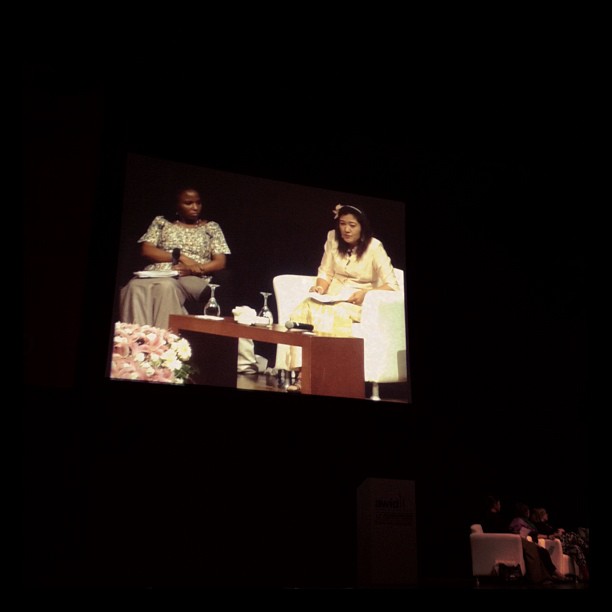 I am Kthi Win from Myanmar and I am a sex worker. I manage a national organisation for female, male and transgender sex workers in Burma and I am also the chairperson of the Asia Pacific Network of Sex Workers. Until now, organising anything in Myanmar has been very difficult. People ask, How did you set up a national programme for sex workers? And my answer to them is Our work is illegal. Every night we manage to earn money without getting arrested by the police. We used to work and organise together, so we use this knowledge in order to work out how we can set up the National Network without making the government angry.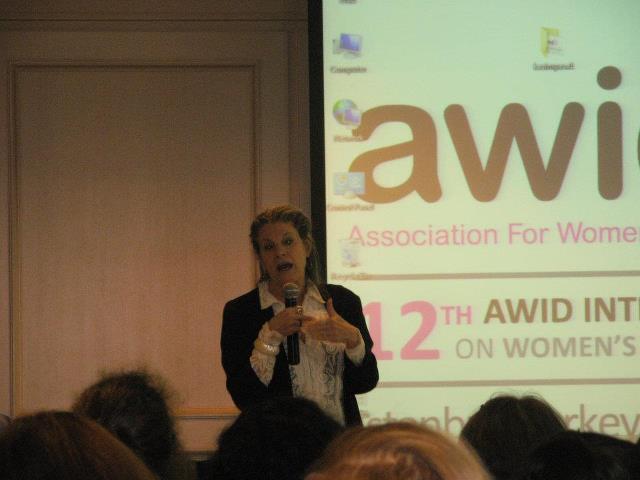














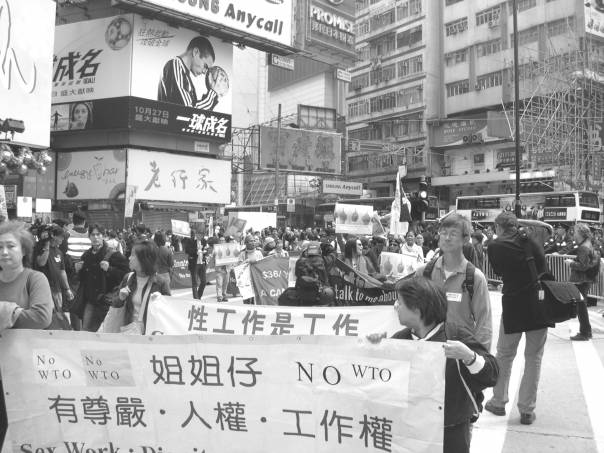

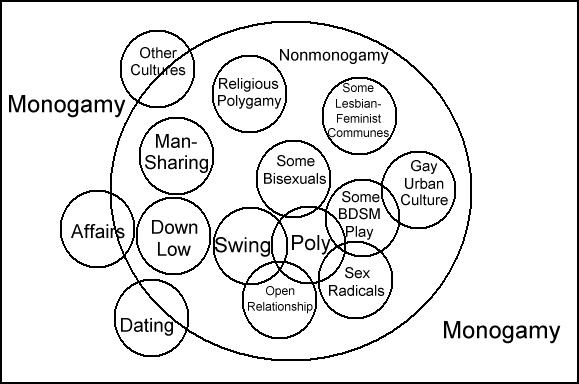


 Feminists have better sex is the latest