web analytics

colonialism

You are currently browsing articles tagged colonialism.

What I hate most about the annual Trafficking in Persons Report (TIP) is the very idea: that one country should presume to judge all others vis-a-vis some topic and then publish a report card with simplistic, childish rankings (all the world fits into 4 classes). Then, not content with simply judging Rest-of-World, the USA threatens to cut off aid and social programming to countries that do not toe its line. It’s the worst kind of cultural arrogance, and it would be if any other country presumed to do it, too.

However, let’s imagine that such a report could be of great use to many people. In that case, I want to know how the data was gathered, which sources were consulted, who was allowed to give information, whose estimates were deemed authoritative and how data were confirmed. I want to know precisely how researchers handled the considerable international muddle over definitions, since the fact that people mean different things when they say the word trafficking is a notorious source of conflict and confusion, not to mention that a lot of the English keywords cannot be reliably translated into all other languages (for example, abuse, exploitation, force, coercion). Yet every year since the beginning the Report has fudged explaining how it’s compiled. Instead of concrete information on methodology we get the vaguest of statements, really worthy of a Cold War spy operation. This is what the 2009 document says about this contemporary Crusade:

Methodology

The Department of State prepared this report using information from U.S. embassies, foreign government officials, nongovernmental and international organizations, published reports, research trips to every region, and information submitted to [an email address]. This email address allows NGOs and individuals to share information on government progress in addressing trafficking. U.S. diplomatic posts reported on the trafficking situation and governmental action based on thorough research that included meetings with a wide variety of government officials, local and international NGO representatives, officials of international organizations, journalists, academics, and survivors.

No, a list of nameless institutions and groups does not qualify. The vaguer and longer the list, the more impressive it appears, but we have no way to know how the particular people were chosen and who was not consulted. Research studies can never be completely objective but they can and must address their own biases, and one of these concerns Gatekeepers: Who is chosen to tell researchers whom they should talk to and believe.

To compile this year’s report, the Department reviewed credible information sources on every country and assessed each government’s antitrafficking efforts. In prior years a “significant number” (defined to be 100 or more) of trafficking victims had to be documented for a country to be ranked in the TIP Report. The William Wilberforce Trafficking Victims Protection Reauthorization Act of 2008 (TVPRA of 2008) eliminated this requirement, thereby expanding the scope of countries included in this year’s report.

Let readers judge the credibility of sources: Who were they, exactly? Some local informants don’t want their names revealed, fine; list everyone else. Local readers can then judge which political groups informants belonged to, which officials were consulted, which NGOs. This is called Transparency. Again, if it’s judged better not to name all names, name as many as possible, and if not of individuals then of groups.

Some countries have held conferences and established task forces or national action plans to create goals for anti-trafficking efforts. While such activities are useful and can serve as a catalyst toward concrete law enforcement, protection, and prevention activities in the future, these conferences, plans, and task forces alone are not weighed heavily in assessing country efforts. Rather, the report focuses on governments’ concrete actions to fight trafficking, especially prosecutions, convictions, and prison sentences for traffickers as well as victim protection measures and prevention efforts.

So the evaluation is completely focussed on criminal-justice actions: that’s clear, anyway. It’s not as though a lot of proclamations condemning slavery ought to qualify as real efforts, but everything mentioned here is about criminals and victims except the extremely vague and silly term ‘prevention efforts’.

Although critical to increasing anti-trafficking efforts, the Report does not give great weight to laws in draft form or laws that have not yet been enacted. In general, the Report does not focus on governmental efforts that have indirect implications for trafficking, such as general efforts to keep children in school or general economic development programs, though the Report is making a stronger effort to identify trafficking vulnerabilities and measures taken by governments to prevent trafficking that may result from such vulnerabilities. Similarly, this report attempts to identify systemic contributing factors to particular forms of human trafficking. These include particular policies or practices, such as labor recruiters’ charging of excessive fees to prospective migrants and governmental policies allowing employers to confiscate passports of foreign workers—factors that have been shown to contribute to forced labor.

Well, honestly. So they’ve got no interest in underlying causes but are probably paying a bunch of US civil servants to compile a list of them and another list of how smuggling works, which everyone already knows. It’s egregious, self-benefiting, colonialist interference, on top of which they can’t accept research that’s already been done but have to pay themselves to do it. Humbug.

Share

Tags: , , ,

The new Trafficking in Persons Report (TIP) has once again been issued by the US government. I went back to a piece I wrote about this annual shameful phenomenon in 2007, when the Philadelphia Inquirer rang to solicit a piece on the subject. The only thing different now concerns the perceptions of US citizens outside the US: abysmal and worsening then, slightly better now with the election of Obama. It remains to be seen whether this new administration will be able to see and grapple with the imperialism inherent in the TIP, however. Everything else I said two years ago I stand by today. The paper didn’t change my text but did change the title badly (my original appears first below). 

What’s Wrong With the ‘Trafficking’ Crusade?
Well-meaning interference?

The Philadelphia Inquirer   Sunday 1 July 2007
Op-Ed page

Laura Agustín

It’s the season when the United States issues its annual Trafficking in Persons Report (TIP). Having named sexual slavery as a particular evil to be eradicated, the United States grades other countries on how they are doing.

On the one hand, it sounds like an obvious way to do good: Describe the ghastly conditions you as a rich outsider observe in poor countries. Focus on places where sex is sold. Say all women found were kidnapped virgins and are now enslaved; announce to the world that you will liberate them. Organize raids. Denounce anyone who objects – even if their objection is that you are intervening in their country’s internal affairs. Ignore victims who resist rescue. Use lurid language and talk continuously about the most sensational and terrible cases. Justify your actions as a manifestation of faith, as though it exists only for you. Mutter about “organized crime.”

This is also the season when tourists leave the United States en masse to visit the rest of the world, where their country is more disliked all the time. People who used to say: “It’s just the president [or the government], ordinary Americans are all right,” now say it less often. Ignorant, destructive interventions into other countries’ business have been going on too long.

Grading everyone else on moral grounds is highly offensive, particularly when such grades are accompanied by threats of punishment if the line isn’t toed. It’s distressing to witness the deterioration of what good will is left toward this country since the post-2001 wars were initiated and campaigns intensified that presume the United States Always Knows Best.

For crusading politicians and religious leaders, a rhetoric of moral indignation is effective in uniting constituents and diverting the collective gaze away from familiar problems at home. So the culprits, those who get bad grades in the TIP, live far away from U.S. culture, which is assumed to be better. Intransigent local troubles – prisons overflowing with African Americans, millions of children malnourished – are swept aside in the call to clean up other people’s countries.

This moral indignation emanates from people who live comfortably, who are not wondering where their next meal will come from or how to pay doctors’ bills. These moral entrepreneurs do not have to choose between being a live-in maid, with no privacy or free time and unable to save money because the pay is so bad, and selling sex, which pays so well that you have time to spend with your children or read a book, money to buy education or a phone.

It is easy to haul out sensationalistic language (sex slavery, child prostitution), but it is much harder to sort out the real victims from the more routinely disadvantaged and trying-to-get-ahead. Those who know intimately the problems of the poor in their own cultures rarely deny that they can decide to leave home and pay others to help them travel and find work, in sex or in any other trade.

“But sex for money is disgusting and degrading; no one should have to do it.” And should anyone have to clean toilets all day? Risk being maimed in unsafe fireworks factories? Should children have to spend their lives in lightless tunnels of mines, or women have to remain married to men who are cruel to them? The world is full of things we wish we could eradicate – but isn’t starvation the first of them? Why is there no equivalent moral furor over hideous poverty? Are we meant to believe that sex without love is worse than military violence? All over the world, selling sex pays better than most jobs readily available to women, and many do not believe it is the worst possible experience they can have.

What’s questionable about the TIP is not the defense of children or anyone else against true violence – it’s one government’s assumption that it has the right to judge everyone else and apply a draconian definition of exploitation that does not ask people whether and how they would like to change their lives. Questionable is the focus on the photogenic, cowboy moment of rushing in to rescue slaves, with no interest in what will follow.

Victims are “protected” rather than granted autonomy. At the Empower Center in Chiang Mai, Thailand, signs written by migrant women “rescued from” selling sex include: “We lose our savings and belongings”; We are locked up”; “We are held till deporation”; “We are interrogated by many people”; “Our family must borrow money to survive while we wait.”

From the standpoint of social science, the TIP is gravely faulty. It never explains how data were gathered and compared across so many languages and cultures, or who did it exactly under what circumstances. A raft of other research shows enormous diversity among people who sell sex, and a wide variety of experiences in the sex industry among both migrants and people who stay at home. Studies show that the worst kind of trafficking can happen to people doing other kinds of jobs – and to men. Women all over the world, including the poorest, repudiate being characterized as above all sexually vulnerable.

In assuming its creators’ moral values are or should be universal, the TIP ignores local cultures and the complexities of human desires and functions – yet another reason tourists from the United States will be less welcome everywhere this summer.

Share

Tags: , , , , , ,

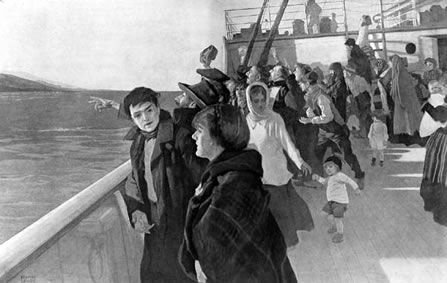
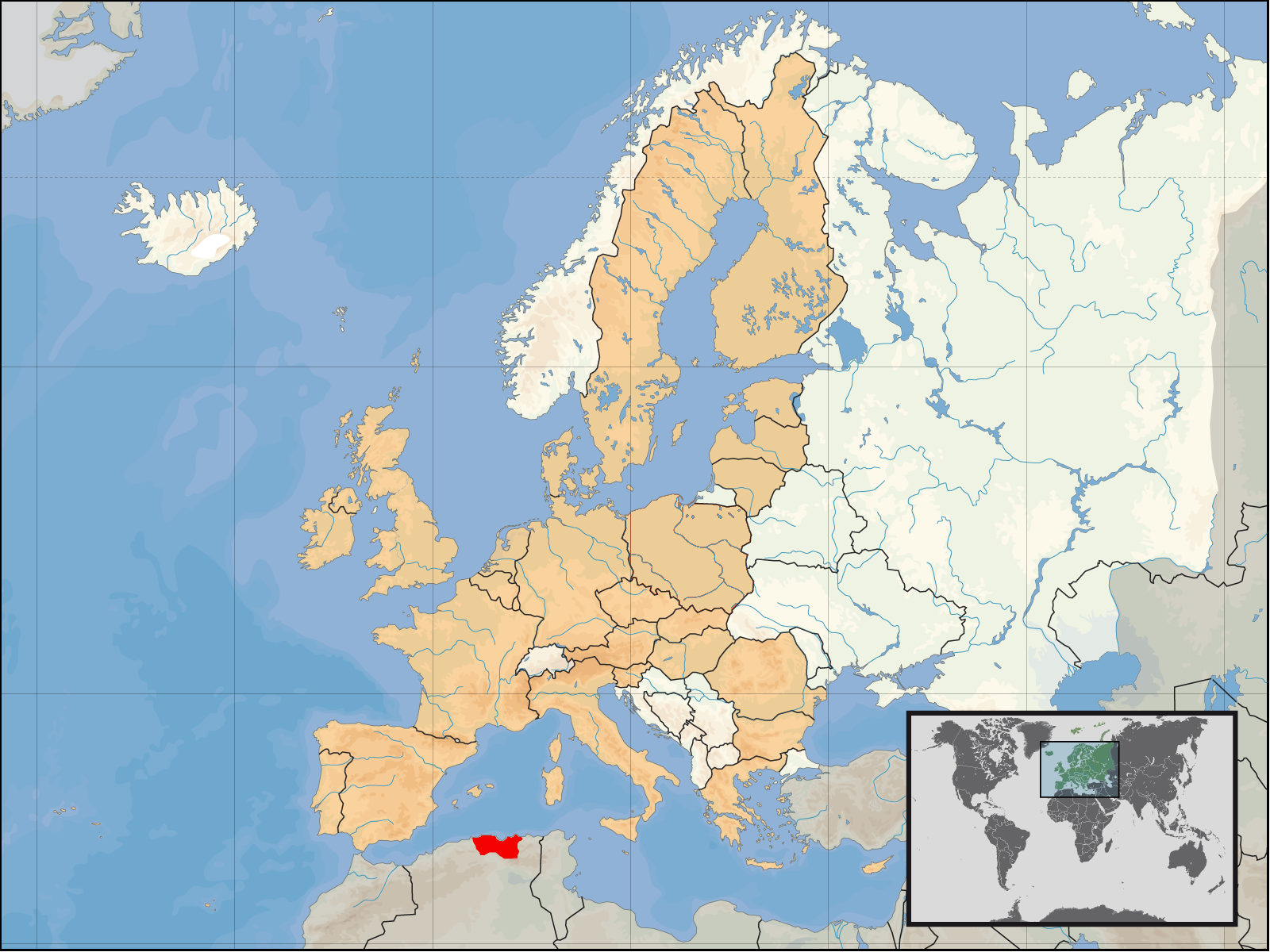
The Suffering of the Immigrant is still one of the best books I know about the experience of migration. The book demonstrates how suffering does not have to equal victimisation and, most importantly, how migration is the inevitable consequence of colonialism. The migrants discussed left Kabylia, in northern Algeria, and went to France.

Book Review by Laura Agustín in International Journal of Urban and Regional Research, Vol 29.3 pp 703-15, September 2005

Abdelmalek Sayad, 2004: The Suffering of the Immigrant. Cambridge: Polity Press.

Initially I thought this book’s title might signal the growing trend to victimize migrants, but I was wrong. On the contrary, The Suffering of the Immigrant presents the strongest possible arguments for recognizing migrants’ agency in the face of inherent, structural conditions that are all against them and whose consequences they must, undoubtedly, ‘suffer’.

Whereas many contemporary commentators refer to migration as a phenomenon of ‘globalization’, Abdelmalek Sayad makes no bones about which stage of globalization we should be looking at: the north’s imperialist colonization of the south. Most commentators agree that current migratory flows are related to free-market capitalism’s need for flexibility, moving its workplaces around the world while workers move to find them. And probably few would deny that ‘earlier’ colonial relations were implicated, especially where migrants move to their former ‘mother countries’.

But Sayad obliges us to consider a more serious proposition, that migrations are a structural element of colonial power relationships that have never ended. His case study is the Algerian migration to France in the second half of the twentieth century, during which time many migrants passed from being French (citizens of the colony) to Algerian (citizens of an independent Algeria) and back to French (as legal workers and residents in France), with the complication that the majority were Berber peasants. The colonial relationship is seen in the subordination of the economic and social life of rural colonies to the industrial activity of the country in which peasants become ‘workers’.

Sayad’s arguments, however, go much further than this particular case. First, he demonstrates how discourses of migration focus on the situation of ‘immigrants’ — meaning, on how receiving countries view immigration as their own social problem. Read the rest of this entry »

Share

Tags: , , , , , ,

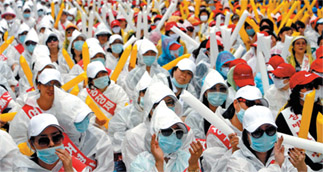
This story shows how laws aimed at suppressing the sex industry are met with creative resistance. Businesspeople invent new ways to put workers and clients together without drawing so much police attention. The police know this will happen but are anyway under-funded to make more than a minimum effort. The report provides some historical background that links present-day commercial-sex forms to earlier colonisation of Korea by Japan and the USA. I’ve drawn attention to interesting details in bold. Note the presence of a Minister of Gender Equality and the photo of thousands of sex workers protesting the anti-sex trafficking law.

Joong Ang Daily, Seoul

Commercial sex survives despite crackdown

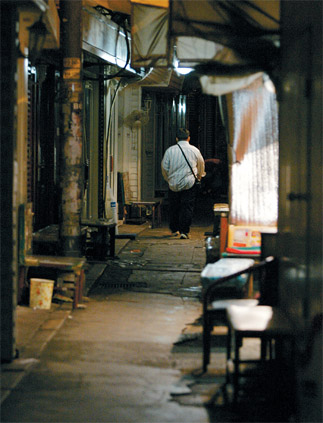
A man walks down an alley in Mia-ri Texas, Seoul, where sex workers still operate.

By Brian Lee, 16 March 2009 

“Oppa, wanna have some fun?” A middle-aged woman throws a questioning look at a male passerby who shakes his head and goes about his business. She’s standing at an intersection in Yeongdeungpo, western Seoul, which used to be one of the better known red-light districts in the capital. Most of the storefronts are shuttered during the daytime and come alive at sundown.

But business is slower than usual, partly because of the bad economy but also, according to government officials, due to the success of the Anti-Sex Trafficking Law, which was enacted five years ago amid great fanfare to beef up existing anti-prostitution laws. However, except for cosmetic changes, the lucrative sex trade is still very much around, experts say. The only difference is that since the law was enforced, the sex trade has evolved.

More visible outlets such as the one in Yeongdeungpo have taken the brunt of the law as have the once notorious neighborhoods of northern Seoul’s Cheongnyangni and Mia-ri Texas, which are both scheduled for urban redevelopment. But it is still possible to buy sex in these areas, like Cheongnyangni, for as little as 70,000 won ($47.50).

Business as usual

A tell-tale sign that business was, if not booming, reasonably healthy came earlier this month when the Seoul Metropolitan Police Agency announced it would transfer hundreds of police officers in the southern Seoul districts of Gangnam, Seocho and Suseo. The move has been widely interpreted as an effort to sever ties between the police and entertainment establishments offering sex services. The decision to transfer the officers, all from a range of departments, came after it was discovered that police officers had inappropriate relationships with massage parlors in those areas. The current going rate for massage parlors is 170,000 won in cash and 190,000 with a credit card. As credit card records are easy to trace, customers and owners tend to prefer cash.

3000 Seoul sex workers protest Anti-Trafficking Law, 2007
3000 Seoul sex workers protest Anti-Sex Trafficking Law, 2007

Nowadays, adding to the sex-for-cash businesses,  hyugae-tel (resting rooms), where customers can call up sex workers and then later join them at another venue, are expanding rapidly, while commercial sex offered online, which is harder to track, is also growing. Still, government officials say the implementation of the law from five years ago has helped significantly reduce the scale of the sex industry. Read the rest of this entry »

Share

Tags: , , , , , , , ,

As a longtime appreciator of Don Kulick’s Travesti: Sex, Gender, and Culture among Brazilian Transgendered Prostitutes, I am happy that he appreciated my book, too.

Sexuality Research & Social Policy, Vol. 5/4, 95–96 (2008)

Don Kulick

A few years ago, as my colleague Deborah Cameron and I were lamenting how much academic life is spent wrangling over debates fueled by misinformation and polemic, we half-jokingly came up with an idea for a book series we thought would be fun to edit. The series would be titled Let’s Stop Talking Crap About… and would consist of short, no-nonsense texts that explained why debates about some particular topic were misguided and pointless wastes of time.

Debbie and I have not (yet) done anything with that idea. But if we were editing a series like that, Laura María Agustín’s Sex at the Margins: Migration, Labour Markets and the Rescue Industry is the kind of text we would be commissioning. The book easily could have been titled Let’s Stop Talking Crap About Prostitution and Trafficking. It offers a sensible, levelheaded, knowledgeable, and accessible overview of why current debates about prostitution and trafficking are so flawed and confused, as well as a careful discussion of why laws and policies resulting from these debates are harmful to precisely the people they supposedly protect.

The author is a well-known scholar and advocate who has worked for many years both among migrants in various countries and among the professionals—social workers, nongovernmental organization (NGO) employees and volunteers, and others in the social sector—who administer and assist those migrants. She summarizes both her own research and a great deal of secondary literature. By highlighting the enormous variation that exists among migrants who sell sexual services, she demonstrates that debates about prostitution and trafficking can proceed as they do only because very few of the social workers, policymakers, government representatives, and others involved in these discussions actually know what they are talking about.

Agustín spells out the basic message of Sex at the Margins on page 5: “This book argues that those declaring themselves to be helpers actively reproduce the marginalisation they condemn.” She goes on, several pages later, to explain this message more fully: “Social agents’ current practices in services, education, outreach, publications and policy-making…perpetuate a constructed class—‘prostitute’—which justifies their actions and serves an isolationist immigration policy” (p. 8).

This frank assessment is unlikely to sit particularly well with many of the social agents who work with prostitutes and prostitution. But the author does not blame, lecture, or scold. She acknowledges that social workers and others who work with prostitutes are genuinely interested in helping them. The problem is that most of the policies and interventions concerned with prostitution and trafficking are grounded in (a) statistics pulled out of thin air, (b) ideological posturing devoid of knowledge about how migration actually operates, (c) moral evaluations of sex that regard it as fundamentally incomparable with any other human activity, and (d) patronizing understandings of women that ultimately rely on the idea “that poorer women are better off staying at home than leaving and possibly getting into trouble” (p. 39).

Agustín is a skillful narrator. She draws the reader into the text by presenting the material as a kind of journey of discovery. Read the rest of this entry »

Share

Tags: , , , , , ,

It’s an uphill, possibly hopeless task to go against the massive tide of uninformed ideas about migration and the sex industry (called in blanket fashion sex trafficking and sex slavery), but a growing number of people are asking questions about images such as this one:

From the Salvation Army’s anti-trafficking programme

All too often even a mild analysis or questioning of the current shrill public discourse on this subject is attacked as monstrous and cruel. To the contrary, measured skepticism about such brouhaha is healthy. Nathalie Rothschild is commissioning editor of Spiked. Her reporting on immigration and migration issues include the following analysis of the UK Home Secretary’s proposal to criminalise clients of sex workers ‘controlled for another’s gain’. My own analysis of this legislation appeared in the Guardian as The Shadowy World of Sex Across Borders

Prostituting women’s solidarity

Spiked, 27 November 2008

The UK government’s call to British women to help combat ‘sex trafficking’ amounts to a crackdown on immigration.

Nathalie Rothschild

Women around Britain have been asked to unite to liberate their prostitute sisters from the shackles of modern-day slavery.

Last week, UK home secretary Jacqui Smith unveiled a proposal to protect women from exploitation by tackling the demand for prostitution – in other words, by punishing punters. Anyone who pays for sex with someone who is ‘controlled for another person’s gain’ could be fined and receive a criminal record. Under the proposal, ignorance of the circumstances would be no defence.

On Tuesday, Harriet Harman, the minister for women, followed up on Smith’s proposal by sending out a rallying call to members of the Women’s Institute (WI), the UK’s largest voluntary women’s organisation. She asked the ladies to help tackle the sex trade by complaining to editors of local papers that run ‘sleazy adverts’ for sexual services.

Harman believes this will help stamp out sex trafficking, which she has described as a ‘modern-day slave trade’. One WI member told the BBC that the ‘sleazy ads’ may be for services that the girls involved are not giving willingly. They may have been tricked and forced into prostitution, she said. Spokeswoman Ira Arundell said the WI’s aim is ‘to raise awareness and spread the message about what is happening with these girls’. Just how complaining to editors about newspaper ads will counteract exploitation of women or reveal what happens behind the doors of massage parlours, brothels and erotic DVD shops is not entirely clear.

The images broadcast this week of middle-aged and elderly British WI members, gathered around tables to scour local papers – scissors and marker pens at hand – and tut-tutting at ads for erotic services, were reminiscent of those old gatherings of women knitting sweaters and collecting toys for starving, black babies. In effect, Harman and the WI view the foreigners who they are so intent on rescuing as childlike, helpless victims; as easily cajoled and loose women in need of the watchful guard of respectable, morally superior British ladies.

This war against international prostitution may be well-intentioned, but it looks like a puritanical ‘white woman’s burden’ mission. Far from engaging in an act of solidarity, the WI members who heed Harman’s call will only help to reinforce the image of migrants as a danger to themselves and to British society.

The numerous charities, non-governmental organisations, official bodies and police that work to root out human trafficking form what some have termed a ‘rescue industry’, whose collective efforts reinforce a dehumanising view of migrants. As writer Laura María Agustín points out it in Sex at the Margins: Migration, Labour Markets and the Rescue Industry, migrants become reduced to ‘passive receptacles and mute sufferers who must be saved and helpers become saviours’. This, Agustín says, is ‘a colonialist operation’.

Besides, who says migrant workers employed in the sex industry (which includes everything from charging for sex to pole-dancing, providing attentive dinner company and selling erotic lingerie, literature or DVDs) want to be ‘rescued’ in the first place? Read the rest of this entry »

Share

Tags: , , , , , , ,

I wrote this as the UK’s Home Secretary launched her legislative proposal to criminalise the purchase of sex from those ‘controlled for another person’s gain’. An earlier attempt to criminalise all purchases of sex, always, was shouted down. This version of the abolitionist urge is totally unworkable, as well as silly and patronising towards men and women in general. Not only foreign, brown Others would be targeted – ordinary white Brits seen as insufficiently independent could be accused of being  ’controlled’ by others. Only in this line of work are people required to work alone and possibly lonely – no workplaces, no managers, no colleagues allowed!

The Guardian – Comment is Free

The Shadowy World of Sex Across Borders

The government’s latest proposals for sex workers do little to tackle the problem of human trafficking

Laura Agustín

19 November 2008

Today the government proposes that paying for sex with those “controlled for another person’s gain” be a criminal offence. High on the list are victims of trafficking, and punters’ defence that they didn’t know women were trafficked is declared inadmissible. But clients may still have an out. How, they will ask, can the police prove that sex workers were trafficked?

The police will have to identify the real trafficked victims in order to identify customers at fault – a notoriously difficult enterprise. In a few high-profile cases, self-identified victims name and help find their exploiters, and sometimes these traffickers are successfully prosecuted. But these cases are few and far between. More often it is difficult to point to migrants who knew nothing about their future jobs, who agreed to nothing about their illicit travels and who are willing to denounce perpetrators who may be family or former friends and lovers.

More than a decade ago, while working in a Caribbean Aids-prevention organisation, I visited a small town famous as a market for informal migration. In one cafe, a waiter offered me anything I asked for in return for helping him reach anywhere in Europe. Later, I met a woman determined to travel to Paris to work. Highly informed about prices, she steered clear of brokers promising to “take care of everything”.

I visited a village where most families spoke proudly of daughters who maintained them by selling sex abroad. And I met many people who arranged papers and transport for travellers, some charging fees and others as a family obligation. Scholars understand these as social networks and community strategies used to get migrations underway. Where few jobs are available at home, local institutions rarely try to prevent such trips. To those involved, this travel may feel irregular but not criminal, given the market for migrant labour abroad.

The rub is that most jobs available are not recognised by national immigration regimes that only value highly educated professionals and formal-sector employment. Work permits are not granted for low-prestige jobs in kitchens, sweatshops, night clubs or agriculture. The strict regulation of labour markets can fairly be said to promote an increase in unauthorised workers. Read the rest of this entry »

Share

Tags: , , , , , , , , , ,

This opportunistic use of migrant labour is perfectly practical, from the receiving country’s point of view. This logic makes objects called ‘migrants’ into machines who can be moved around and employed as needed without any recognition that they are living in the countries where they are working – integrating, mixing, feeling, loving, growing – contributing.

Spain’s radical plan for migrants

By Steve Kingstone
BBC News, Madrid

On the northern outskirts of Madrid, the Tres Cantos railway station is getting a makeover.

For many working on the railway, this represents their last job. Under a fierce midday sun, immigrant labourers from North Africa, Latin America and Eastern Europe shift huge concrete slabs into place on the platform, and scatter fresh layers of shingle between the rails and sleepers.

This back-breaking work pays €1,200 (£950) per month, and everyone is making the most of it.

With the construction industry in dire trouble, their Spanish boss has no other projects in the pipeline, and the entire workforce will be laid off when this job ends.

So, any takers for the government’s new offer to unemployed immigrants?

If they volunteer to go back to their home countries and not return to Spain for three years, foreigners will qualify for lump-sum benefit payments, typically worth around €18,000 (£14,200).

The scheme applies to the citizens of 19 non-EU countries which share social security agreements with Spain.

“If someone offered me that cash now I’d go,” says Patrick, from Equatorial Guinea. “Back home, it would go further; I could invest it,” he adds.

Guillermo, from the Dominican Republic, warns that: “if the economy carries on like this, we’ll all have to leave”. But given a choice, he would rather stay. “I now consider myself Spanish,” he grins. Read the rest of this entry »

Share

Tags: , , , ,

Perhaps this is less Border Thinking than calling a spade a spade. Europe made itself through imperialism and now passes a law allowing detention of undocumented migrants, even if employed in European-owned businesses, for up to 18 months. Original Spanish follows.

ALAI, América Latina en Movimiento

2008-07-24 – Available in:    English       Español    Portugues    Français

Manifesto against the European migration law

Honorable European Governments and Parliamentarians

Some of our ancestors, a few, or many, or all of them, came from Europe.

The world received these immigrant workers from Europe with generosity.

Now, with the new European Directive on Forced Return of Migrants, dictated by the looming economic crisis, Europe is criminalizing the free circulation of people, despite this having been consecrated as a right in international law since many years ago.

There is nothing strange about this, because foreign workers have always been used as scapegoats for the periodic crises of a system that uses them when necessary, and then discards them in the in the dustbin when no longer needed.

It is not strange, but it is shameful.

It seems that a convenient amnesia prevents Europe from remembering what Europe would be like without cheap labor from abroad, and without the services that the entire world has provided her with. Europe would not be Europe without the massacre of indigenous peoples in the Americas and without the enslavement of the sons and daughters of Africa, to mention only a few forgotten examples.

Europe should apologize to the world, or at the very least give thanks for what the world has given her, instead of legalizing the hunting down and punishment of hard working people who have come to Europe, fleeing the hunger and the wars that the masters of the world have sent them.

From the Americas,
Cordially,

ARGENTINA
- Adolfo Pérez Esquivel – Premio Nobel de la Paz
- Atilio Boron, escritor
- Hebe Bonafini, Madres de Plaza de Mayo
- Osvaldo Bayer , escritor
- Hermana Martha Pelloni – Derechos Humanos
- Diana Maffía., filósofa feminista
- Rally Barrionuevo, cantautor
- Claudia Korol, periodista, Clacso
- Luis E. Sabini Fernández, periodista, editor y docente
- Bernardo Buonomo – agente pastoral – Pastoral Social Moron
- Lydia Pallavicini.- DNI 3873951
- Virginia Sol.- LC 6.239.888
- María Virginia Parodi.- DNI 25.294.793
- Ana Barousse.- DNI 10859344
- Rodolfo Martín Pavesi.- D.N.I. 21.670.512
- Marta Tomé.- DNI 3604943
- María del Carmen Pessani.- DNI 6264778
- Andrea Castaño.- DNI 17108310
- María Celina De Paula.- DNI31723004
- Mariela Grisel Battaglia.- DNI 33080296
- Eduardo Grandin.- LE 64443858
- Ana Pastor. Coordinadora General, Asociación Civil Madre Tierra
- Gabriel Nosetto. Presidente, Asociación Civil Madre Tierra

BOLIVIA
- Eduardo Paz, profesor universitario Read the rest of this entry »

Share

Tags: , , , , ,

Newer entries »